



Most U.S.-market examples use the same basic powertrain: a 3.3-liter gasoline direct-injected V6 with front-wheel drive. The main differences are the six-speed automatic used through 2018, the eight-speed automatic introduced for 2019, and year-to-year changes in trims and equipment. Problems associated with overseas 2.2-liter CRDi diesel versions—such as diesel particulate filter or EGR-system concerns—do not apply to the U.S.-spec Sedona. Separate articles in this series cover the generation overview, specifications, and interior.
Fuel economy and the conditions that affect it
EPA estimates for 2015–2018 models vary by trim, generally ranging from 17–18 mpg city, 22–25 mpg highway, and 19–21 mpg combined. For 2019–2021 models with the eight-speed automatic, the published estimate is 18 mpg city, 24 mpg highway, and 21 mpg combined. These are laboratory-based ratings rather than guaranteed real-world results.
Actual fuel economy can fall below those figures with frequent short trips, extended idling, heavy passenger or cargo loads, aggressive acceleration, winter operation, or sustained use of climate control. Because the U.S. model uses gasoline direct injection, rough running or reduced efficiency should be diagnosed systematically: ignition components, fuel delivery, intake deposits, sensor data, and basic engine condition may all need to be checked rather than assuming a single cause.
Body, undercarriage, and regional corrosion exposure
The body generally holds up well, but vehicles from Snow Belt states deserve a careful underbody inspection. Road salt and moisture can affect suspension hardware, brake and fuel lines, exhaust components, subframes, rocker seams, and areas around the wheel wells. Surface corrosion is not automatically a structural problem, but scaling, perforation, damaged mounting points, or heavily corroded fasteners can substantially increase repair costs.
Paint chips are common on the nose, hood edge, rocker panels, and lower doors of vehicles that have spent years on highways or gravel roads. The Sedona is a heavy minivan, so worn struts, shocks, control-arm bushings, wheel bearings, and unevenly worn tires should be treated as inspection items rather than judged by mileage alone. A road test should include rough pavement, low-speed turns, braking, and highway-speed tracking.
Interior wear, noise, and power sliding doors
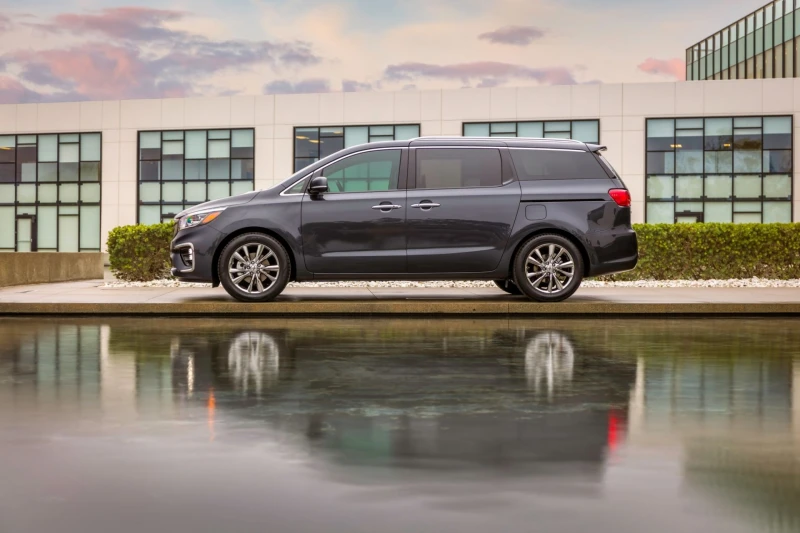
At higher mileage, minor trim squeaks can develop around the dashboard, door panels, and rear cabin. Tire and wind noise also becomes more noticeable above roughly 65 mph, especially on coarse pavement or with worn tires. Seat bolsters, second-row mechanisms, cupholders, USB ports, rear entertainment equipment, and all front and rear climate-control functions should be tested individually because equipment varies by trim and model year.
Power sliding doors are one of the most important areas to inspect. Confirm that both doors open, close, reverse when obstructed, latch completely, and operate from the handles, key fob, overhead controls, and door switches. Certain 2015–2018 Sedonas were included in a safety recall involving the automatic reversal logic, while some 2015–2017 vehicles were covered by additional repair programs for latching or drive-unit concerns. Recall and campaign completion should be verified by VIN through NHTSA and a Kia dealer; a door that hesitates, makes a stick-slip noise, or fails to latch needs diagnosis before purchase.
3.3-liter V6 and transmission inspection
The U.S.-spec Sedona uses a 3.3-liter GDI V6 rated at 276 hp and 248 lb-ft of torque. There is no single mileage at which major repairs become inevitable, so the inspection should focus on evidence: cold-start behavior, warning lights, stored or pending diagnostic codes, misfires, abnormal timing noise, oil or coolant leaks, overheating history, exhaust smoke, and consistent maintenance records. The timing chain has no routine replacement interval, but persistent startup rattle or correlation-related fault codes require proper diagnosis.
Model years 2015–2018 use a six-speed automatic, while 2019–2021 models use an eight-speed automatic. During a test drive, check engagement from Park into Drive and Reverse, low-speed shift quality, kickdown response, behavior after the transmission is fully warm, and any fluid leakage. Harsh shifts, delayed engagement, flare between gears, or shudder should not be dismissed as normal. Service history is useful, but transmission condition should be evaluated from operation and scan data rather than from a blanket assumption about durability.
What changed for 2019 and how versions differ
The refreshed 2019 Sedona brought revised exterior styling, updated cabin technology, and the eight-speed automatic while retaining the 3.3-liter V6. Earlier U.S. trims included L, LX, EX, SX, and SX Limited, while later lineups were reorganized and equipment availability changed. A VIN-specific build sheet or original window sticker is more reliable than a seller's trim description, especially for driver-assistance features, seating layouts, rear entertainment systems, and power-door equipment.
For U.S. buyers, listings on Autotrader, CarGurus, and Cars.com should be compared against U.S.-spec Sedona equipment and powertrain data. Overseas Kia Carnival YP models may use diesel engines, different transmissions, other seating configurations, and market-specific electronics. Their maintenance concerns should not be transferred directly to a U.S. gasoline Sedona without confirming the vehicle's actual specification.
What to inspect before buying
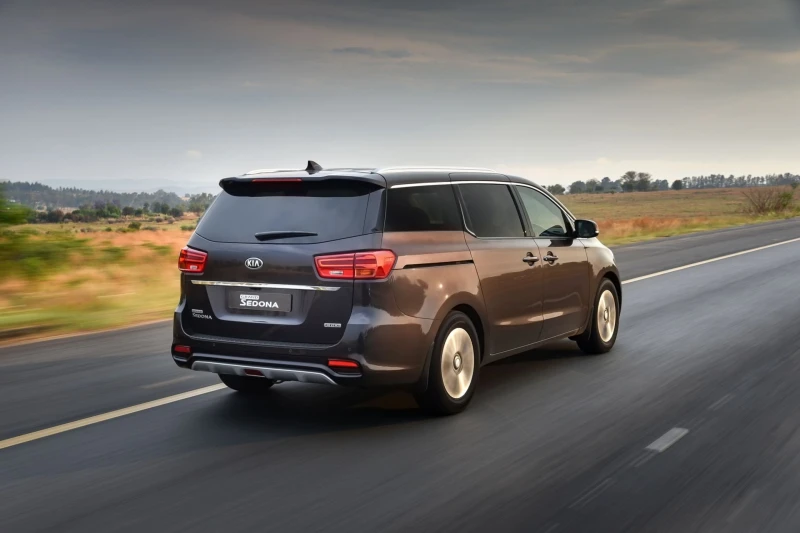
A thorough pre-purchase inspection should cover a cold start, an OBD scan, engine and transmission operation, power sliding doors, rear liftgate, front and rear climate control, suspension, brakes, tires, steering, and the complete underbody. The VIN should also be checked for open recalls, completed campaigns, accident history, title status, and mileage consistency. Compression or leak-down testing is not automatically necessary on every vehicle, but it can be justified when there are misfires, uneven running, oil consumption, or other evidence of internal engine trouble.
Older infotainment systems and driver-assistance features may feel dated compared with newer minivans, but this is primarily an age and equipment issue. Before budgeting for an aftermarket head unit, confirm compatibility with the factory amplifier, steering-wheel controls, cameras, rear entertainment hardware, and vehicle settings. Electrical modifications should be evaluated carefully if the installation quality is unknown.
In the U.S. used market, the strongest candidate is not automatically the newest or lowest-mileage Sedona. A 2019–2021 model offers the eight-speed automatic and updated features, but a well-maintained 2015–2018 vehicle can be the better purchase when its condition, records, recall history, and inspection results are stronger. The decision should balance present mechanical condition, corrosion exposure, door-system operation, ownership history, and a realistic repair budget.