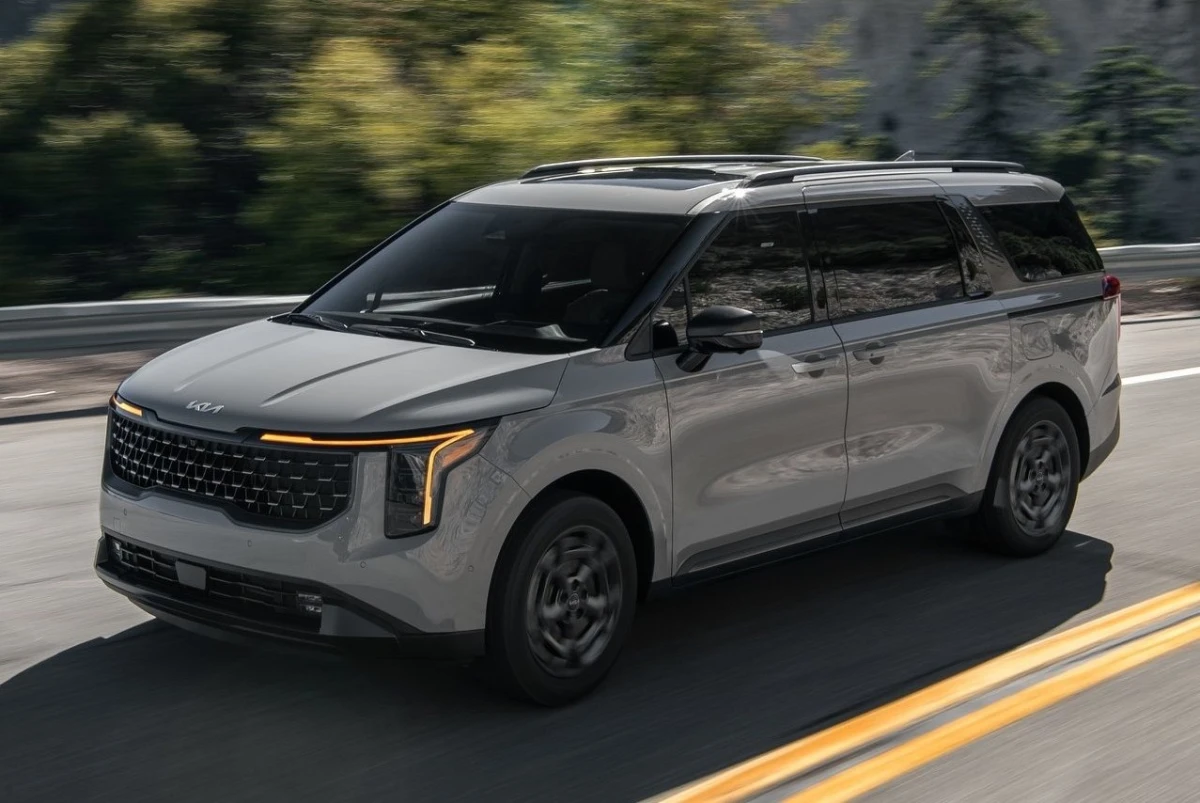
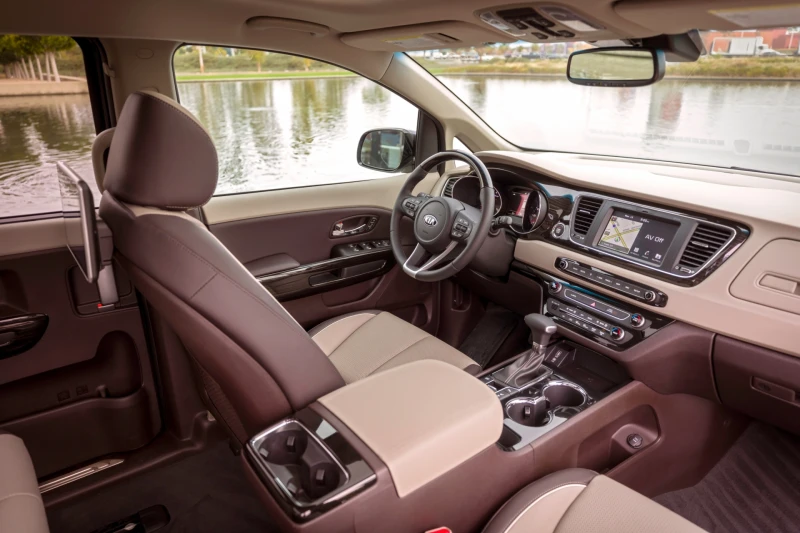
From the driver's seat, the dashboard has a broad, horizontal layout with large air vents, a wide center stack, and straightforward physical controls. The infotainment display varies by trim and model year, ranging from a basic audio interface on lower-spec early vans to larger UVO and navigation systems on better-equipped examples. The steering column tilts and telescopes, the pedals are well placed, and the upright seating position combines with large mirrors and generous glass area to provide good forward and side visibility. On interstate drives and long family trips, the relaxed driving position helps make the Sedona easy to manage despite its size.
Interior materials and how they age
The cabin relies mostly on firm plastics, with softer surfaces and decorative trim appearing more frequently in EX, SX, and SX Limited models. Panel fit is generally tidy for a minivan of this era, although older or higher-mileage examples may develop minor squeaks around the center stack, sliding-door trim, and upper door panels, especially in cold weather. Cloth upholstery is common in L and LX models and usually tolerates family use and routine cleaning well, but the outer bolsters on the front seats should still be checked for wear.
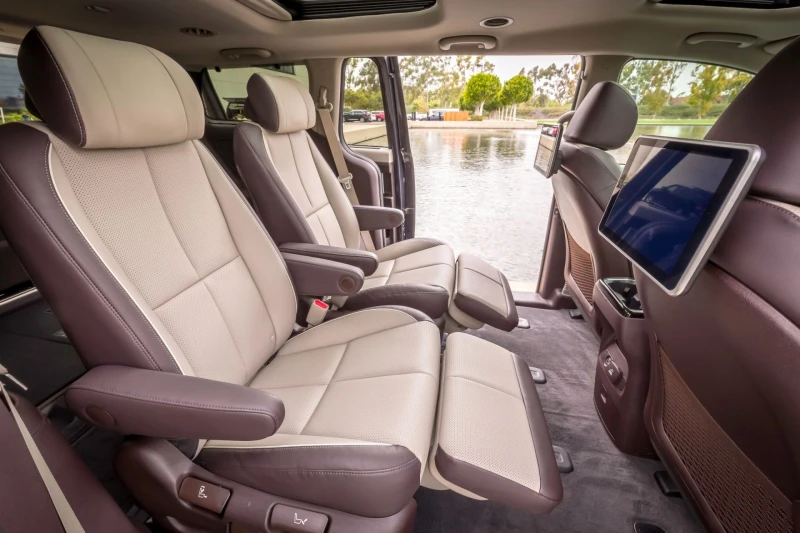
Leather-trimmed seating is more common in higher trims and option packages, depending on model year. In hot, sunny regions, regular cleaning and UV protection help prevent the material from drying, fading, or cracking, while cold-weather vehicles should be checked for creasing and wear around heated-seat elements and high-contact areas. The carpeting and cargo-area trim are practical, but all-weather mats are worthwhile in snowbelt states, wet climates, or vehicles regularly used for camping and outdoor activities.
Space, seat flexibility, and daily practicality
U.S.-market Sedonas are found in seven- and eight-passenger configurations, depending on trim and model year. Many versions use Kia's Slide-N-Stow second-row seats, which slide and fold upright to open a larger cargo area without removing the seats. Some upper-trim configurations instead use reclining second-row lounge seats with footrests, prioritizing passenger comfort over maximum cargo flexibility. The split-folding third row stows into the floor. Adults can use the rear row for shorter trips, but three-across comfort becomes limited on longer drives. Power sliding doors are common on LX-and-higher examples, though they were not universal on every base model, and they are especially useful when loading children or bulky items in tight parking spaces.
With the third row folded into the floor and the second-row seats moved or folded forward, the Sedona offers a large, useful cargo area for luggage, sports equipment, home-improvement supplies, or small-business loads. Cargo hooks, nets, bins, and storage compartments vary by trim and option package. The number and placement of USB ports and power outlets also changed over the years; later models and higher trims may include rapid-charge USB ports, a cargo-area charging point, or a 110-volt outlet.
U.S.-market trims and commonly found equipment
Early third-generation U.S. models were offered in L, LX, EX, SX, and SX Limited trims, while the lineup was simplified in later model years. Cloth seating and front-and-rear air-conditioning controls are typical of lower trims. Leather-trimmed upholstery, tri-zone automatic climate control, heated or ventilated front seats, power-adjustable passenger seating, dual sunroofs, and rear-seat entertainment were generally reserved for higher trims or option packages. Because equipment changed from year to year, a vehicle's VIN, original window sticker, and working condition matter more than the badge alone.
Infotainment systems on 2015–2018 vans range from basic audio units to larger UVO and navigation displays. Apple CarPlay and Android Auto became more widely available as the generation progressed and were standard with the 7-inch touchscreen on the 2020 lineup. A rearview camera is common, particularly on later examples, while parking sensors, blind-spot monitoring, and rear cross-traffic alert appear more often on mid- and upper-level trims. Smart cruise control and forward-collision technology were limited to higher trims or packages in the later years of this generation.
How the 2019 model-year refresh changed the interior
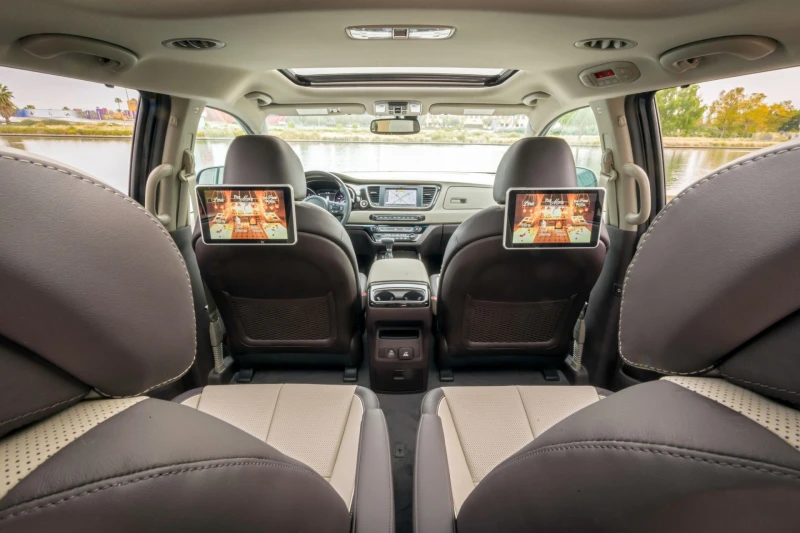
The U.S. facelift arrived for the 2019 model year and made targeted rather than structural changes. Kia introduced a more modern center fascia, revised instrument-cluster graphics, an available wireless phone charger, and a redesigned floor console with additional small-item storage. Higher trims gained an electronic parking brake, while an available cargo-area USB charging point improved access for third-row passengers. The optional rear-seat entertainment system also moved from a single overhead display to dual 10.1-inch seatback touchscreens with device-mirroring capability. Cabin dimensions and the basic seating layout remained unchanged, but refreshed models feel more current and integrate newer devices more easily.
Everyday use, noise, and cabin care
On typical U.S. roads, the Sedona's cabin remains comfortable and functional, though tire and wind noise become more noticeable at highway speeds, particularly with coarse pavement, worn weather seals, or louder replacement tires. Rear climate controls help keep all three rows usable, but the third row may take longer to heat or cool during very hot summers or severe winter weather. Age-related rattles can appear in the dashboard or door trim on higher-mileage vans; they are usually a refinement issue rather than a safety concern, but they should be noted during a test drive.
Routine interior care is straightforward. Cloth seats are generally easier to clean after daily family use, while leather surfaces need periodic conditioning and protection from prolonged sun exposure. The upright seating position and broad glass area are useful in traffic and parking lots, although the vehicle's overall length makes a functioning rearview camera and parking sensors valuable. Buyers should also test both sliding doors, the power liftgate if fitted, every seat-release mechanism, all climate-control zones, USB ports, and the rear entertainment system before purchase.
Overall, the 2015–2020 Kia Sedona interior remains practical for families, road trips, and cargo-heavy use. On the U.S. used market, well-kept LX and EX examples often provide a strong balance of seating flexibility, power sliding doors, climate control, and manageable equipment complexity. SX and SX Limited models add more premium materials, entertainment features, and driver-assistance technology, but they also introduce more electronics and powered components that deserve a careful pre-purchase inspection.