When Kia introduced the Seltos globally in 2019, demand for small SUVs was already accelerating. The first-generation SP2 reached U.S. showrooms for the 2021 model year, positioned between the Soul and Sportage. It was not the least expensive vehicle in the segment, but its upright body, flexible cargo area, available all-wheel drive, and broad equipment list gave it a clear role. With 2021–2026 examples now represented on the pre-owned market, the Seltos has also become a realistic alternative to buying a new subcompact SUV.
How the Seltos fit the U.S. market
American buyers often ask a small crossover to cover several jobs: weekday commuting, grocery runs, highway travel, and winter driving. The Seltos addresses those needs with 7.3 inches of ground clearance and optional AWD on most versions. Its size remains manageable in urban parking, while the taller seating position and squared-off body make it feel more substantial than a subcompact hatchback. It is still a road-focused crossover, however, rather than a vehicle intended for demanding off-road use.
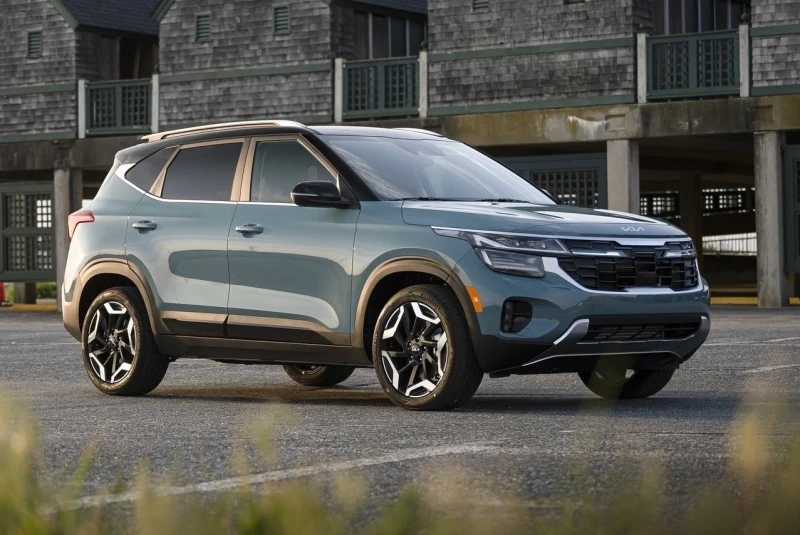
The styling also helped distinguish it from more conservative rivals. Early models combined Kia's tiger-nose grille with split lighting elements and contrasting roof options on selected trims. The 2024 model-year refresh brought revised front and rear styling, a new light signature, and an updated cabin. Those changes matter when comparing listings because a 2024 Seltos is more than a lightly altered version of a 2023 model.
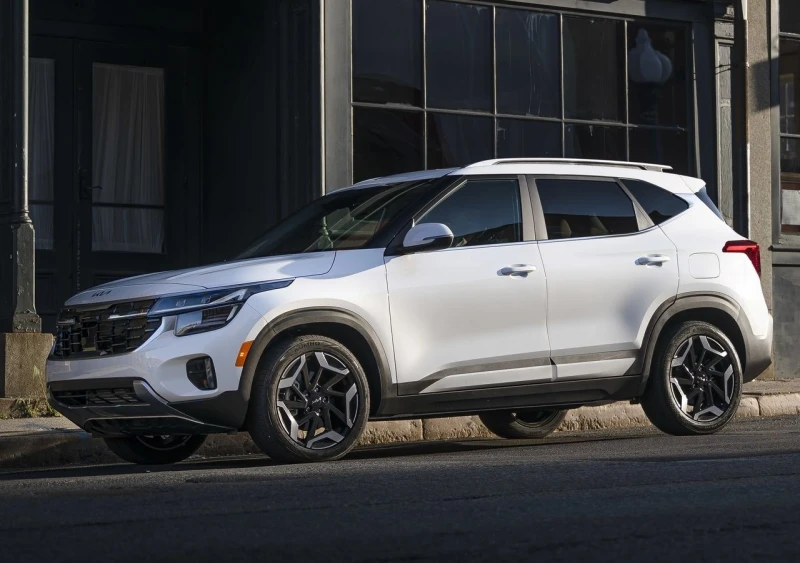
Design and interior: space is the main advantage
The U.S.-spec Seltos measures 172.0 inches long in 2021–2023 form and 172.6 inches after the 2024 update, while the 103.5-inch wheelbase remained unchanged. Passenger space is generous for the class, and the relatively upright roofline is useful for rear-seat headroom. Cargo capacity is approximately 26.6 cubic feet behind the second row and up to 62.8 cubic feet with the rear seats folded, giving the Seltos enough flexibility for luggage, sports equipment, or a longer road trip.
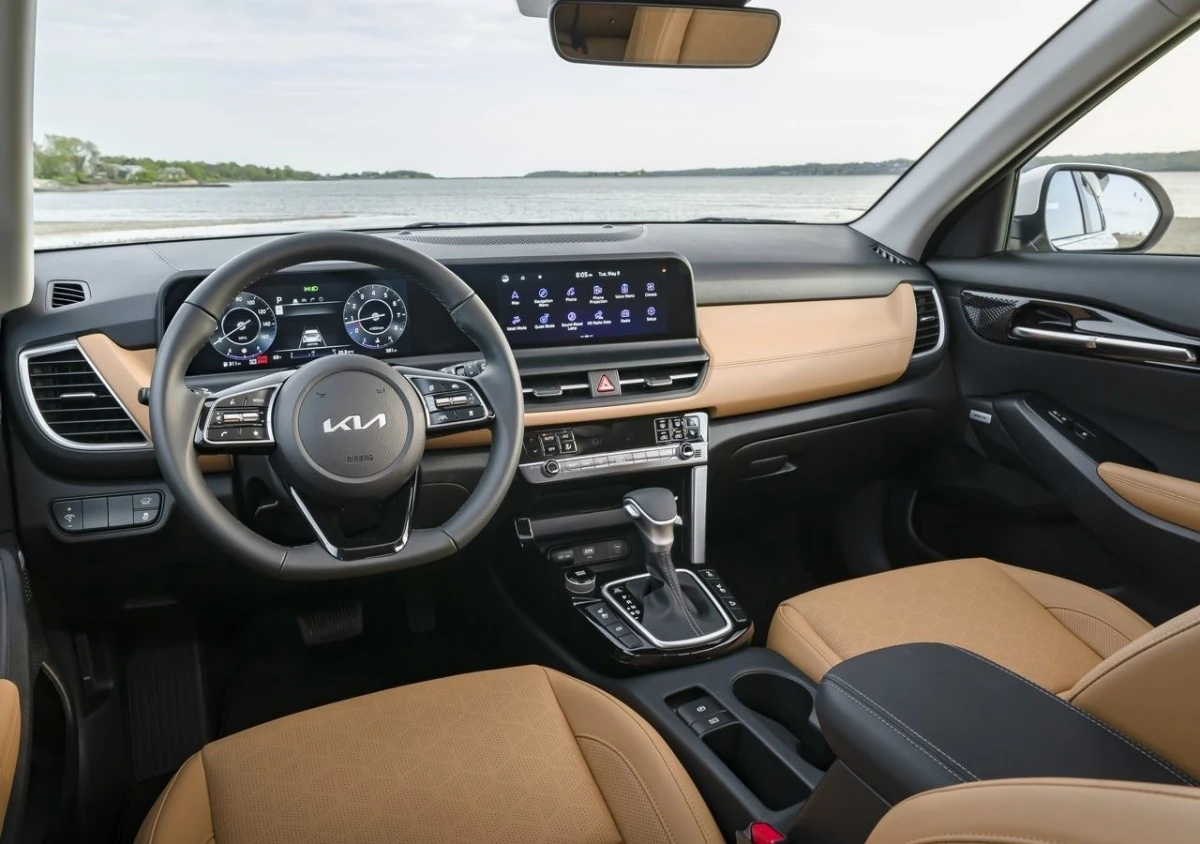
Cabin technology varies considerably by year and trim. Early vehicles used an 8-inch touchscreen on lower trims, while a 10.25-inch navigation display was available higher in the range. The 2024 refresh introduced a more integrated dashboard layout, with dual 10.25-inch displays on selected versions. Apple CarPlay and Android Auto are available, but connection type and screen specification should be confirmed for the exact model year and trim rather than assumed from the exterior.
Comfort equipment follows the same pattern. Automatic climate control, heated front seats, a sunroof, upgraded audio, and surround-view technology appear on certain configurations, not across the entire range. The best approach is to verify the original window sticker or build sheet, especially when two used vehicles carry similar dealer descriptions but differ in factory equipment.
Engines and transmissions: two distinct model-year groups
U.S. buyers received two gasoline four-cylinder engines; the diesel and manual-transmission versions sold in some other markets were not part of the American lineup.
For 2021–2023, the mainstream powertrain was a naturally aspirated 2.0-liter MPI engine rated at 146 hp and 132 lb-ft, paired with Kia's Intelligent Variable Transmission. Depending on trim and model year, it was offered with front- or all-wheel drive. This is the calmer choice, with progressive response suited to commuting and highway cruising.
The early performance option was a 1.6-liter turbocharged GDI engine producing 175 hp and 195 lb-ft. It came with a seven-speed dual-clutch transmission and AWD. For 2024, Kia raised output to 195 hp and replaced the dual-clutch unit with a conventional eight-speed automatic; this updated combination continued through 2026 on the relevant turbo trims. The change gives 2024–2026 turbo models a meaningfully different character from their 2021–2023 counterparts.
EPA fuel-economy ratings vary by year, engine, and drivetrain, but combined estimates generally range from about 26 to 31 mpg. The 2.0-liter FWD versions sit at the efficient end of that range, while turbo AWD models use more fuel. These are EPA estimates; actual consumption depends on speed, weather, traffic, tires, and driving style.

Trims and prices: a guide to the U.S. market
The first-generation Seltos covered the 2021–2026 model years in the United States. LX, S, EX, and SX are the core trim names, but the lineup changed over time: Nightfall Edition appeared for 2022–2023, X-Line replaced it for 2024–2025, and the 2026 range returned to LX, S, EX, and SX. Powertrain and drivetrain availability also shifted, so the trim badge alone does not describe every vehicle.
At the time of publication, mainstream national listings commonly place 2021–2022 examples from the mid-$10,000s to around $20,000, depending on mileage, trim, history, and region. Used 2024 vehicles generally occupy the low- to mid-$20,000 range, with low-mileage SX models often priced higher. Outliers exist at both ends, and advertised figures may exclude sales tax, registration, documentation fees, or other state- and dealer-specific charges.
Value depends more on configuration than on a single preferred trim. LX and S models cover the essentials, EX adds comfort features, and SX pairs the stronger turbo engine with more technology. Nightfall Edition and X-Line emphasize appearance and AWD capability. When comparing vehicles on Cars.com, CarGurus, or Autotrader, matching model year, engine, drivetrain, mileage, and accident history produces a more meaningful comparison than price alone.
What to check before buying
Start with the VIN, ownership history, maintenance records, and an independent pre-purchase inspection. A vehicle sold new in the United States is easier to verify than one with unclear import documentation. Confirm that the dashboard shows no warning lights, test every driver-assistance feature, and check the body and undercarriage for collision repairs or corrosion associated with road salt or coastal use.
Recall status is especially important. Certain 2021–2023 Seltos vehicles equipped with the 2.0-liter Nu MPI engine were included in NHTSA recall 25V-099 concerning piston oil rings. Some 2023–2024 vehicles with the IVT were covered by recall 23V-531 involving the Idle Stop & Go electric oil pump, while certain 2024 vehicles were included in side-curtain-airbag recall 23V-830. Applicability is VIN-specific, so buyers should use the NHTSA recall lookup and confirm that required work has been completed.
On a test drive, evaluate the transmission from a cold start, in stop-and-go traffic, and at highway speed. Early turbo models use a dual-clutch transmission, so their low-speed behavior differs from both the 2.0-liter IVT and the eight-speed automatic fitted to 2024–2026 turbo models. On AWD examples, inspect tire condition and verify that all four tires are closely matched, then review service records rather than assuming previous maintenance was completed.
The most relevant U.S. alternatives include the Hyundai Kona, Honda HR-V, Toyota Corolla Cross, Subaru Crosstrek, Chevrolet Trailblazer, and Mazda CX-30. The Seltos stands out for cargo room and the performance available from its turbo engine; competitors may offer different advantages in ride quality, standard AWD, cabin finish, or resale value. Insurance quotes, local dealer access, and remaining factory or certified pre-owned coverage should be evaluated for the individual vehicle.
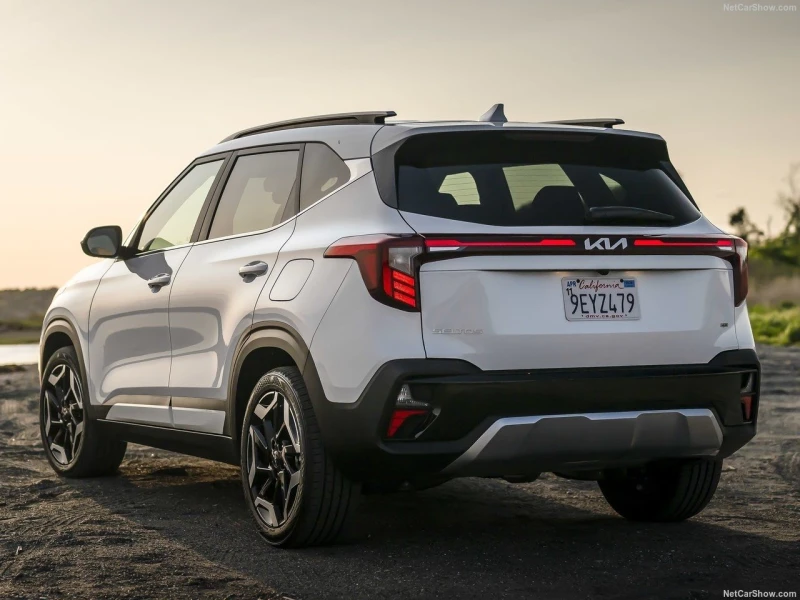
Bottom line for buyers
The first-generation Kia Seltos is a well-rounded small SUV for buyers who want useful interior space without moving up to a larger, more expensive crossover. Its U.S. lineup is straightforward once the model-year split is understood: 2021–2023 vehicles use the original engines and transmissions, while 2024–2026 models bring the refreshed design, a stronger turbo engine, and an eight-speed automatic.
Earlier 2.0-liter models can make sense as value-focused transportation when their history, condition, and recall status check out. Buyers prioritizing quicker acceleration and the updated cabin may prefer a 2024 or newer turbo model. In either case, comparing the exact drivetrain and equipment matters more than relying on the trim name alone.
Prices and availability reflect the market at the time of publication and may vary by vehicle condition, mileage, location, taxes, and dealer fees.