The automaker's leadership acknowledges that the brand's existing electric vehicles were created according to traditional principles of the automotive industry and do not fully align with the modern concept of so-called "software-defined vehicles." That is why new models will be built on a completely different architecture, where software plays a key role.
This approach should simplify vehicle updates, reduce electronics complexity, and accelerate the implementation of new features. For manufacturers, this becomes an important direction of development amid the growth of vehicles' digital capabilities.
What is a Software-Defined Vehicle
The term "software-defined vehicle" refers to a car where most functions are managed by software rather than separate hardware modules. In such a system, the vehicle essentially receives a unified digital foundation, and various functions are activated or modified through software updates.
This architecture provides manufacturers with several advantages:
- reduced vehicle design complexity
- ability to update features over the internet
- quick bug fixes and improvements to safety systems
- simplified production through equipment unification
In an ideal setup, vehicles on the assembly line have nearly identical hardware, with differences between versions determined by software.
Issues with Current Ford Electric Vehicles
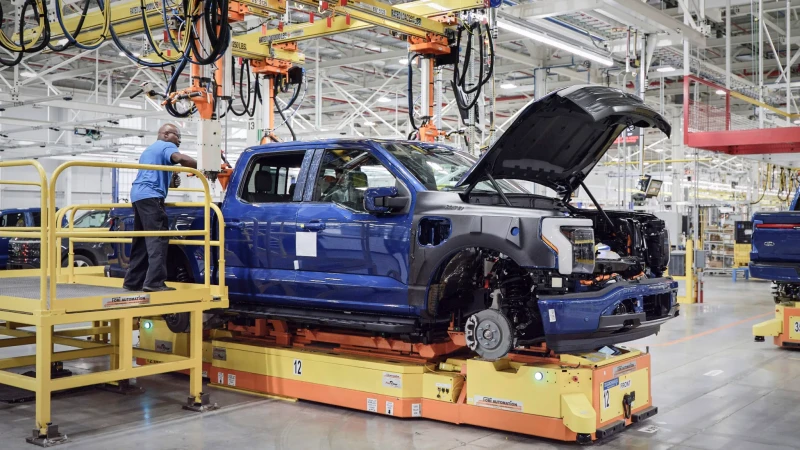
Ford's electric models, such as the F-150 Lightning and Mustang Mach-E, were developed during a period when automakers were just beginning to actively implement digital technologies. As a result, their electronic architecture consists of a large number of separate modules.
In the case of the F-150 Lightning, more than 70 electronic control units are used. Many of them are supplied by different manufacturers. For the vehicle to function correctly, all these systems must interact with each other.
Such a structure significantly complicates software development. With each major update, it is necessary to coordinate the work of numerous suppliers and their electronic components. This increases the time for implementing new features and makes the system less flexible.
New Architecture for Future Models
The next generation of Ford electric vehicles will be built on a different electronic architecture. Instead of dozens of separate modules, the plan is to use a small number of central computing units.
This system features a zonal structure. In it, the vehicle's main functions are distributed among several powerful controllers that manage different zones of the car—for example, the front section, interior, or safety system.
This approach allows:
- reduction in the number of electronic components
- simplification of software updates
- acceleration of new feature development
- decreased dependence on external suppliers
For engineers, this means more direct control over the vehicle's software platform and the ability to implement new technologies more quickly.
Summary
Ford acknowledges that the current architecture of its electric vehicles complicates the development of software features and updates. Therefore, the company is preparing a new generation of electric models with a more centralized electronic system. The transition to software-defined vehicles should simplify the design, speed up updates, and ensure more flexible development of vehicles' digital capabilities.