In Australia, they’ve come up with a new way to charge electric vehicles — and it looks less like the future and more like a backyard DIY project on steroids.
Why Charging an EV in the City Is Still a Pain
Electric cars have one huge, universal headache: where do you actually plug them in? Most Americans don’t live in houses with private garages and 240-volt outlets. They live in apartments or townhouses, parking on the street. Running a cable from your second-floor window to the curb? Technically possible, but illegal, ugly, and a trip hazard.
We’ve all seen the viral photos from Europe of extension cords dangling out of windows. It works… until it rains or someone sues the city.
The Australian “Brilliant but Bonkers” Fix
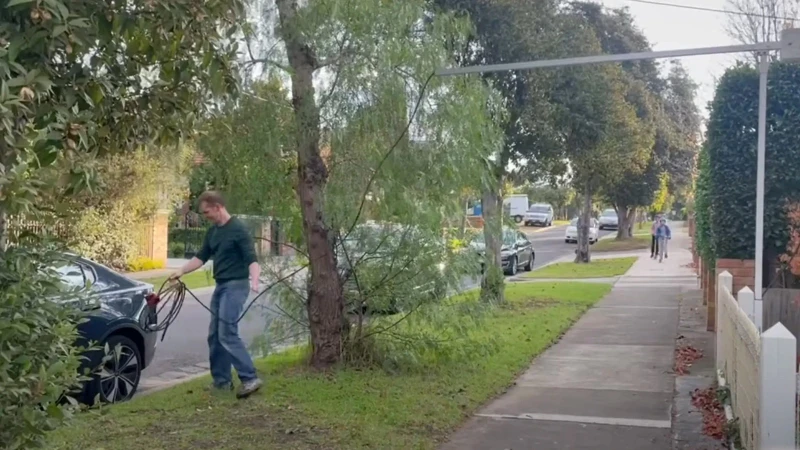
In the Melbourne suburb of Merri-bek, local officials just launched a wild pilot program. Twenty EV owners are now allowed to install 8-foot (2.5 m) retractable metal poles on the curb. The charging cable clips to the top and hangs overhead, keeping sidewalks clear and (theoretically) safe.
On paper it’s clever. In real life? Picture a quiet residential street suddenly sprouting a forest of metal poles with cables swinging in the breeze. It’s part charging station, part steampunk art installation, part “mad scientist finally snapped.”
What Locals Are Saying
The council insists no one gets reserved parking spots and that overhead is still safer than cords on the ground (which are banned anyway). Some residents love the creativity; others are already joking that the next upgrade will be zip-lines.
Australian media and social media are having a field day. One commenter summed it up perfectly: “Or… hear me out… just buy a regular gas car and fill up in five minutes?” Hard to argue with that on a windy day.
How Much Does This Circus Cost?
Exact pricing isn’t public yet, but similar curb-mounted pole systems in early trials elsewhere run $2,000–$4,000 installed — per spot. Add that to the price of a new EV (a Hyundai Ioniq 5 starts around $45,000–$52,000 depending on trim in the US market), and you’re looking at serious commitment just to juice up at home.
Approximate market price for similar overhead charging pole setups in the United States: $2,500–$5,000 per installation, depending on local permits and electrical work.
The Bottom Line
Give Australia points for creativity and getting something done fast. But this is a Band-Aid on a much bigger problem: cities still aren’t building enough proper curbside or lamp-post chargers. Until that changes, EV owners in dense neighborhoods will keep inventing Rube Goldberg solutions — and the rest of us will keep laughing (and maybe quietly sticking with premium unleaded).