


More than 40,000 vehicles worldwide require replacement of their traction batteries due to a potential risk of fire. The situation serves as another example of the challenges automakers encounter in the accelerated shift to electric powertrains.
The Nature of the Problem
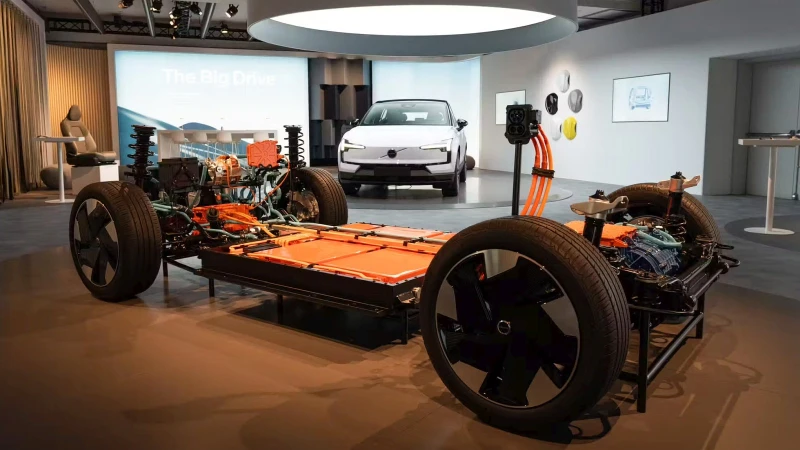
The recall stems from a defect in the battery modules. According to the company, a specific batch of batteries exhibits structural shortcomings that, in rare instances, could lead to overheating and potential fire. As the issue is hardware-based, it cannot be resolved through a software update — a full replacement of the battery pack is necessary.
In total, the recall affects 40,323 EX30 vehicles. These are cars produced during a specific manufacturing period. Battery replacement remains one of the most expensive procedures in electric vehicle maintenance, given that the battery is the model's most costly component.
Financial Impact
Reuters estimates Volvo's expenditure on the campaign at around $195 million. However, the final figure could be higher when accounting for logistics, dealer compensation, and the coordination of work across different countries.
For comparison, similar service campaigns by other manufacturers have cost hundreds of millions of dollars. Mass battery replacement involves not only the price of the modules themselves but also the labor-intensive processes of removal and installation, along with verification of cooling systems and electronics.
Restrictions for Owners
Until the replacement is completed, Volvo recommends that EX30 owners observe the following temporary precautions:
- do not charge the battery beyond 70% capacity;
- avoid parking in enclosed spaces whenever possible;
- do not leave the vehicle near other cars while charging.
These restrictions noticeably reduce ease of use. For an electric vehicle intended for urban driving, the need to monitor charge levels and parking conditions introduces an additional element of inconvenience.
Market Context
Volvo had previously expressed its commitment to expanding its electric vehicle lineup and phasing out internal combustion engines. The EX30 is one of the key models in this strategy. However, the large-scale recall has coincided with declining sales, with demand for the model showing negative trends in several European countries.
Such cases illustrate a wider industry trend. Battery manufacturing is a highly complex process that demands exceptional precision. Even small deviations can have serious consequences. At the scale of global production, the risk of defective batches reaching the market increases.
Conclusion
The recall of more than 40,000 Volvo EX30 vehicles underscores the critical importance of quality control in the electric vehicle sector. Battery replacement will represent a significant financial test for the manufacturer and may influence market perception of the model. For owners, it entails temporary restrictions and waiting for service procedures, while for the industry it serves as another reminder of the challenges inherent in the transition to fully electric mobility.