



Shift in Stellantis Strategy
In recent years, many automotive concerns have consistently reduced their lineup of large naturally aspirated engines, citing environmental requirements and a focus on electrification. However, within the Stellantis group, a management review has led to a more flexible approach. The new leadership of the North American division has prioritized the return of classic powertrains, primarily guided by market demand.
Ram 1500 Experience and Buyer Interest
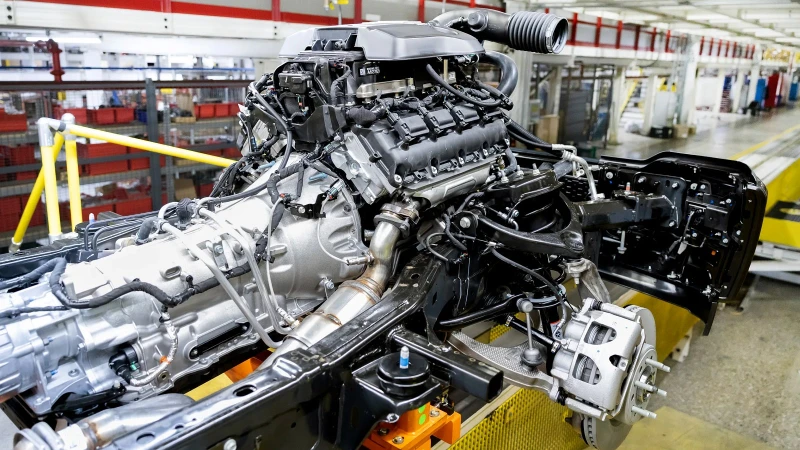
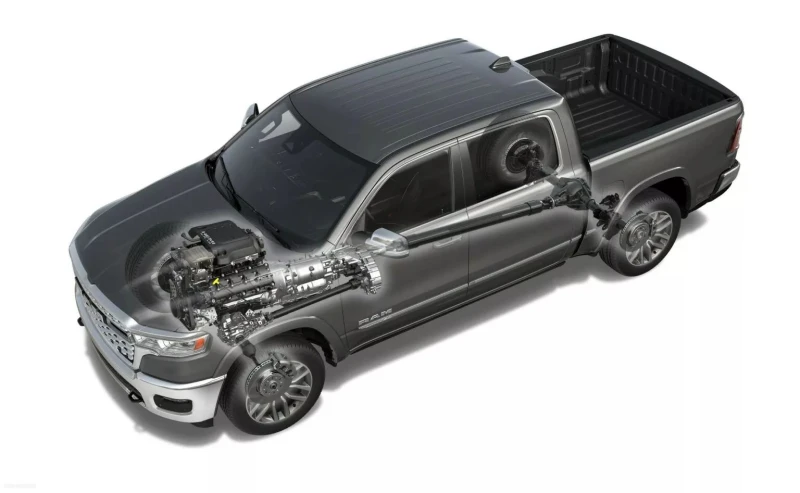
A key example is the Ram 1500 pickup, whose engine lineup has once again included a naturally aspirated 5.7-liter V8 from the Hemi family. The engine has returned without significant technical upgrades and is offered with a surcharge of about 1,400 euros compared to the base six-cylinder motor, which formally surpasses it in power and efficiency.
Despite this, in less than six months of sales, about 30% of orders were for the V8 version. This result shows that for a significant portion of customers, not only the specification characteristics matter, but also the engine's character, its sound, and familiar architecture.
Production Growth and Manufacturing Constraints
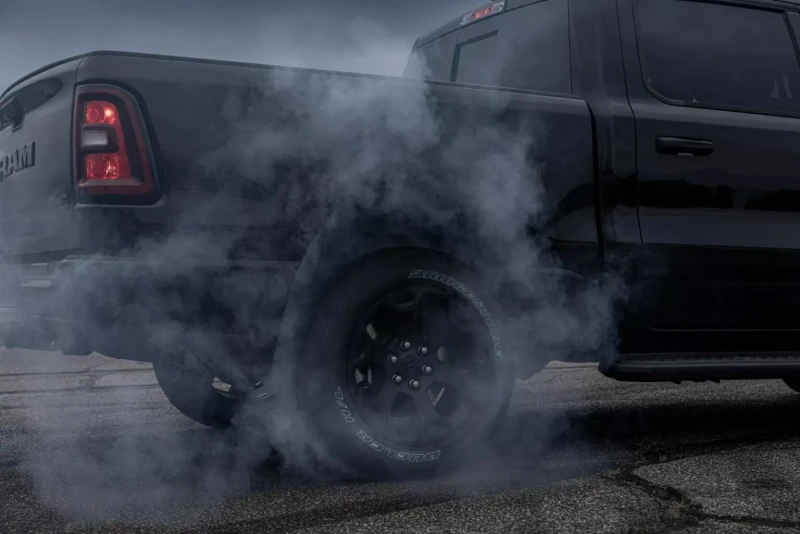
According to brand management estimates, actual demand has exceeded current capabilities. To meet it, more than 100,000 Hemi engines are planned for production in 2026, which is more than three times the volume of the previous year, when about 30,000 units were produced amid a significantly higher number of orders.
Previously, assembly of these engines was carried out at a plant in Mexico, which also produces other power units, including turbocharged 6.2-liter V8s and inline six-cylinder engines. In this regard, the concern is considering relocating or expanding production to other sites, without being tied to one location.
Broader Market Context
Interest in V8 engines is observed not only in North America. Stable sales of such engines are reported by European brands operating in the global market. This indicates that demand for large gasoline engines persists, despite a prolonged period of their reduction in model lineups.
Conclusion
The situation with the return of V8s demonstrates that market demand remains a key factor even under strict regulations. Manufacturers capable of promptly adapting their strategies to real customer expectations gain an additional competitive advantage.