Renault has introduced a new direction for its electric vehicle development in which the internal combustion engine once again assumes a key role. This approach aims to address practicality challenges and broaden the usability of electric vehicles.
Why Electric Vehicles Have Not Met Expectations
Despite strong promotion of electric mobility, its adoption encounters several limitations. High costs, limited range, and dependence on charging infrastructure remain the main obstacles to wider demand. For many drivers, a car needs to deliver predictability and convenience in daily use — qualities still more easily provided by conventional powertrains.
Moreover, a significant number of users lack regular home charging options, reducing the convenience of electric vehicles. In these conditions, the pursuit of alternative solutions becomes necessary.
New Concept: Generator Rather Than Direct Drive
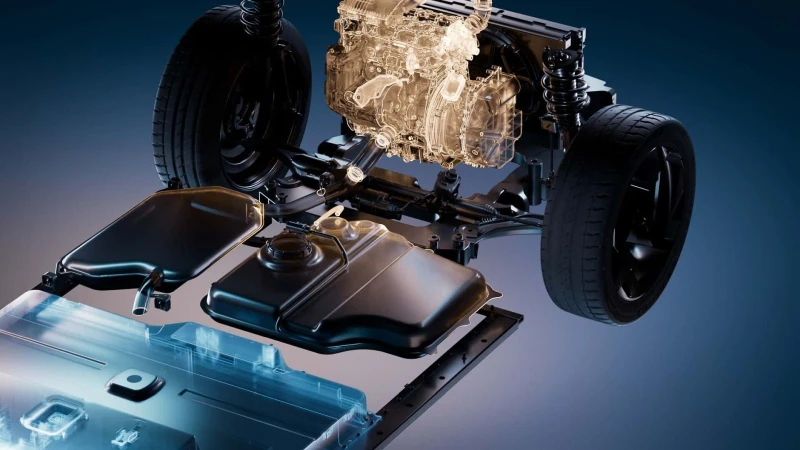
Renault proposes using the internal combustion engine not for direct propulsion but as a power source. In this configuration, a gasoline engine acts as a generator to charge the battery, while electric motors drive the wheels.
This architecture allows for significantly extended range without frequent charging stops while preserving the electric drivetrain, in line with emissions reduction targets.
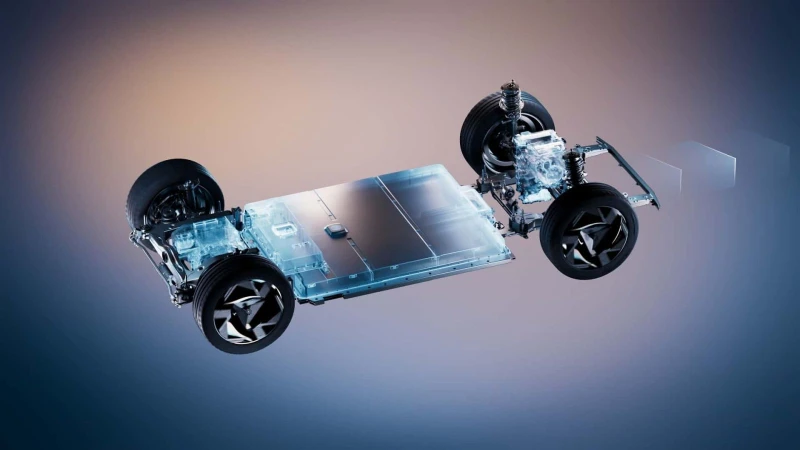
RGEV Medium 2.0 Platform
The new strategy is built around the RGEV Medium 2.0 platform. According to initial data, the fully electric variant will offer up to 750 km of range on the WLTP cycle. With the addition of an internal combustion engine generator, total range could reach approximately 1,400 km.
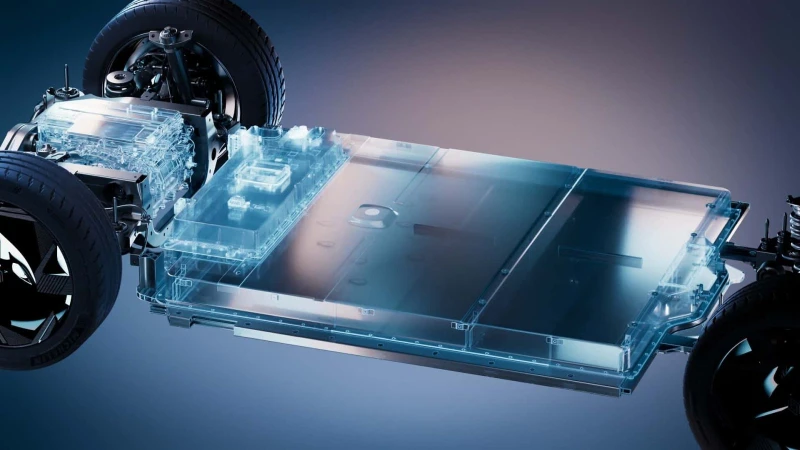
The platform utilizes an 800-volt architecture for faster charging and supports configurations with one or two electric motors.
Features and Limitations of the Technology
Despite its advantages, the new system is technically complex. Combining a battery pack, electric motors, and a gasoline generator increases vehicle mass and design complexity, potentially affecting real-world efficiency and dynamics.
In addition, manufacturer-stated energy consumption and emissions figures are based on standardized test cycles and may differ in actual driving conditions.
Future Model Plans
Renault plans to deploy the new platform across a wide range of vehicles, from compact hatchbacks to crossovers and minivans. The first production model is expected around 2028.
The company also intends to gradually replace traditional internal combustion engine models in Europe with hybrid and electric alternatives.
Conclusion
Renault’s new concept represents an attempt to adapt electric vehicles more closely to real-world requirements. Using an internal combustion engine as a generator extends range and reduces charging infrastructure dependence. The ultimate effectiveness of these solutions will depend on practical performance and market response.