


However, operating high-performance electric vehicles under extreme loads continues to raise significant questions.
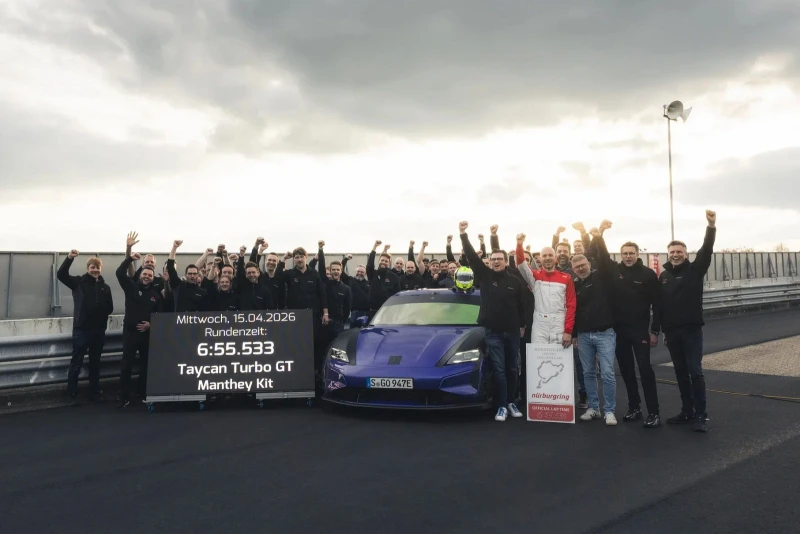
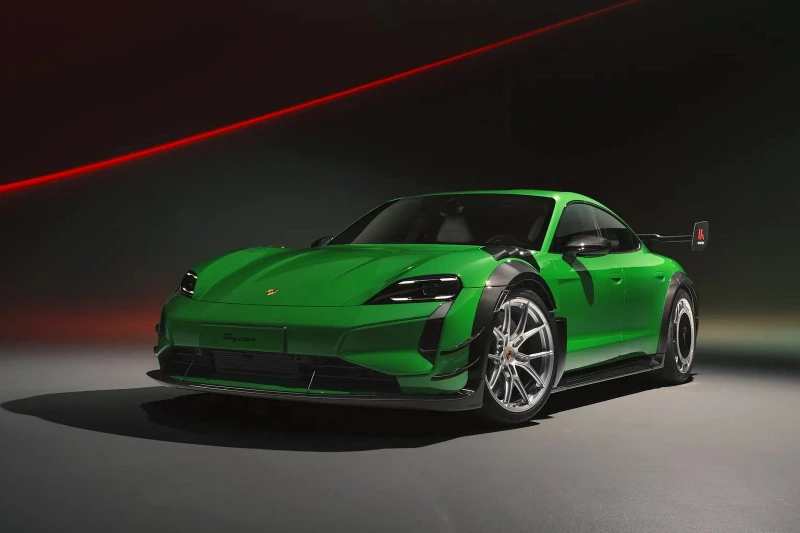
Porsche has unveiled a specialized track version of the Taycan Turbo GT featuring the Weissach package and upgrades from Manthey Racing. The vehicle received substantial modifications to its aerodynamics, suspension, and powertrain calibration. Despite these changes, the upgraded electric car was still outperformed by the lighter gasoline-powered Porsche 911 GT3 RS.
How the Taycan Turbo GT Was Upgraded
The standard Taycan Turbo GT is already one of the most powerful production Porsche models. In overboost mode, its powertrain can deliver up to 1,108 horsepower.
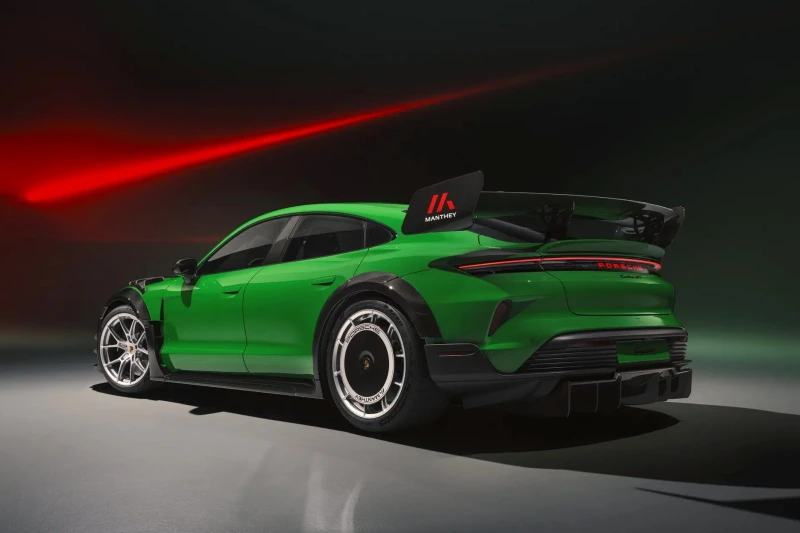
To enhance track performance, Porsche collaborated with Manthey Racing to develop an additional upgrade package. The car now features:
- a new aerodynamic body kit;
- an enlarged rear wing;
- a revised diffuser;
- lightweight forged wheels;
- semi-slick tires;
- retuned suspension;
- an upgraded braking system.
Engineers also adjusted the all-wheel-drive settings and chassis control systems. According to Porsche, downforce has increased approximately threefold compared to the standard model.
Result at the Nürburgring
Following the modifications, the Taycan Turbo GT completed a lap of the Nürburgring Nordschleife in 6 minutes 55 seconds. This is an impressive achievement for a large electric vehicle.
However, the gasoline-powered Porsche 911 GT3 RS with its naturally aspirated engine producing around 530 horsepower posts a faster time of approximately 6 minutes 49 seconds.
The 911 GT3 RS achieves this without relying on an extreme electric powertrain or the associated increase in vehicle mass.
The Primary Challenge: Energy Consumption
One of the most notable aspects was the battery performance during a fast lap. According to Porsche, the car consumed nearly half its battery charge over a single full lap of the Nürburgring.
This points to very high energy consumption when driving at the limit. Converted to standard figures, it equates to over 200 kWh per 100 km.
Such demands create multiple limitations:
- significantly reduced range;
- power derating after several quick laps;
- increased strain on the cooling system;
- higher overall vehicle mass due to the large battery pack;
- extended charging times after intensive use.
Why Vehicle Mass Remains Critical
Even modern battery technology offers significantly lower energy density than traditional fuels. Achieving substantial energy capacity requires heavy battery packs.
In high-performance electric sports cars, this results in increased overall mass. The added weight demands more powerful brakes, reinforced suspension, and larger wheels.
Consequently, engineers must balance performance, handling, and driving range.
Conclusion
The track-focused Porsche Taycan Turbo GT showcases the advanced state of modern electric vehicle technology and delivers highly competitive lap times on the race circuit.
Nevertheless, its comparison with the gasoline-powered Porsche 911 GT3 RS highlights that conventional sports cars still hold advantages in terms of weight, consistent performance, and efficiency under sustained high-load conditions.