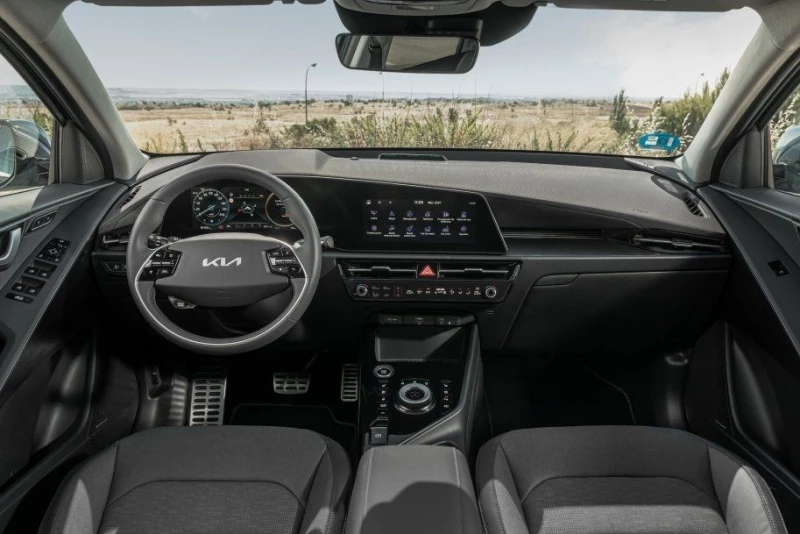
The second-generation Kia Niro (SG2) reached the United States for the 2023 model year with a cleaner, more technology-focused cabin. Its asymmetrical dashboard curves toward the front occupants, while a wide display housing gives upper versions the appearance of one continuous panel. Screen configurations vary by powertrain and trim: the dual 10.25-inch layout is standard on the Niro EV and was offered on selected versions at launch, while the Niro Hybrid combines an 8-inch or 10.25-inch center touchscreen with a 4.3-inch driver display in current U.S. specifications. The raised center console provides useful storage without making the front footwells feel cramped.
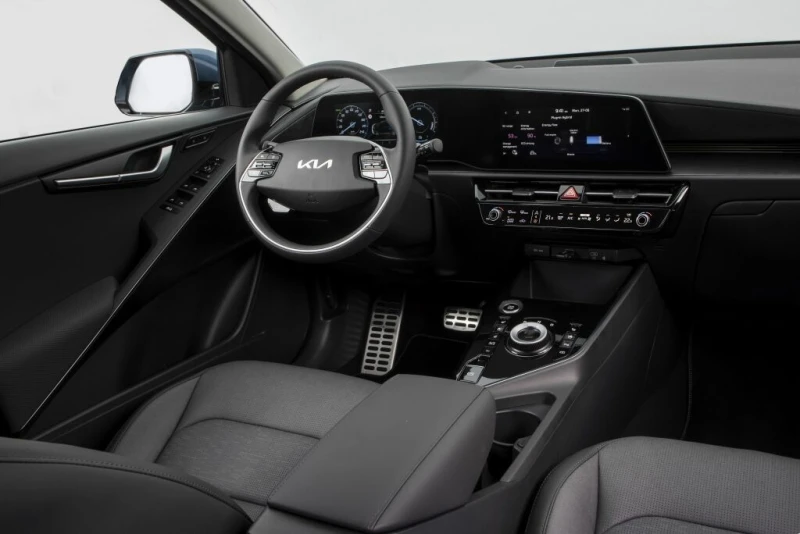
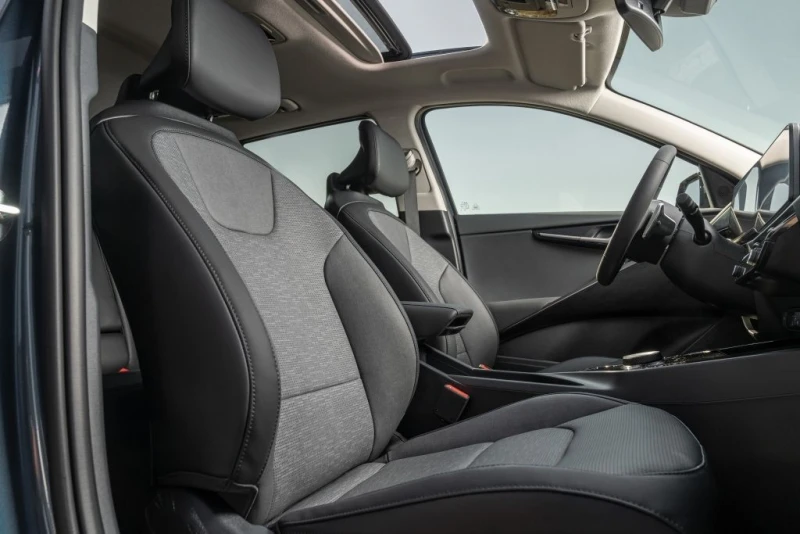
U.S.-market materials depend on trim rather than following the leather and Nappa combinations offered in some overseas markets. The range includes woven cloth, SynTex-and-cloth upholstery, and perforated SynTex on higher trims. Kia also uses recycled or lower-impact materials in several cabin components. Soft-touch surfaces appear in the main contact areas, while harder plastics remain visible lower on the doors and dashboard. Gloss-black trim adds contrast but shows dust, fingerprints, and fine scratches easily.
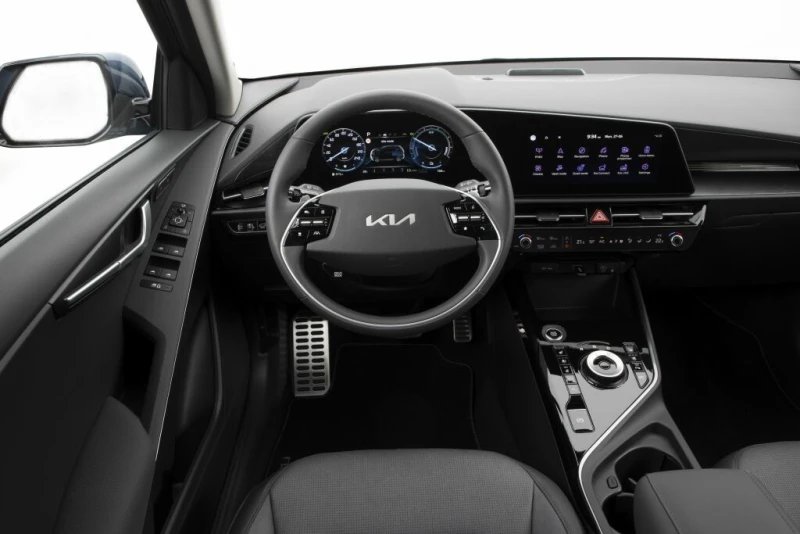
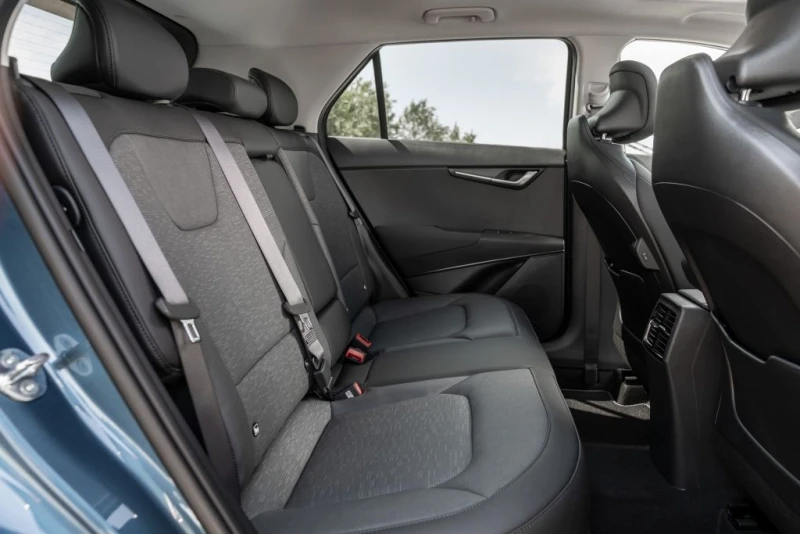
The driving position is straightforward, with good steering-wheel adjustment and clearly grouped controls. Entry trims use manually adjusted seats, while higher versions add a power driver's seat, lumbar adjustment, heating, ventilation, and memory depending on the trim and powertrain. Passenger space is a major strength for a small electrified crossover: the current Niro Hybrid lists 41.5 inches of front legroom and 39.8 inches in the rear. The relatively low center floor also makes the middle rear position more usable than in many compact crossovers, although three adults will still find the bench tight on longer trips.
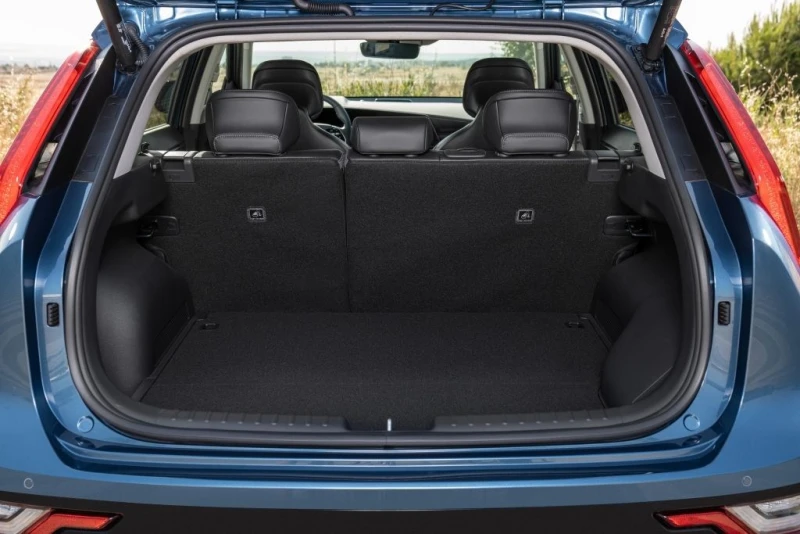
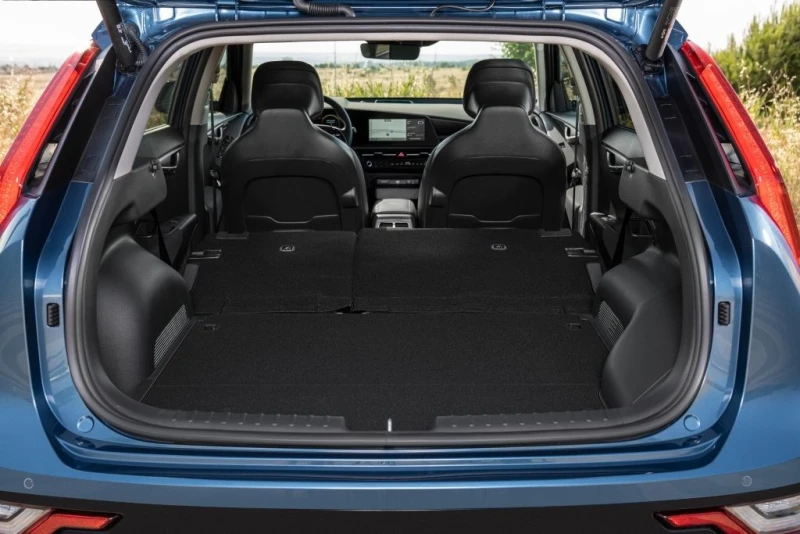
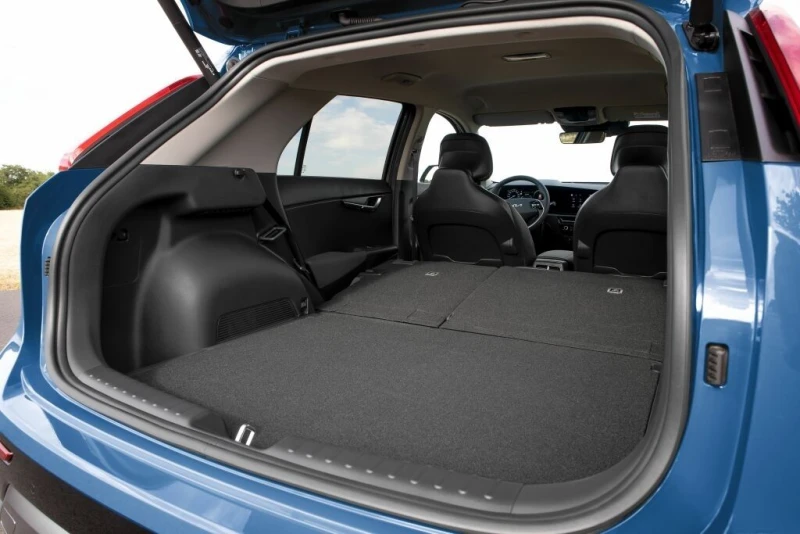
For the U.S.-spec Niro Hybrid, Kia lists 22.8 cubic feet of cargo space behind the rear seats and 63.7 cubic feet with the 60/40-split seatbacks folded. Cargo capacity and underfloor storage can vary among HEV, PHEV, and EV versions because their batteries and charging hardware are packaged differently. Practical details include front and rear USB ports, available wireless phone charging, seatback-mounted charging ports, cupholders, small-item bins, and an available dual-level cargo floor. The load opening is wide, although the raised floor and sloping rear roofline limit space for especially tall objects.
U.S. powertrains and trim levels
The SG2 Niro has been sold in the United States as a conventional hybrid, a plug-in hybrid, and a battery-electric model. Trim names and equipment differ by powertrain and model year, so imported-market labels such as Prestige, GT-Line, Premium, and X-Line do not describe the official U.S. lineup.
| U.S. version | Typical upholstery | Displays and media | Climate and comfort | Driver assistance | Market notes |
|---|---|---|---|---|---|
| Niro Hybrid LX / EX | Woven cloth on LX; SynTex-and-cloth on EX | 8-inch touchscreen on LX; 10.25-inch navigation touchscreen on EX; 4.3-inch driver display | Dual-zone automatic climate control; EX adds heated front seats, a power driver's seat, and wireless phone charging | Core Kia driver-assistance systems are standard; EX adds more convenience features | Core U.S. HEV trims from the 2023 launch onward |
| Niro Hybrid SX / SX Touring and Niro PHEV EX / SX Touring | Perforated SynTex or SynTex-and-cloth, depending on version | 10.25-inch navigation touchscreen; Harman Kardon audio on selected upper trims | Available ventilation, driver's-seat memory, heated steering wheel, sunroof, and power liftgate | Available navigation-based cruise control, Highway Driving Assist, parking sensors, and additional collision-avoidance functions | PHEV equipment and availability vary by model year; verify the exact vehicle by VIN or window sticker |
| Niro EV Wind / Wave | SynTex-and-cloth on Wind; perforated SynTex on Wave | Dual 10.25-inch displays; Wave adds a head-up display and Harman Kardon audio | Heated front seats on Wind; Wave adds ventilated front seats, front power seats, driver's memory, and a heated steering wheel | Highway Driving Assist and a broad suite of standard driver-assistance features | Official U.S. EV trims; equipment packages can add a heat pump and heated rear outboard seats |
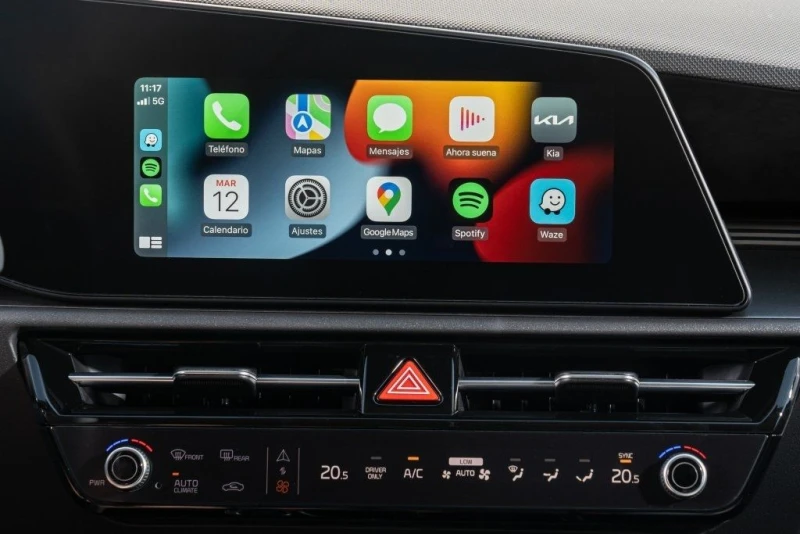
Every U.S.-market SG2 Niro is front-wheel drive. The HEV and PHEV use a six-speed dual-clutch automatic transmission, while the EV uses a single-speed reduction gear. Apple CarPlay and Android Auto are standard, but wired versus wireless operation varies by powertrain, infotainment unit, and model year; a 10.25-inch screen should not automatically be assumed to support wireless projection. A multi-link rear suspension is used across the U.S. range.
Interior changes by model year
The second-generation cabin has not received a major U.S. redesign through the 2026 model year. Most changes have involved trim availability, standard equipment, and small feature revisions rather than a new dashboard.
- 2023 — U.S. launch of the SG2 generation with HEV, PHEV, and EV powertrains; available dual 10.25-inch displays, ambient lighting, heated and ventilated seats, and a head-up display
- 2024 — largely carried over, with color and equipment adjustments depending on powertrain and trim
- 2025 — rear seatbelt pretensioners became standard across the range; the PHEV SX Touring gained its Cold Weather Package as standard equipment
- 2026 — the Hybrid lineup consists of LX, EX, SX, and SX Touring, while the EV continues in Wind and Wave trims; the basic cabin architecture remains unchanged
Because Kia changed feature packaging between trims and years, the VIN-specific window sticker is more reliable than a generic online listing. This is especially important for the sunroof, Harman Kardon audio, heated rear seats, heat pump, head-up display, and smartphone-projection connection type.
Common cabin concerns and inspection points
Rather than treating every Niro as identical, used-car shoppers should check the exact interior condition and equipment operation. The most relevant points include:
- Light-colored cloth and SynTex can show dye transfer, staining, and creasing more readily than darker trim
- Gloss-black panels collect fingerprints and may develop fine scratches from routine cleaning
- The combined touch-sensitive audio and climate-control strip takes more attention to use than conventional dedicated buttons
- Road and tire noise can become noticeable on coarse pavement, especially with larger wheels; this varies with tire brand and condition
- Rearward visibility is restricted by the thick rear pillars, making the rearview camera and available parking sensors useful
- Infotainment, Kia Connect functions, phone pairing, and charging ports should all be tested because equipment and software differ by model year
In hot or cold U.S. climates, inspect the seat surfaces, climate-control system, heated and ventilated seats, steering-wheel heater, and sunroof drains where fitted. Any odor, damp carpet, water staining, or inconsistent HVAC output deserves further investigation before purchase.
Verdict: how well has the cabin aged?
As of 2026, the Kia Niro II still offers a spacious and well-organized interior for a compact electrified crossover. Its strongest points are rear-seat room, useful cargo capacity, straightforward ergonomics, and a broad spread of comfort and driver-assistance technology. The main limitation is that the dashboard looks more uniform across the range than the actual hardware is: entry Hybrids do not receive the same dual-screen setup as the EV.
For many U.S. buyers, the Hybrid EX is the balanced choice because it adds the 10.25-inch navigation screen, heated front seats, a power driver's seat, rear air vents, and wireless phone charging without requiring the highest trim. The SX and SX Touring add more premium comfort, while the EV Wind already includes the dual-screen layout and the Wave concentrates most of the luxury features. On a used vehicle, condition, service history, battery and charging-system checks where applicable, and VIN-specific equipment matter more than the trim badge alone.
Before buying a used second-generation Niro, check:
- seat bolsters, light upholstery, stitching, stains, and unusual wear
- the operation and brightness of every display, camera, switch, and driver-assistance warning
- Apple CarPlay, Android Auto, Bluetooth, Kia Connect, USB ports, and the wireless charging pad
- heated and ventilated seats, climate control, and the heated steering wheel where equipped
- the sunroof, headliner, door seals, carpet, and cargo well for signs of water intrusion
The SG2 Niro's cabin remains one of the model's main selling points in the United States, but accurate trim identification is essential because Hybrid, Plug-in Hybrid, and EV versions do not share the same displays or comfort equipment.