On the US market the model remains highly relevant in both new-vehicle sales and the used-car segment, with strong emphasis on ergonomics, build quality, and available technology. Below is a close look at the Mazda CX-5 II interior highlights, typical trim configurations, design evolution over the years, and real-world owner impressions drawn from 2026 owner feedback and marketplace data.
Overall Cabin Overview
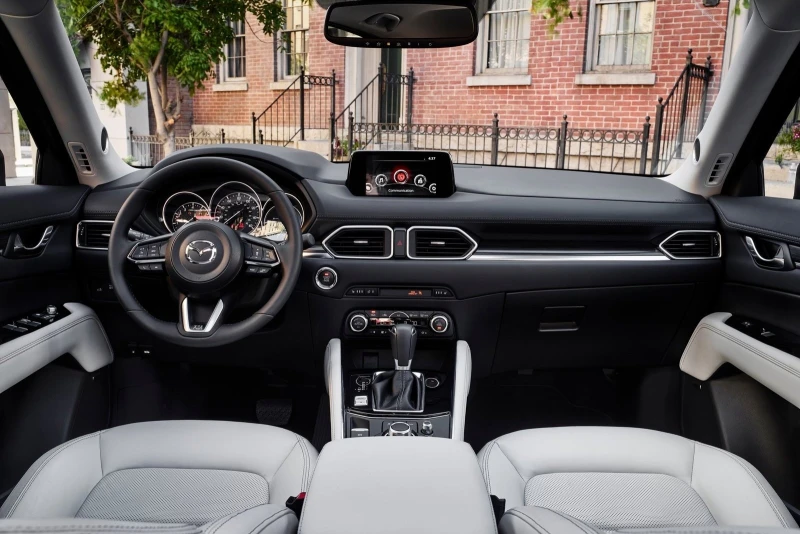
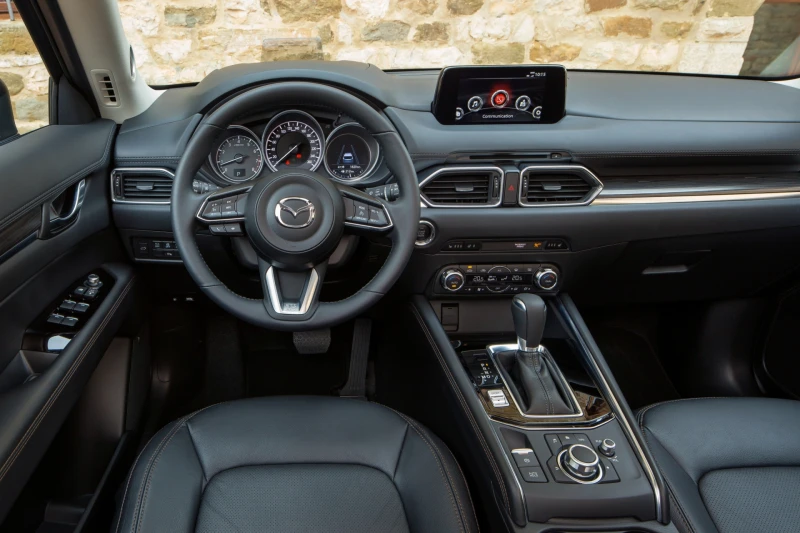
The Mazda CX-5 II interior is built around the brand’s "driver-oriented" philosophy and features clean, minimalist design. The dashboard uses a horizontal layout with flowing lines: the upper section houses air vents and the main display, while the lower portion contains climate and infotainment controls. Materials mix soft-touch plastics and leather — entry-level trims feature cloth upholstery with some hard plastics, while higher grades offer Nappa leather with contrast stitching and aluminum trim pieces. Perceived quality is excellent — tight assembly tolerances, minimal rattles, and upscale-feeling textures that avoid cheap shiny finishes, a point frequently praised in long-term owner reviews.
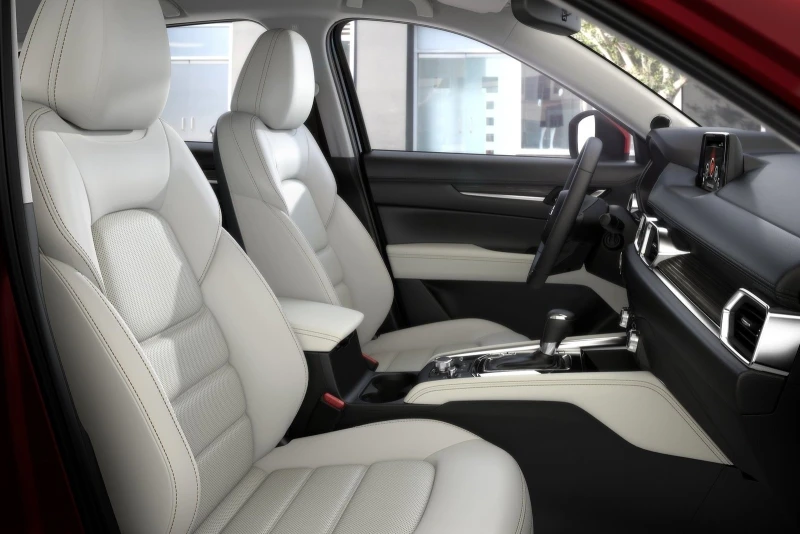
The instrument cluster blends analog gauges with a 7–10.25-inch digital display (standard from 2021 onward), with the speedometer placed centrally for best readability. The center console’s rotary Mazda Connect controller remains intuitive and refreshingly button-light. Driver ergonomics are a strong point: tilt-and-telescopic steering wheel, power-adjustable front seats with memory function in Signature models, logically positioned pedals, and excellent long-distance comfort on highways.
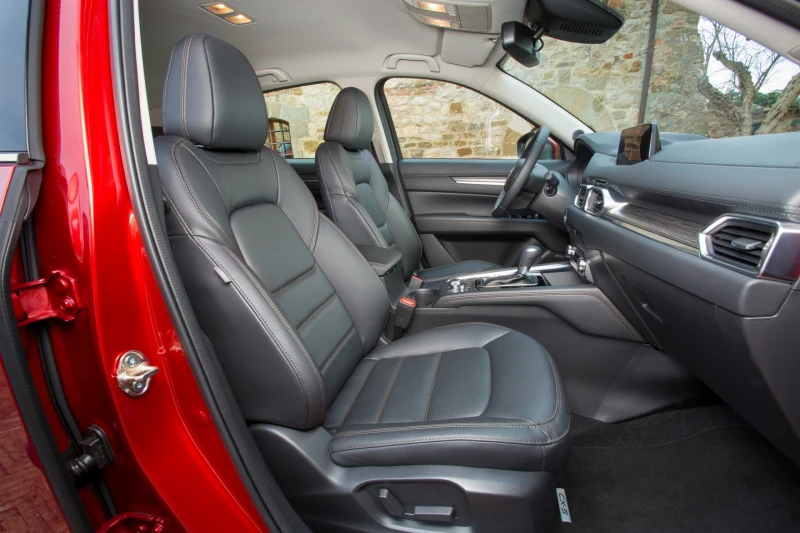
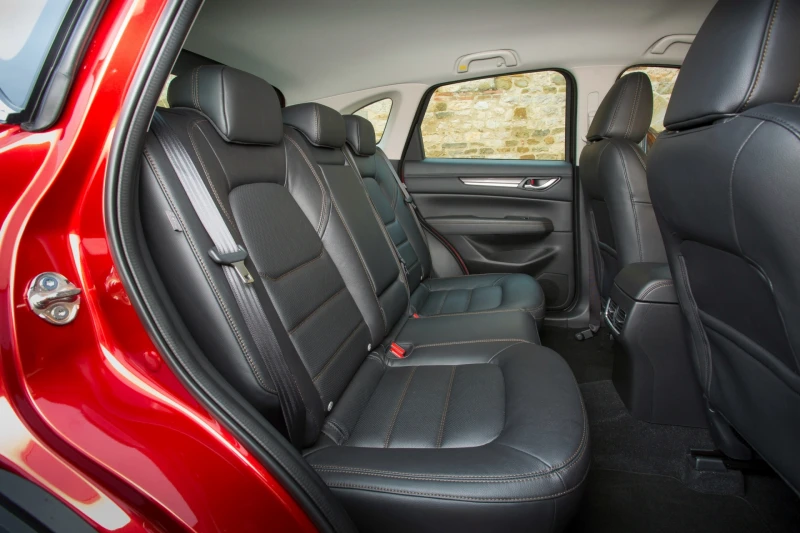
Front-seat occupants enjoy good bolstering and generous space — approximately 41 inches of legroom and 57 inches of shoulder room. The rear bench seats three adults reasonably well: roughly 39 inches of legroom and 55 inches of headroom, although the center position is narrower and firmer due to the driveline tunnel. Extreme US temperature variations (from below-freezing winters in many states to scorching summers) make the available heated (and in some cases ventilated) seats especially valuable. Forward visibility is very good, though thick rear pillars do restrict over-the-shoulder views.
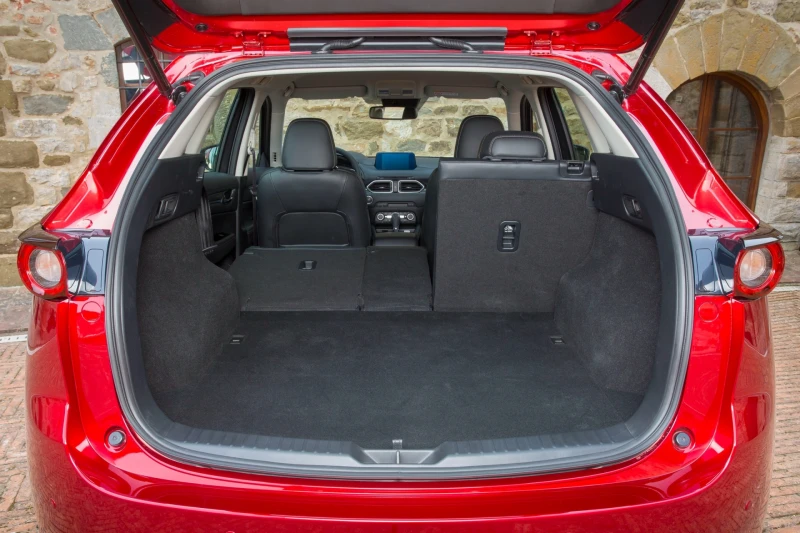
Cargo capacity stands at 30.8 cubic feet behind the rear seats (to the cargo cover) and expands to 59.3 cubic feet with the 40:20:40 split-folding rear seats down, creating a nearly flat load floor and low liftover height. Everyday usability is strong — tie-down hooks, cargo nets in higher trims, and a space-saver spare underneath. Storage for small items, multiple USB ports, and cupholders are plentiful, though the lack of standard wireless charging in earlier models feels dated by 2026 standards.
Trim Levels & Features on the US Market
According to recent 2026 used-market and new-vehicle data, the most common Mazda CX-5 II configurations in the United States favor all-wheel drive and higher-content trims:
| Trim Level | Typical Years | Interior Materials | Infotainment | Climate Control | Key Features |
| Sport / Touring | 2017–2023 | Cloth, soft-touch plastics | 7" Mazda Connect, Apple CarPlay & Android Auto | Single-zone | Adaptive cruise control, heated front seats, rearview camera |
| Grand Touring / Carbon Edition | 2019–present | Leatherette / leather, wood-look accents | 10.25" screen (from 2021), available Bose audio | Dual-zone automatic | 360° camera, heated steering wheel & rear seats, blind-spot monitoring, 19" wheels |
| Signature / Turbo Signature | 2021–present | Nappa leather, suede inserts | 10.25" screen + head-up display | Dual-zone automatic | Matrix LED headlights, panoramic sunroof, adaptive suspension (select models), traffic-sign recognition |
AWD models with the full suite of i-Activsense safety features (forward-collision warning, lane-keep assist, etc.) and heated elements dominate the market due to varied US weather conditions. Panoramic sunroofs appear mostly in Signature trims and are less common due to added cost. Wireless Apple CarPlay and Android Auto became standard after 2019. Ventilated front seats are usually part of optional packages on mid- and upper-level trims.
Interior Evolution & 2021 Refresh
Over its production run the CX-5 II cabin has seen steady improvements. Early 2017–2019 models launched with a 7-inch screen, leather in higher trims, and conventional analog gauges; sound insulation was decent with laminated front glass on most versions. By 2020, head-up display became available on top trims and new interior color schemes (such as Polymetal Gray) appeared.
The significant 2021 refresh brought a revised center console with capacitive climate controls, a larger 10.25-inch infotainment screen with sharper graphics, a fully digital instrument cluster on most trims, and noticeably improved sound deadening (extra insulation in wheel wells and acoustic glass). Materials also moved upscale with more extensive Nappa leather usage and new carbon-look or open-pore wood accents. These updates reduced cabin noise by an estimated 10–15% and made touch interfaces more responsive.
From 2022 through 2026 minor refinements continued — wireless phone charging became more widely available, Mazda Connect software received updates, and small fit-and-finish improvements were made. The current digital gauge cluster and 10.25-inch screen remain modern; pre-2021 models with the smaller 7-inch display now feel dated. Post-2021 cabins consistently receive the highest praise for refinement and contemporary feel.
Common Owner Comments & Known Issues
2026 owner reviews and forum discussions highlight the following points about living with the CX-5 interior in real-world US conditions:
- Material durability: Nappa leather holds up well overall but can fade noticeably after 4–5 years of intense sun exposure; lighter cloth seats in base models show dirt easily on dusty roads;
- Weak points: rotary controller can develop play with heavy use; plastic trim around the screen is prone to scratches;
- Noise & rattles: early 2017–2019 models sometimes develop door-panel creaks on rough pavement; post-2021 examples are significantly quieter, though tire roar remains audible on concrete highways;
- Rear-seat comfort: good space for adults, but the high floor can cause fatigue on long trips; rear heated seats are appreciated in colder states;
- Visibility: thick rear pillars create blind spots — the available 360° camera (higher trims) helps, though the lenses can get dirty in wet weather;
- Maintenance notes: light interior colors (especially beige) show road salt and stains more readily; many used examples show evidence of heavy family use or previous smoking.
Rough roads in some regions, winter salt, and skipped maintenance accelerate wear. Roughly 60% of 2017–2020 examples on the used market show at least minor rattles, while later post-refresh models tend to age more gracefully.
Final Thoughts & Buying Advice
As of 2026 the Mazda CX-5 II interior remains very competitive in its class. The digital instrument cluster, large 10.25-inch screen, and high-quality materials meet or exceed expectations for the segment, even if early 7-inch displays now feel behind the curve. The cabin continues to set a high standard for ergonomics and driver engagement.
For the best balance of modern features and value, target post-2021 Grand Touring or Signature models — dual-zone climate, available Bose audio, comprehensive driver assists, and significantly better noise control. The Signature trim justifies its higher price if you want the panoramic roof, head-up display, and most luxurious materials (typically $3,000–$5,000 more than equivalent lower trims). For new purchases current models are still fresh; on the used market focus on 2022+ examples with low mileage and clean service history.
When shopping new or used, carefully inspect:
- Condition of leather/cloth (fading, stains, cracking);
- Infotainment operation (software version, rotary controller feel);
- Road noise levels (test drive on highway);
- Function of all heated/ventilated seats and climate zones;
- Signs of heavy use (family wear, previous smoking, pet hair).
The KF-generation CX-5 interior remains one of the most appealing and practical choices in the compact crossover segment for the US market in 2026 — especially post-refresh versions.