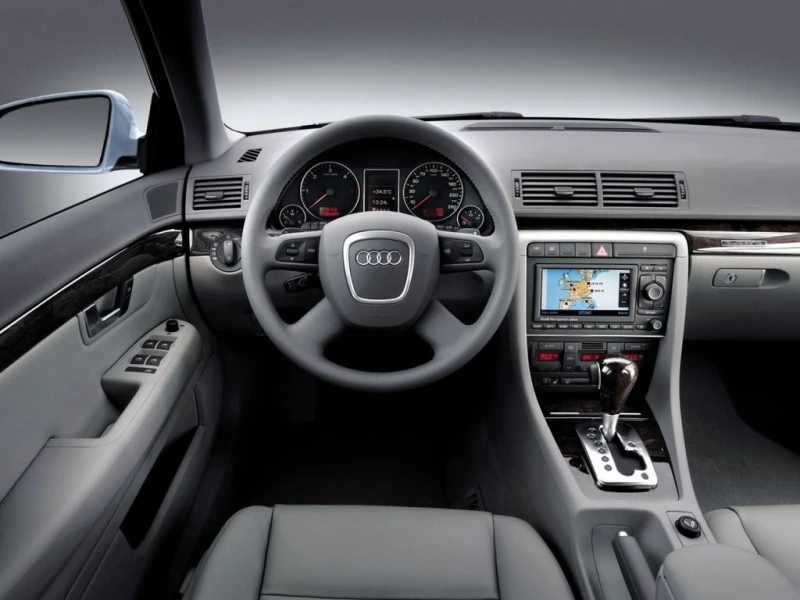
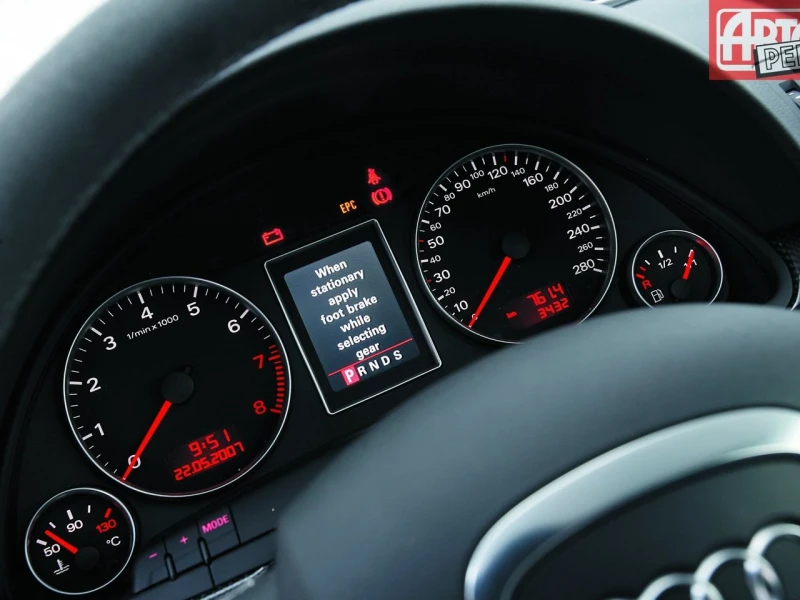
The Audi A4 III interior from the third generation (Typ B7) remains a textbook example of early-2000s premium design, blending high-quality materials, excellent ergonomics, and everyday practicality. The cabin of the 2004–2009 Audi A4 was engineered for long-term comfort and durability, keeping it relevant on the American used-car market even in 2026. Trim materials feature soft-touch plastics on the dashboard, aluminum or genuine wood inlays (depending on package), and leather or high-grade cloth upholstery. The instrument panel is clean and driver-focused: classic analog gauges with red backlighting, a multi-info display in the center cluster, and a center console angled toward the driver that houses climate controls and the audio head unit (with optional MMI interface).
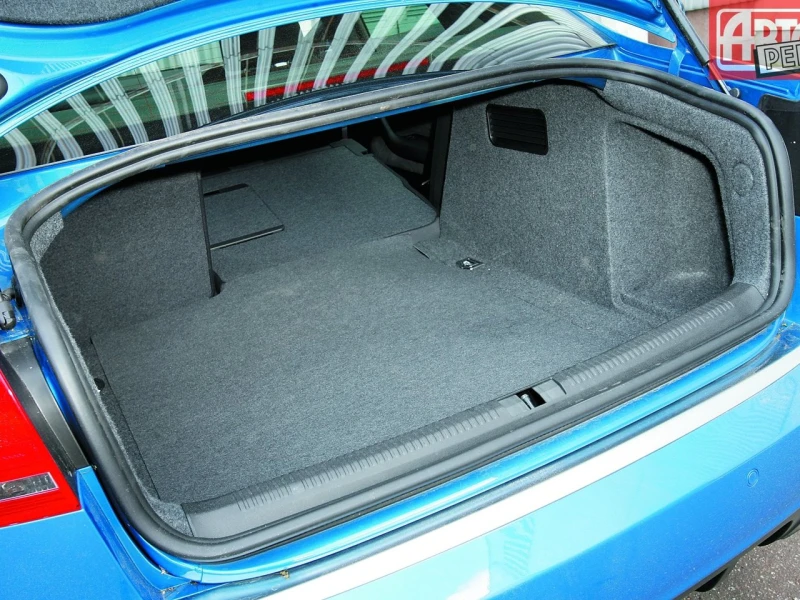
Seating comfort stands out — the driver's seat offers strong side bolstering, height adjustment, and lumbar support on higher trims. Front passengers enjoy generous room, while the rear seat accommodates two adults comfortably (wheelbase 2648 mm / 104.3 in), though a third passenger will feel the prominent center tunnel. Audi A4 2004–2009 cabin provides respectable sound insulation, especially in gasoline models. Trunk space: 460–833 liters (16.2–29.4 cu ft) in the sedan with seats folded, and 442–1184 liters (15.6–41.8 cu ft) in the Avant wagon. The 60/40 split-folding rear seat is practical, creating a nearly flat load floor and often including a ski pass-through. Storage is thoughtful: multiple bins, cupholders, and armrest compartments. Overall, the Audi A4 interior delivers understated premium quality suited for daily driving in American conditions.
Trim Levels & Packages: What's Included
On the US used market, Audi A4 III interiors vary mainly across European-sourced Base, Ambition, Ambiente, and occasional S line examples (as well as US-spec packages). Base models come with cloth upholstery, manual air conditioning, a basic 8-speaker audio system, and manual seat adjustments. Materials remain upscale — soft plastics and aluminum accents.
Ambition (sport-oriented): sport seats in cloth/leather combination, leather-wrapped multifunction steering wheel, automatic climate control, cruise control. Multimedia often includes CD changer and optional Bluetooth. Ambiente (comfort-focused): leather seats, heated front seats, parking sensors, enhanced sound deadening, optional panoramic sunroof. Safety assists are basic — ESP standard, no advanced driver aids.
Top-tier S line: Alcantara/leather upholstery, sport steering wheel and pedals, premium Bose audio, bi-xenon headlights, MMI navigation. In the US, versions with heated seats and dual-zone climate remain desirable due to varied weather. Approximate used market prices in 2026: entry-level examples $4,000–$6,500, well-equipped or S line examples $7,000–$10,000.
| Trim Level | Key Interior Features | Notable Options |
| Base | Cloth seats, manual A/C, basic audio | Aluminum trim |
| Ambition (Sport) | Sport seats, auto climate, multifunction wheel | Cruise control, Bluetooth |
| Ambiente (Comfort) | Leather, heated seats, parking sensors | Panoramic sunroof |
| S line (Top) | Alcantara/leather, premium audio, MMI | Navigation, advanced features |
Year-to-Year Changes Within the Generation
The B7 A4 was essentially a heavily revised B6, with notable updates starting 2004–2005: redesigned instrument cluster with color multi-info display, softer dashboard plastics, and new options such as the solar-powered ventilation panoramic sunroof. By 2007, Special Edition models appeared featuring cabin colors and trim inspired by the Cabriolet — expanded beige and gray leather choices plus better door soundproofing.
Later models (post-2005) benefit from improved MMI ergonomics and reduced interior rattles. On the US market, 2007–2009 examples are preferred for these refinements, offering better long-distance comfort on highways.
Common Questions & Interior Drawbacks
On the American used market, typical issues with aging Audi A4 III cabins stem from mileage and climate exposure. Light-colored leather or cloth stains easily from road salt or spills and needs regular care (professional cleaning recommended 1–2 times per year). Wear items: steering wheel and seats show shine or bolstering collapse past 120,000–150,000 miles; center console plastics scratch readily. Noises: door panels and dash creaks from road vibrations, moderate wheel-arch insulation.
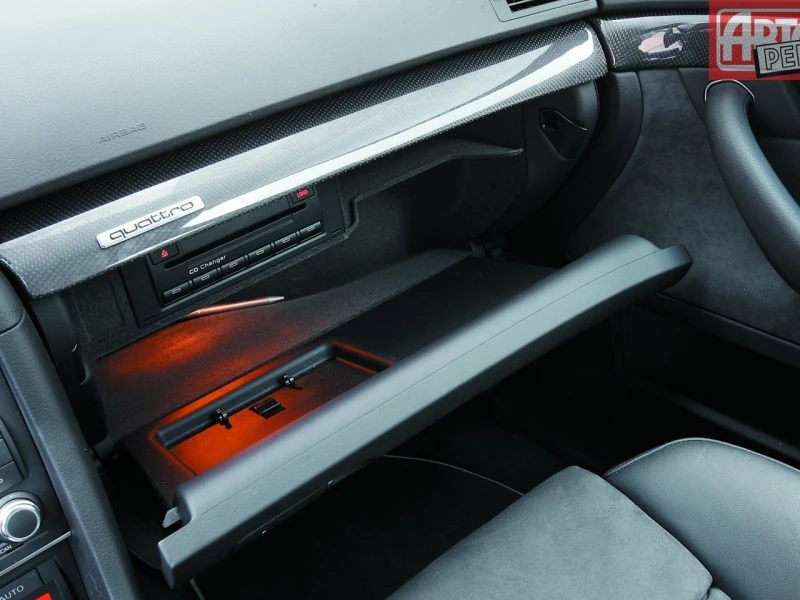
Rear seating remains snug for three adults due to the tunnel. Visibility: thick pillars and relatively small mirrors. In US weather extremes (cold winters, hot summers), A/C components wear out and interior surfaces can fade. Other known issues: sunroof leaks leading to dampness or mold, failing glovebox latches, and armrest hinge wear. When shopping used, always inspect for accident damage — misaligned panels, musty odors — and perform full electronics diagnostics.
Bottom Line: How the Cabin Holds Up Today & Best Trim Choice
In 2026 the Audi A4 2004–2009 cabin still feels classically premium, though clearly dated next to touch-heavy modern designs. The sweet spot for most US buyers is an Ambiente-spec model with leather, dual-zone climate, and heated seats: excellent comfort-to-price balance (roughly $5,500–$8,500) and reasonable running costs.
When shopping, prioritize condition of upholstery (wear, stains, cracks), fully functioning infotainment, no lingering odors, and healthy electrics. A pre-purchase inspection is essential. The Audi A4 III interior remains a compelling choice for anyone who appreciates timeless premium execution in the compact executive segment.