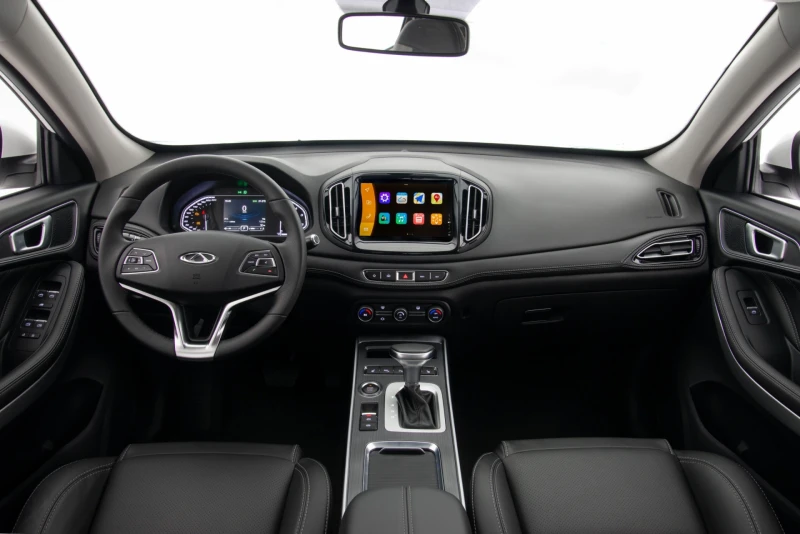
The Chery Tiggo 7 / 7 Plus / 7 Pro / Pro Max I interior is designed around the everyday needs of a compact crossover. The cabin of the 2016–present Chery Tiggo 7 / 7 Plus / 7 Pro / Pro Max varies by model year and export market, particularly in materials and equipment. Below is a detailed interior review adapted for U.S. buyers and ownership conditions as of 2026.
Cabin overview
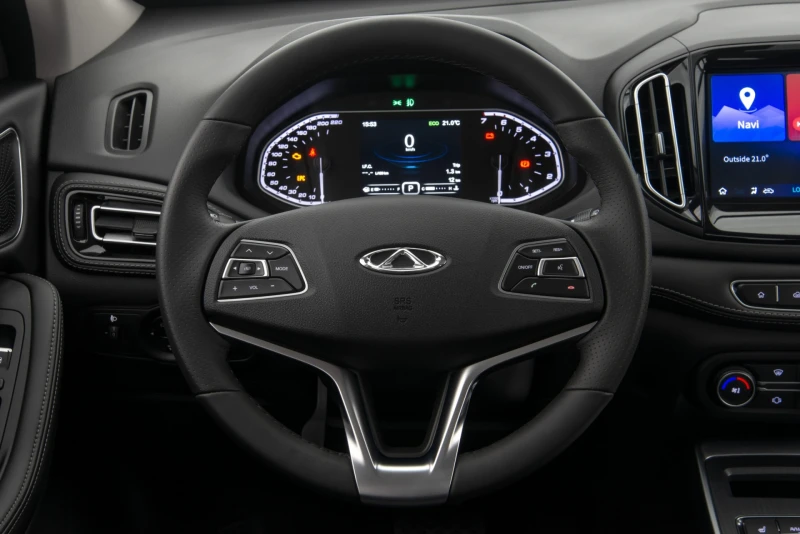
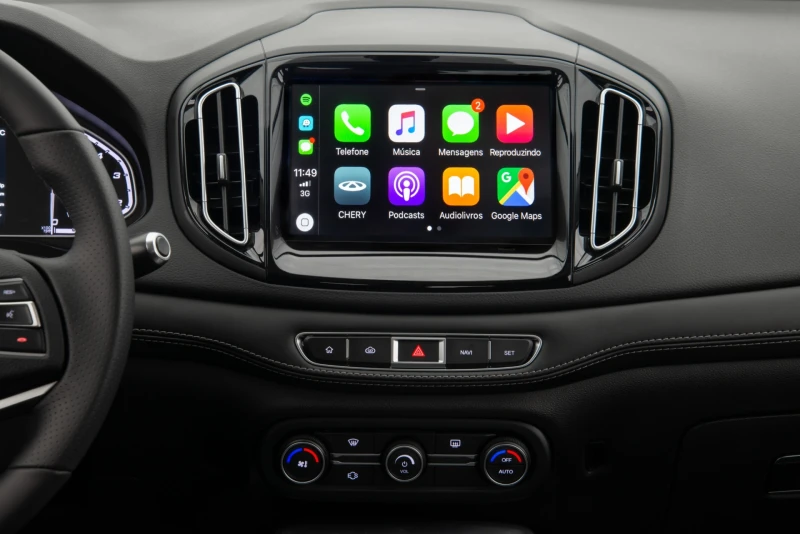
The Chery Tiggo 7 / 7 Plus / 7 Pro / Pro Max I uses a horizontal dashboard layout that makes the cabin feel wider. Depending on the model year, the center stack features an 8- to 10.25-inch touchscreen mounted high on the dashboard, with physical climate and audio controls positioned below. Entry-level versions use analog gauges with a 3.5-inch information display, while higher trims can feature a configurable 12.3-inch digital instrument cluster and a head-up display.
Interior materials include soft-touch trim across the upper dashboard and door panels, aluminum-look or wood-look accents on higher trims, and a choice of cloth, synthetic leather or leather upholstery. Overall quality is competitive for the class: most surfaces wear reasonably well, and the cabin is generally assembled with tight, consistent panel gaps. Hard plastic is more common in the lower sections of early and entry-level models, which was typical for Chinese crossovers of that period.
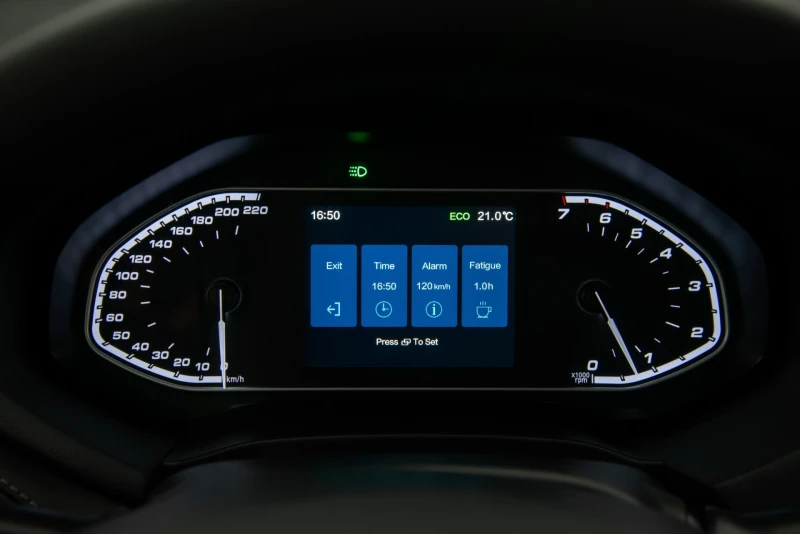
The driver's area is thoughtfully arranged, with a multifunction steering wheel that adjusts for both tilt and reach, an easy-to-use CVT or dual-clutch transmission selector, and logically separated control zones. Pedal and shifter placement are comfortable enough for longer highway drives.
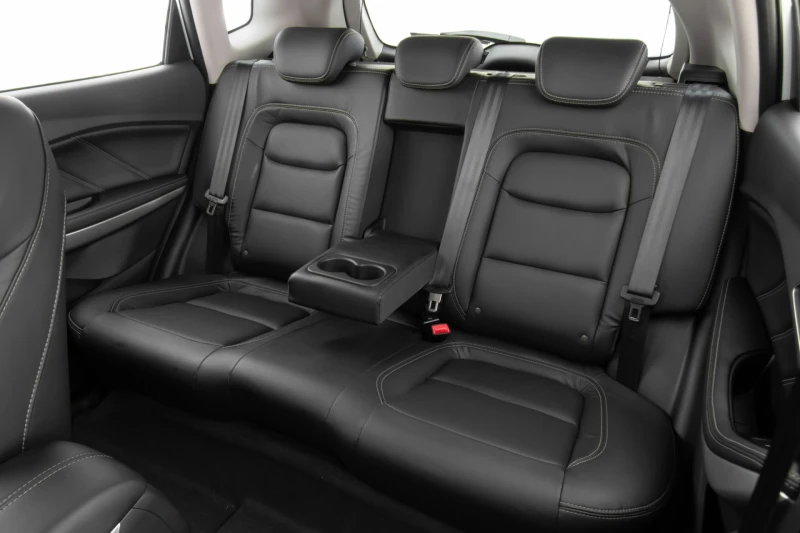
Front-seat comfort is good, especially in versions with power adjustments and lumbar support. There is enough space for occupants up to about 6 feet 1 inch tall. The rear bench is designed for three passengers, and the 105.1-inch wheelbase provides adequate legroom and headroom, although the center position is less comfortable because of the raised floor tunnel. Later versions may add a center armrest and rear USB ports, while seatback adjustability varies by trim and market.
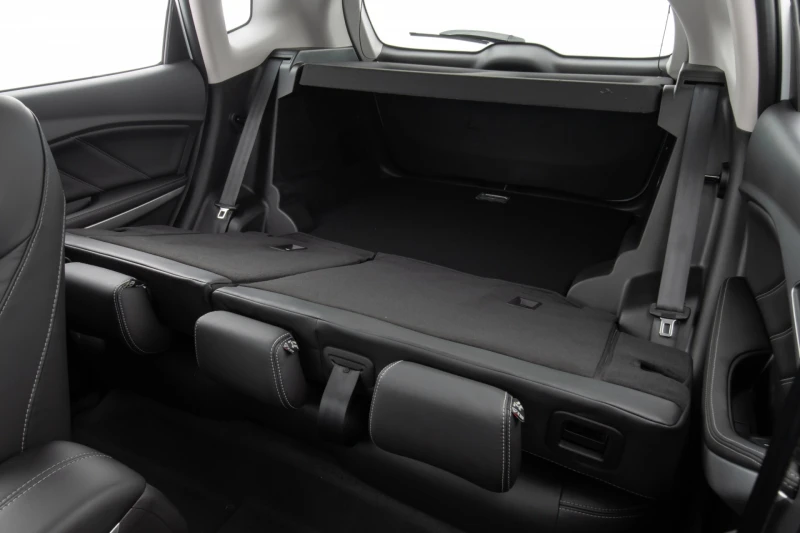
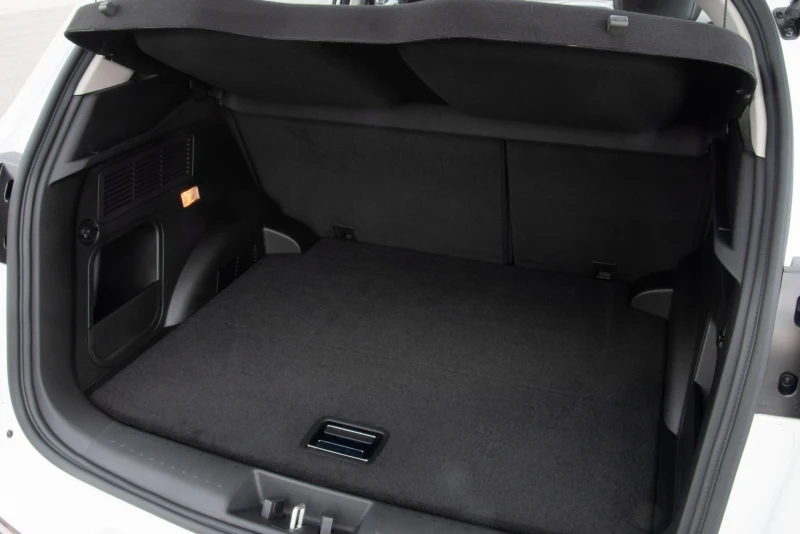
Cargo capacity is approximately 14.6 cubic feet behind the rear seats and up to about 38.8 cubic feet with them folded. Practical touches include a relatively flat load floor, grocery hooks, cargo nets and, on some versions, an adjustable dual-level floor. The 60/40-split rear seatbacks improve versatility. For daily commuting, errands and light cargo duty, the cabin is easy to live with and offers plenty of small-item storage.
Versions and trims for U.S.-oriented buyers
For U.S. buyers comparing imported Chery Tiggo 7 / 7 Plus / 7 Pro / Pro Max I models, the most commonly referenced trim names are Comfort, Premium and Pro Max. Equipment can vary significantly by country of origin, model year and importer, so the actual feature list should always be verified by VIN and visual inspection.
Comfort: cloth or synthetic-leather upholstery, basic interior trim, an 8-inch infotainment display with Apple CarPlay and Android Auto on later examples, air conditioning, and core safety equipment such as ABS, stability control and multiple airbags. Cold-weather equipment, including heated mirrors or washer nozzles, depends on the original market specification rather than being standard across all imported vehicles.
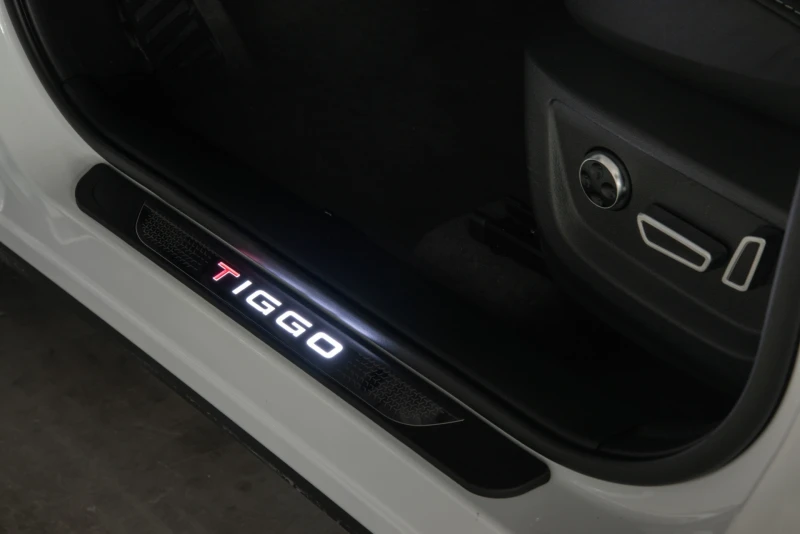
Premium: leather upholstery, upgraded soft-touch surfaces and metallic accents, a 10.25-inch infotainment system with navigation, dual-zone climate control, cruise control, parking sensors, blind-spot monitoring on selected versions, and an available panoramic roof.
Pro Max: higher-grade trim that may include suede-like inserts, an upgraded audio system, heated and ventilated seats, a broader driver-assistance package with adaptive cruise control and traffic-jam assist, a standard panoramic roof on many configurations, and 19-inch wheels. Plug-in hybrid versions combining a 1.5-liter turbo engine with an electric motor are more likely to appear through specialty import channels, often with optional cold-weather features and a 360-degree camera system.
Interior updates by model year and facelift
Because the first-generation model has remained in production in several forms, its cabin changed noticeably over time. Early 2016–2019 Tiggo 7 models generally used an 8-inch infotainment screen, analog gauges and more basic sound insulation. Hard plastic was more visible in the lower cabin, and the most common color schemes were black or gray with limited contrast trim.
The 2020 Tiggo 7 Pro introduced a redesigned dashboard, a 7-inch digital gauge display on many versions, a 10.25-inch infotainment screen and softer interior materials. Beige and brown color schemes became more widely available. Additional insulation in the wheel wells and doors reportedly reduced cabin noise by roughly 1–2 dB. The 2023 Pro Max added options such as a 12.3-inch digital cluster and wireless smartphone connectivity.
The most current-looking features are the large touchscreen, digital instrument panel and well-sized storage compartments. Earlier solutions, including wired smartphone integration and modest sound insulation, can feel dated next to compact crossovers introduced for the 2025–2026 model years.
Common questions and cabin drawbacks
Owner reports and forum discussions point to several recurring interior concerns. Wear may appear on the steering wheel, seat bolsters and frequently touched plastic surfaces after roughly 50,000–75,000 miles, particularly in cabins upholstered with synthetic leather. Genuine leather generally holds up better but still needs conditioning, especially in hot, dry climates.
Potential weak points include squeaks from the center console over rough pavement, especially in 2016–2019 vehicles. Rattles can also develop when the suspension repeatedly encounters potholes or broken road surfaces. The rear bench is acceptable for two adults, but three-across comfort is limited because the center cushion is firmer and the floor tunnel reduces foot space.
Outward visibility is average for the class. Thick roof pillars and a high beltline take some adjustment, although larger mirrors, parking sensors and surround-view cameras help on better-equipped versions. Light-colored interiors show dirt quickly: road salt in northern states, desert dust in the Southwest and everyday spills can all leave visible marks. Service quality also varies because imported vehicles may depend on independent repair shops, and poorly installed aftermarket electronics or trim can create additional rattles and electrical issues.
On the used market, cabins with fewer than about 62,000 miles are often still presentable when properly maintained. Higher-mileage examples may show cracked trim, flattened seat cushions, worn switchgear or signs of intensive commercial use.
Conclusion: Is the interior still competitive?
The Chery Tiggo 7 / 7 Plus / 7 Pro / Pro Max I interior remains competitive among Chinese compact crossovers, especially in later versions with larger displays, improved materials and better ergonomics. In terms of equipment, it compares favorably with models such as the Geely Coolray and Haval Jolion.
For the best balance of technology and refinement, 2023-and-newer Pro or Pro Max versions are the strongest choices. Paying more for a higher trim makes sense for buyers who want features such as a panoramic roof, ventilated seats or a full driver-assistance package, while Premium or Pro versions cover the essentials well.
When inspecting a new or imported vehicle, confirm that wireless smartphone integration, navigation and all driver-assistance systems work correctly. For a used example, check:
- Upholstery and plastic trim for scuffs, cracks or peeling;
- The cabin for squeaks and rattles during a test drive over uneven pavement;
- All displays, cameras and smartphone-integration features;
- Signs of heavy detailing, water damage or persistent odors;
- The condition of decorative trim, armrests and frequently used switches.
The cabin remains one of the strongest aspects of the 2016–present Chery Tiggo 7 / 7 Plus / 7 Pro / Pro Max, offering useful technology, practical packaging and solid everyday comfort for a wide range of buyers.