The interior combined practicality, a basic level of comfort, and moderate equipment. In the United States, the vast majority of this generation’s vehicles are sedans, which also influenced perceptions of interior space and practicality.
Overall Cabin Overview
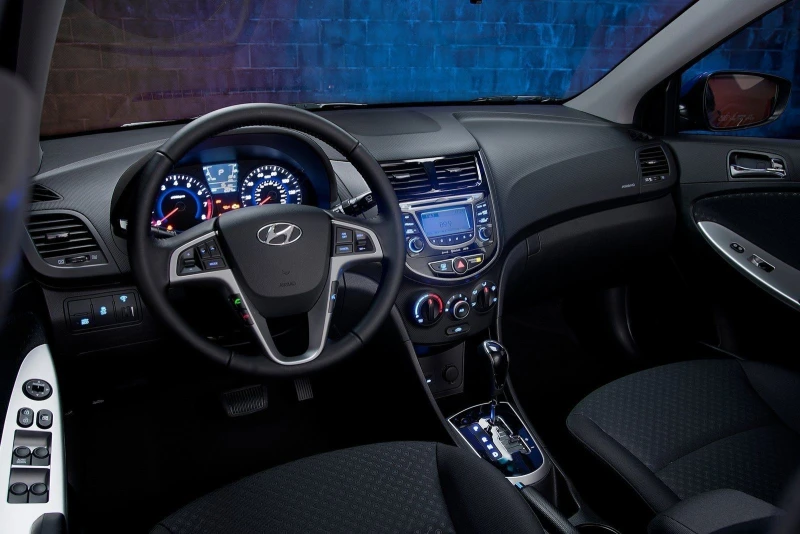
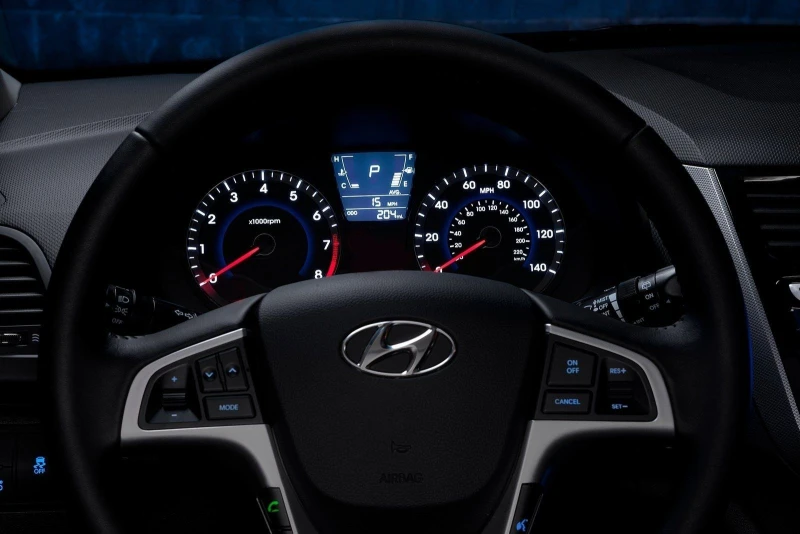
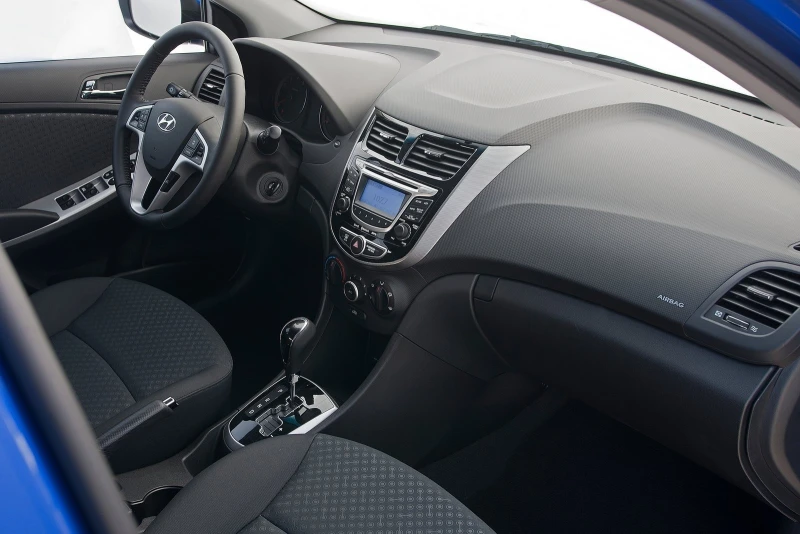
The interior design follows the “Fluidic Sculpture” styling typical of Hyundai models from 2010–2015. The center console is slightly angled toward the driver. The instrument panel features two main gauges with a small monochrome trip computer display between them (base versions have analog gauges without a screen).
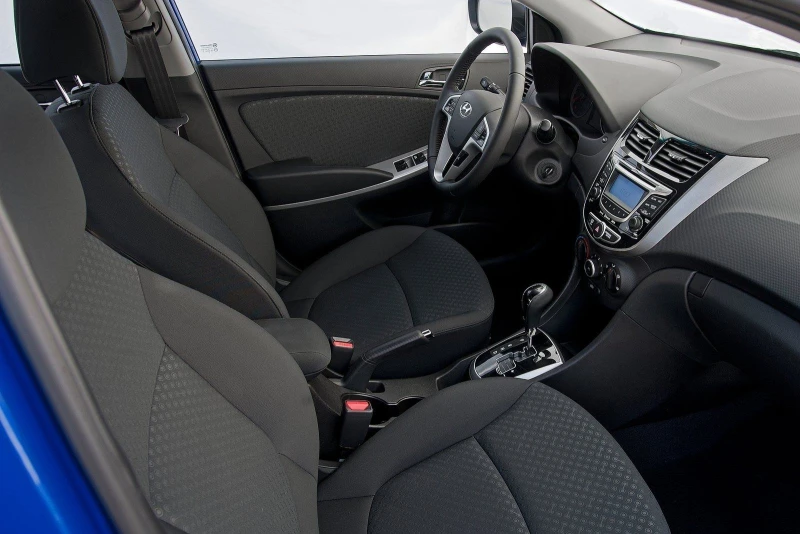
Materials are mostly hard plastic. Soft-touch plastic appears on the upper dashboard and door cards only in higher trims (Elegance and Top). “Aluminum-look” or piano-black inserts are found in Comfort and above, but they tend to show fine scratches and fingerprints over time.
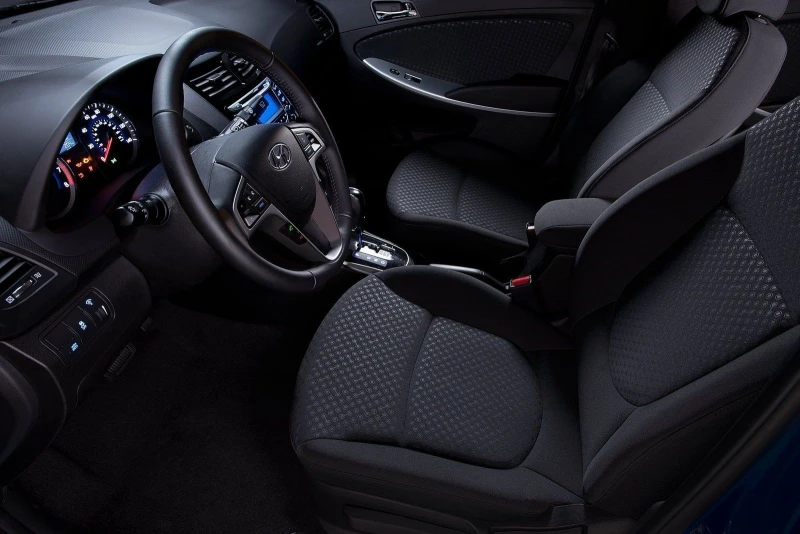
Driver ergonomics are decent: controls are logically placed, and the steering column adjusts for height (telescopic adjustment was added after the 2015 facelift in higher trims). The seats provide moderate bolstering with enough adjustment range for drivers from 5'5" to 6'3".
The rear bench is best suited for two average-height adults. Taller passengers over 5'11" may find knee room tight against the front seats, especially with a tall driver. Headroom is limited — roughly 1–1.5 inches to the headliner in mid-level trims. The center tunnel is minimal, making a third passenger viable only for short trips.
The sedan’s trunk is one of the Accent’s strongest assets: about 16.4 cubic feet with a flat floor and wide opening. Rear seatbacks fold 60:40 (from the Comfort trim onward), enabling long-item transport. The hatchback (less common) offers around 13.1 cubic feet, expanding to roughly 38.8 cubic feet with seats folded.
Trims and Equipment on the U.S. Market
On the U.S. used car market, the most common equipment levels are:
| Trim | Seat Upholstery | Climate Control | Infotainment | Key Features | Market Prevalence |
| Base / Classic | Basic cloth | Air conditioning | Audio prep / basic radio | 2 airbags, ABS, front power windows | Average (earlier years) |
| Comfort | Upgraded cloth | Air conditioning / automatic climate control (later models) | CD/MP3 + USB/AUX, 4–6 speakers | Heated front seats, full power accessories, trip computer | Most common |
| Elegance / Style | Cloth with accents, sometimes leatherette | Automatic climate control | 5–7" touchscreen (post-2015), Bluetooth, rearview camera | Heated steering wheel, electronic stability control, 6 airbags, automatic headlights / rain sensors | Average (2015–2018) |
| Top | Leather / leatherette with cloth inserts | Automatic climate control | 7" multimedia + navigation (rare), camera | Key fob, cruise control (rare), 16" alloy wheels, heated rear seats | Low |
A panoramic roof was never officially offered for the Accent IV in the U.S. Full leather interiors and rear seat heaters were limited to top 2016–2018 versions, often higher-spec imports.
Interior Changes by Year and 2015 Facelift
Pre-facelift (2011–2014/2015):
- Hard plastic dominated, even on the upper dashboard
- Instrument cluster with a small monochrome display
- Steering column adjustable for height only
- Mostly non-touchscreen factory radios
After the 2015 facelift:
- Updated center console design with better-quality soft-touch materials on top
- Telescopic steering wheel adjustment (in Elegance and higher)
- Available 7-inch touchscreen with rearview camera
- Improved sound insulation with added mats on the floor, doors, and wheel wells
- New seat fabric options and darker color schemes
2015–2018 models on the U.S. used market are noticeably more comfortable and quieter than earlier examples.
Common Questions and Cabin Drawbacks
Typical owner and buyer comments on the American market:
- Rapid driver’s seat wear (cushion and side bolsters compressing after 75,000–93,000 miles)
- Plastic squeaks around the center console and door panels (especially in cold weather and on rough roads)
- Low sound insulation of wheel arches and floor in pre-facelift models
- Limited rear passenger space when the car is fully loaded
- Restricted rear visibility due to the narrow rear window and thick pillars
- Quick wear on glossy trim pieces and silver accents
- Cloth upholstery prone to stains and fading (especially lighter colors)
In U.S. driving conditions and climate (temperature swings, road salt in winter, dust), the interior benefits from regular care: professional detailing once or twice a year, plastic protectant, and protective seat covers.
Conclusions and Relevance Today
In 2026 the Hyundai Accent IV interior no longer feels modern, but it still offers solid practicality and intuitive ergonomics. On the U.S. used car market, Comfort and Elegance 2015–2018 examples deliver the best value for money in terms of equipment and comfort — featuring automatic climate control, heated seats, decent multimedia, and better sound insulation.
Approximate market price for the United States: $6,500–$11,500 depending on condition, mileage, and equipment.
When shopping for a used example, check:
- Driver’s seat condition (no major sagging or torn fabric)
- Functioning infotainment and rearview camera (if equipped)
- Absence of excessive plastic rattles or loose trim
- Good condition of the headliner and door panels (often affected by sun and humidity)
- No musty odors (possible sign of water leaks)
For daily commuting, a small family of 3–4, or rideshare use, the fourth-generation Accent IV remains a practical and reliable choice in the budget segment — especially when low ownership costs and dependability matter more than a premium-looking cabin.