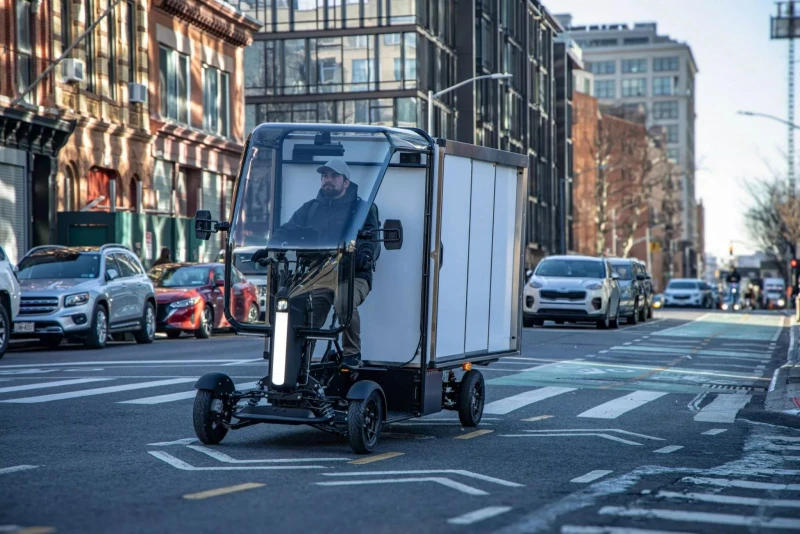
The model in question is the eQuad, targeted at courier services and urban logistics. This project illustrates how automakers are exploring new niches amid shifting demand and stricter environmental standards for transportation.
Format and Purpose
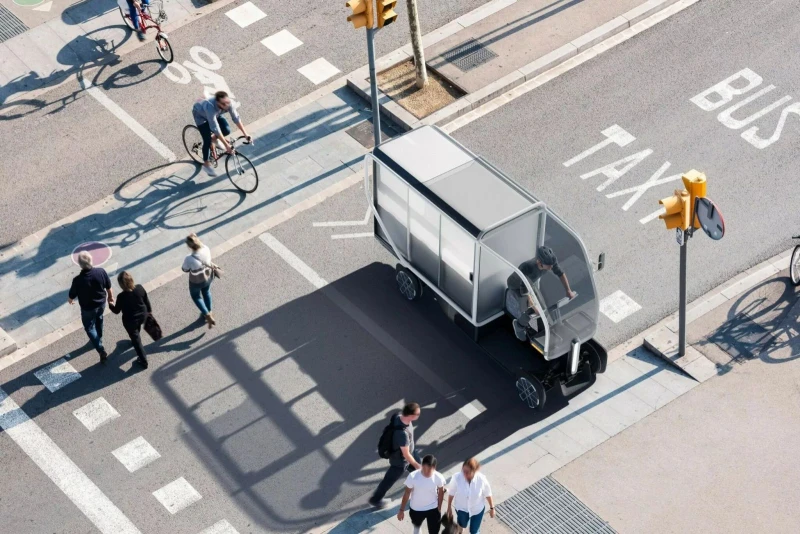
The eQuad is a compact four-wheeled vehicle, similar in concept to a quadricycle featuring an enclosed cargo compartment. It is designed for operation in dense urban environments, where maneuverability and compact size are critical. At approximately one meter in width, it can utilize bicycle lanes, potentially easing navigation through congested streets.
The model is offered in two length variants — around 3.4 and 3.7 meters. This allows adaptation to various delivery tasks, including the transport of larger loads.
Design and Operating Conditions
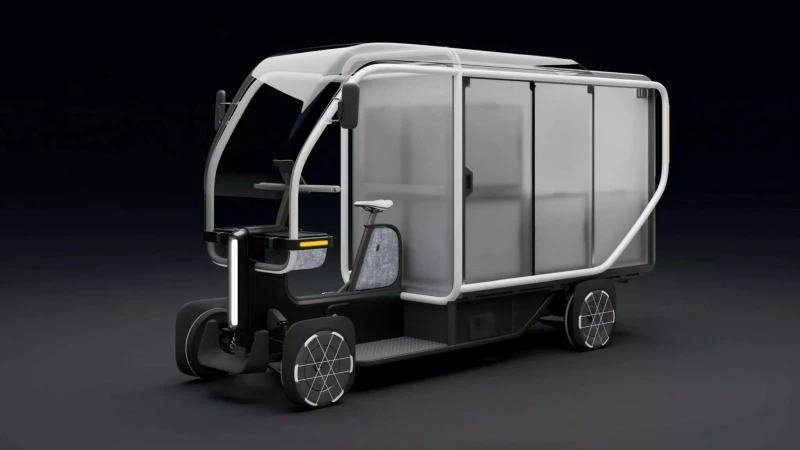
The eQuad cabin adopts a semi-open format. The front section is protected by a transparent panel that extends into the roof, while the side areas remain open. For added comfort, it includes heated steering and climate control systems, though the design does not provide full protection from the elements.
This approach may suit milder climates, but in low temperatures or strong winds, operation can become less comfortable, particularly during extended shifts.
Technical Specifications
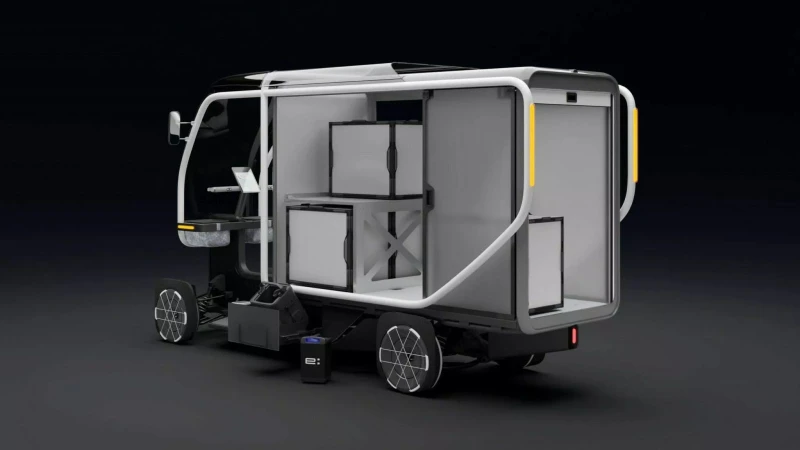
The vehicle's electric powertrain features a battery with a capacity of approximately 1.3 kWh. The curb weight ranges from about 392 to 431 kg depending on the version. This is in addition to the driver and payload, which can reach up to 294 kg with a cargo volume of around 3,200 liters.
Range is limited:
- approximately 37 km for the shorter version;
- approximately 32 km for the longer variant.
A full charge takes up to four hours. This can be a constraint during intensive daily use. Quick battery swapping is offered as a solution, though it increases operating costs.
Economics and Market Prospects
The base version is expected to cost around $8,000. For professional applications, this represents a relatively accessible price point, but additional expenses for batteries and charging infrastructure may significantly impact total cost of ownership.
Compared to traditional compact internal combustion engine vehicles, these solutions still fall short in versatility and range. However, their advantages become apparent in dense urban traffic and under restrictions on conventional vehicles.
Conclusion
The Honda eQuad represents an effort to tailor electric mobility to urban logistics needs. Its compact dimensions, high maneuverability, and ability to use dedicated lanes make it suitable for specific use cases. Nevertheless, the limited range and semi-open design impose practical constraints, especially for high-intensity daily operations.