


The announcement of the winner in the European Car of the Year 2026 contest has once again drawn attention not so much to the vehicle itself, but to the state of the industry and the approaches guiding professional juries. The voting results provide an opportunity to reflect on how well expert choices align with real market demands and buyer needs.
How Automotive Press Opinions Are Formed
Automotive journalism has long operated in a complex relationship with the industry. Manufacturers, marketing strategies, internal agreements, and pressure from advertising budgets inevitably influence the tone of publications. This is not new, but in recent years, the gap between public assessments and the actual market situation has become particularly evident.
Many journalists in private conversations can critically evaluate developments, yet in final materials and rankings, formulations and conclusions often align with industry expectations rather than consumer realities. This results in a distorted picture of events.
Electric Vehicles as the Default Choice
This is most evident in attitudes toward electric vehicles. Despite their relatively modest share in sales across most European markets, such models increasingly become central figures in industry awards. Electric propulsion has effectively become a prerequisite for victory, regardless of market success or the vehicle's versatility.
Previously, the Car of the Year title often went to technologically breakthrough models or vehicles offering outstanding value in terms of price, features, and practicality. Today, this principle has noticeably blurred.
Results of the 2026 Contest
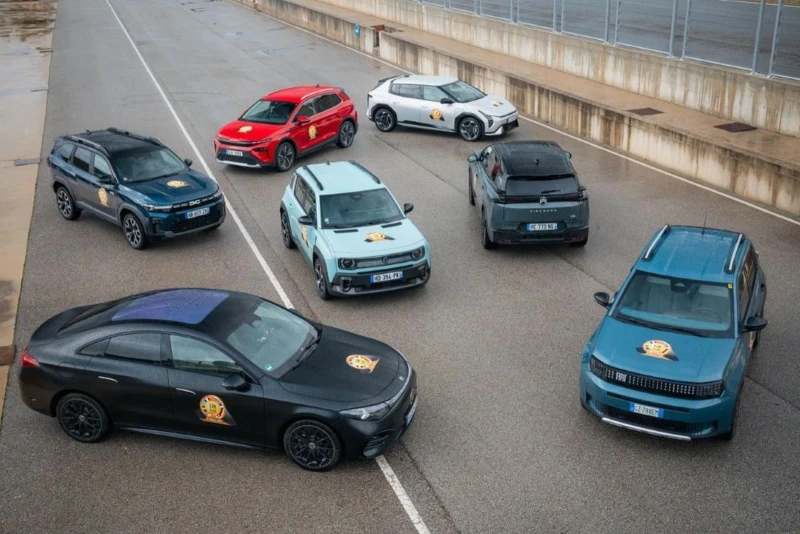
The winner was the Mercedes CLA in its fully electric version, outperforming the Škoda Elroq and Kia EV4. This refers not to the hybrid powertrain variant, but specifically to the EV, which formally expands the brand's lineup.
The final seven also included the Citroën C5 Aircross, Fiat Grande Panda, Dacia Bigster, and Renault 4. The final table clearly shows that alignment with the current agenda remains a key factor for success, rather than market demand or objective novelty.
Final Voting Results
- Mercedes CLA — 320 points
- Škoda Elroq — 220 points
- Kia EV4 — 208 points
- Citroën C5 Aircross — 207 points
- Fiat Grande Panda — 200 points
- Dacia Bigster — 170 points
- Renault 4 — 150 points
Gap Between Rankings and the Market
When compared to actual sales, it becomes clear that model popularity among buyers and contest successes increasingly diverge. Vehicles that find their customers and show steady demand remain in the shadows, while titles go to cars that fit the prescribed development direction but are not always in demand in practice.
Conclusion
The outcomes of the Car of the Year 2026 contest reflect not so much the market state, but the current direction of industry discourse. Returning the automotive industry to a more balanced approach will likely require revisiting evaluation criteria and fostering a closer connection between expert opinions and real buyer expectations.