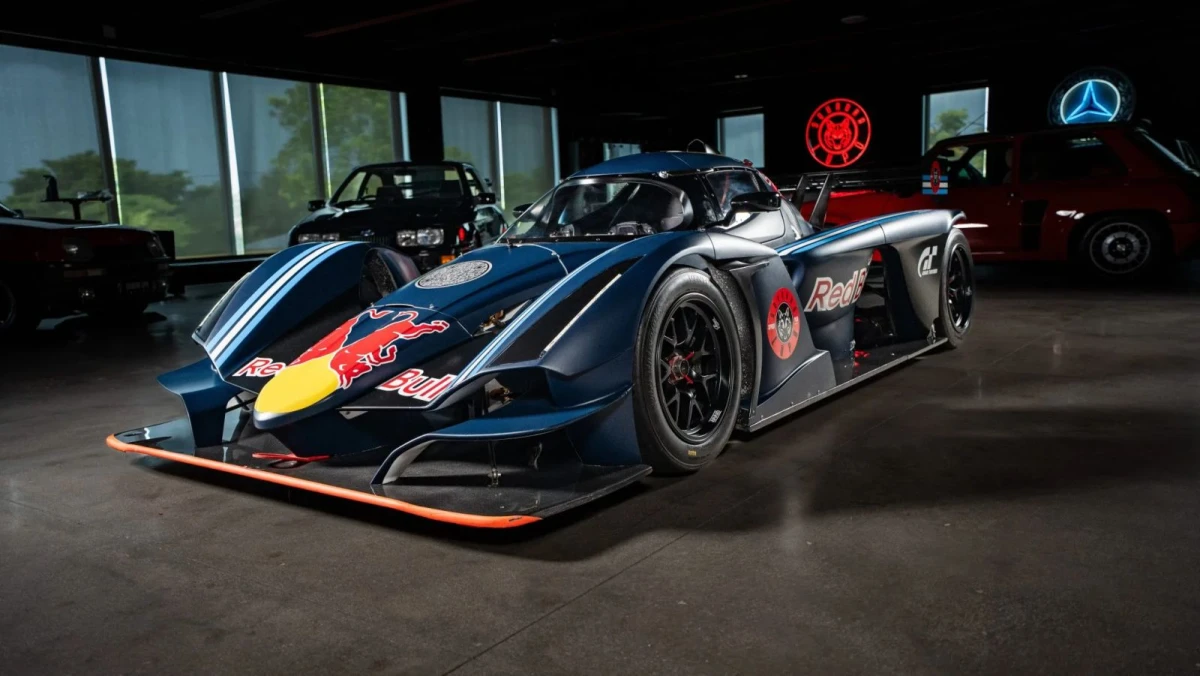
Internal team assessments indicate that addressing or partially mitigating the deficiencies could take approximately six months. The machine features an ambitious concept but incorporates several design decisions that have led to unintended consequences.
Radical Concept and Its Consequences
The AMR26 was presented with an unusual aerodynamic philosophy and an extremely compact layout. The exterior appearance and internal architecture were developed with the goal of lowering the center of gravity and achieving maximum component density. While this approach can deliver gains in dynamics, it requires precise integration of all elements.
Signals of potential risks were already evident during virtual testing at the Sakura facility. Pre-season tests confirmed the concerns: under certain operating regimes, the power unit exhibited elevated vibration levels.
Hybrid System Layout
The key issue lies in the packaging of the hybrid components. At the request of the technical leadership, the MGU-K generator was positioned as low as possible to reduce the center of gravity. This required splitting the battery into two modules and modifying the unit mountings after the original design was approved.
The MGU-K spins at speeds of up to 30,000 rpm. Combined with the internal combustion engine, this generates substantial vibrations. Due to its close proximity to the battery and chassis, some of these oscillations are transmitted directly to the battery pack. This impacts seals and can cause leaks of coolant that comes into contact with the battery cells. Since the accumulator is liquid-cooled, coolant entering sealed areas risks damaging the cells.
Chassis and Load Transfer
The chassis is constructed in a minimalist style, optimized for high stiffness at minimal weight. However, this design is less effective at damping vibrations. Other teams locate hybrid elements differently, with the generator positioned higher and farther from the battery, and reinforced monocoque sections. Aston Martin’s configuration has proven less tolerant of such loads.
Additional challenges concern the transmission. The gearbox requires refinement in synchronization and electronic integration. The primary issues involve software and the interaction between electrical systems, which are theoretically easier to resolve than structural chassis modifications.
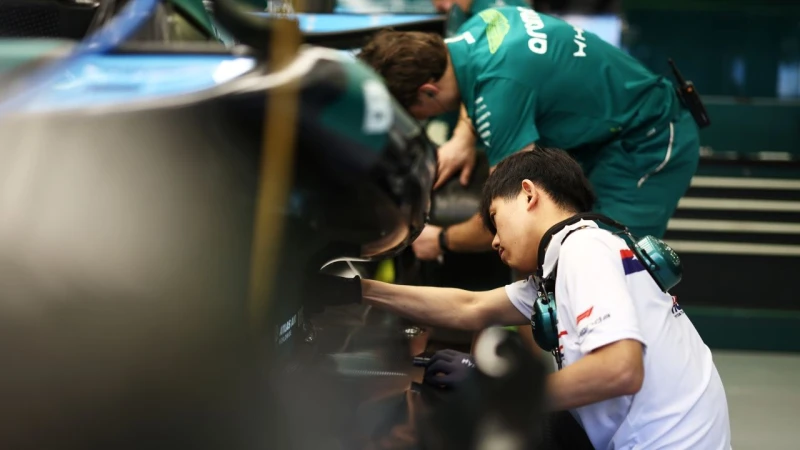
On-Track Behavior
A notable characteristic is the effect of fuel mass. With a full tank, vibrations are partially damped as the fuel serves as an additional damper. At low fuel levels, typical for qualifying runs, loads on the components increase and the risk of failure rises. This limits operation of the power unit at maximum revs.
Refinement Prospects
Engineers are evaluating several approaches. Revising the packaging and mountings may take several months. A complete power unit redesign would require significantly more time. The team hopes that phased modifications will stabilize the car’s performance over the course of the season.
Conclusion
The AMR26 situation illustrates the sensitivity of hybrid system integration in contemporary F1 cars. The pursuit of extreme compactness and a lower center of gravity has resulted in complex vibrational loads affecting the battery and transmission. In the coming months, the main priority will be finding the right balance between design efficiency and reliability.