This sporty luxury sedan has long proven that four doors and a spacious cabin don’t stop it from being a true Porsche. For 2025, the third-generation Panamera gets meaningful upgrades: new powertrains, cutting-edge technology, and the same exhilarating drive that gets your heart racing. In a market that values performance and prestige, it’s bound to turn heads. Let’s dive into what’s new and see if it lives up to the hype!
What’s New?
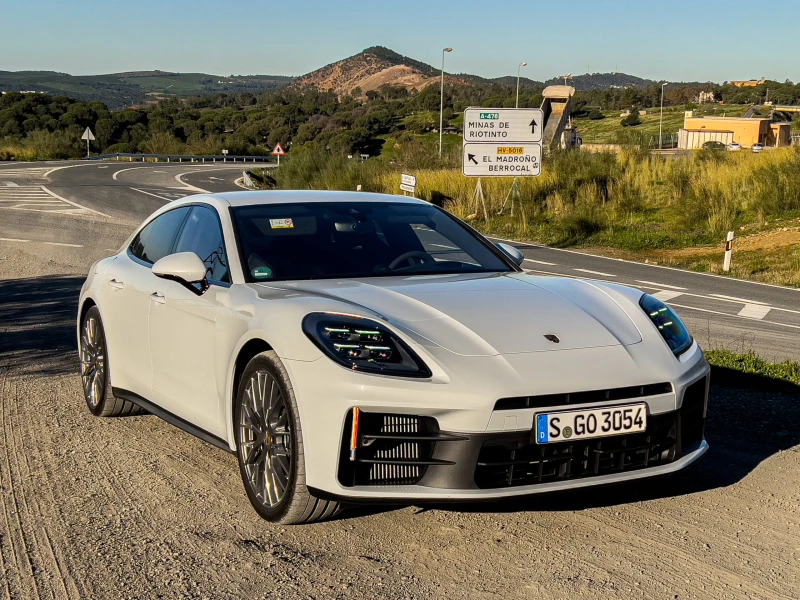
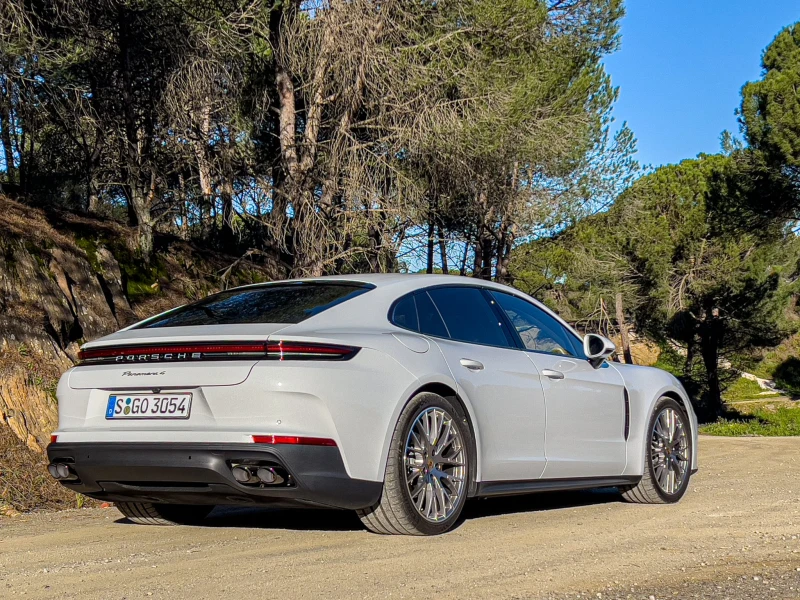
The 2025 Panamera builds on the model introduced in 2023. Exterior changes are subtle but sharp: updated matrix LED headlights, a redesigned front bumper with larger air intakes, and smoother body lines. The GTS adds blacked-out accents, 21-inch center-lock wheels, and a sport exhaust with bronze tips. It measures about 198 inches long, 56 inches high, and offers up to 5.5 inches of ground clearance with the air suspension—plenty for city streets and light rough patches.
Approximate market pricing in the United States starts around $105,000 for the rear-wheel-drive base model and climbs above $230,000 for the range-topping Turbo S E-Hybrid. Compared to rivals like the BMW 8 Series Gran Coupe or Mercedes-AMG GT 4-Door, the Panamera commands a premium—but it outshines them in character and driver engagement. Fun fact: the 2025 Panamera GTS just set a new class record at the Nürburgring with a lap time of 7:24.17!
Interior: 911 Cockpit Meets Rear-Seat Luxury
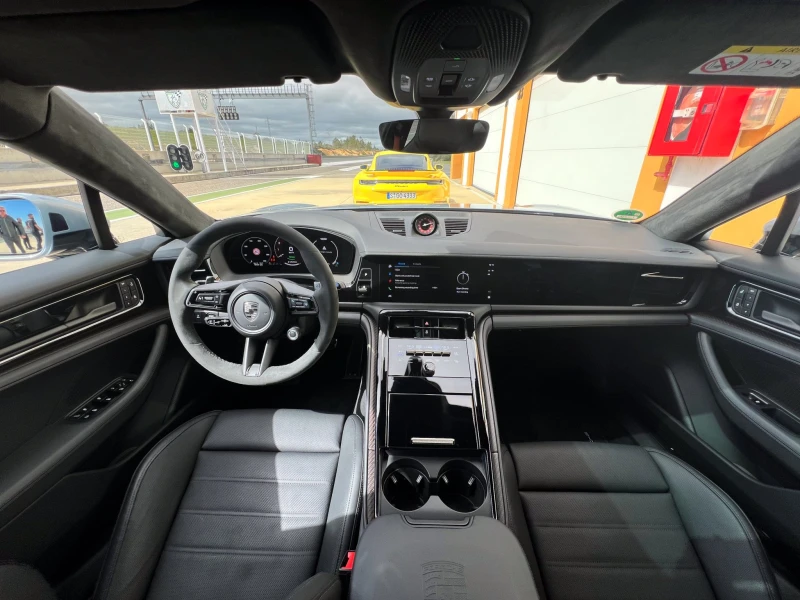
Step inside and you’re greeted by a blend of opulence and driver focus. Three screens dominate: a 12.6-inch curved digital gauge cluster, a 12.3-inch central touchscreen, and an optional 10.9-inch passenger display for streaming or navigation. PCM infotainment supports wireless Apple CarPlay and Android Auto, while “Hey Porsche” voice control handles everything from heated seats to the sunroof. Top-spec Burmester audio delivers 21 speakers and 1,455 watts—concert-hall quality on wheels.
Seats offer 14-way comfort adjustment standard or optional 18-way adaptive sport seats with heating, ventilation, and massage. GTS models feature Race-Tex trim and contrast stitching. Trunk space is 17.4 cubic feet, expanding to 46.9 with the rear seats folded. The back seat comfortably fits two adults; the middle spot is best for shorter trips. One minor gripe—fewer physical buttons mean more menu diving, but the cabin still feels like a high-tech cockpit.
Powertrains: From Quick to Ferocious
The 2025 Panamera lineup offers something for every enthusiast:
- Base: 2.9-liter twin-turbo V6, 348 hp, 368 lb-ft, 0–60 mph in 5.0 seconds, combined EPA estimate around 20 mpg.
- 4 E-Hybrid: V6 + electric motor, 463 hp, 479 lb-ft, 0–60 in 4.1 seconds, up to 30 miles of electric range.
- 4S E-Hybrid: Same V6 tuned to 536 hp, 553 lb-ft, 0–60 in 3.7 seconds.
- GTS: 4.0-liter twin-turbo V8, 493 hp, 486 lb-ft, 0–60 in 3.6 seconds.
- Turbo S E-Hybrid: V8 + electric motor, 771 hp, 737 lb-ft, 0–60 in 2.8 seconds, top speed 202 mph.
All models use an 8-speed PDK dual-clutch transmission; all-wheel drive is standard except on the base. Plug-in hybrids feature a 25.9 kWh battery for impressive efficiency—often below 3 gal/100 miles in hybrid mode when charged regularly. The GTS’s V8 roar is pure emotion for those who run premium unleaded.
How Does It Drive?
It’s a Porsche—so it handles like a sports car wearing a luxury suit. The available Porsche Active Ride air suspension (standard on hybrids) uses hydraulic dampers to keep the body flat in corners while soaking up bumps. The GTS, lowered 0.4 inches with stiffer anti-roll bars, delivers track-ready feel. The Turbo S E-Hybrid’s 771 hp simply obliterates the road—2.8 seconds to 60 mph is supercar territory.
On American highways and city streets, the adaptive suspension is a must-have: it raises the body over speed bumps and smooths out potholes. Drive modes—Normal, Sport, and Sport Plus—transform steering, throttle, and exhaust note. Large 21-inch wheels transmit some road imperfections, but optional rear-axle steering sharpens turn-in to near-911 levels.
Safety and Driver Assistance
Standard features include adaptive cruise control, lane-keeping assist, 360-degree cameras, traffic-sign recognition, and parking sensors. Higher trims add night vision, Porsche InnoDrive (Level 2 automated driving), and optional carbon-ceramic brakes that haul this heavy sedan down with authority. The previous generation earned a 5-star rating; the updated model should match it.
Cool extras: Turbo S E-Hybrid buyers can spec an Aerokit with carbon-fiber elements adding 132 pounds of downforce at 124 mph. GTS models include Sport Chrono with a push-to-pass boost function.
Who Is It For?
The 2025 Panamera is for drivers who refuse to compromise—luxury, prestige, and pure driving thrill in one package. Executives who need a boardroom shuttle by day and a canyon carver by night? Perfect. Growing families? The 4 E-Hybrid balances efficiency and space. Speed addicts? GTS or Turbo S E-Hybrid will deliver adrenaline in spades. Rivals include the BMW 8 Series Gran Coupe, Mercedes-AMG GT 4-Door, and Audi S7—each strong in its own way, but none quite match the Porsche magic.
Any Drawbacks?
Price is the biggest hurdle: a well-optioned base can exceed $135,000, while a loaded Turbo S E-Hybrid pushes past $260,000. Rear-seat room for three adults is tight, and trunk space trails the BMW (17.4 vs. 19.8 cubic feet). Some early owners report occasional infotainment glitches. Still, the overall package remains compelling.
Verdict: Worth It?
The 2025 Porsche Panamera redefines what a luxury performance sedan can be. Starting around $105,000, you get technology, refinement, and driver engagement that rival the 911. Hybrids offer real-world efficiency, while the GTS and Turbo S E-Hybrid are outright rockets. If the budget allows, it’s an incredibly rewarding choice.
My take? The Panamera is love at first corner. Go for the 4S E-Hybrid for the best balance or the GTS for pure emotion. Test it against the BMW 8 Series or Audi S7—and don’t forget to negotiate at your local Porsche Center.