


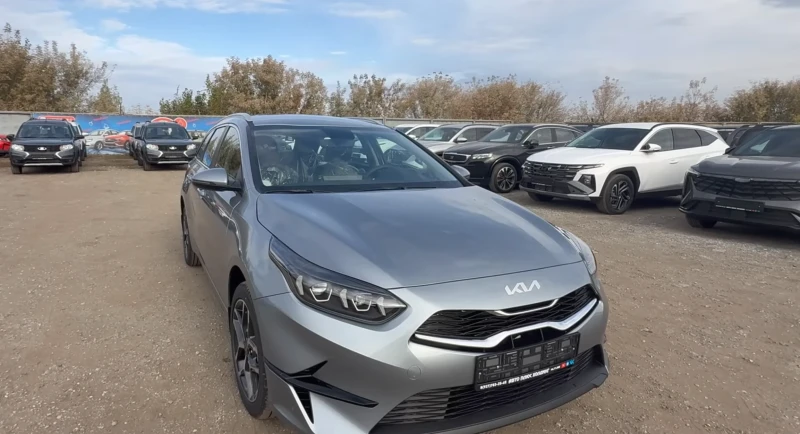
Picture this: you fire up the 2025 Kia Ceed, and the compact hatchback — or wagon at around 4600 mm long — comes alive with a smooth purr. Ground clearance sits at about 5.9 inches, with a generous cargo area up to 625 liters in the wagon. The cabin greets you with soft ambient lighting from the 10.25-inch display, a leather-wrapped steering wheel, and enough room that even rear passengers stay comfortable on longer drives.
At first glance, it's a perfect daily driver: highway fuel economy around 39 mpg, 0-60 mph in about 9.5 seconds with the 1.5-liter turbo making 150 hp. But after a year or two, owners on forums start sharing stories — suspension knocks over potholes, the infotainment lags in hot weather, and the paint chips easily from road debris. Let's break down what's behind the sleek looks, how to minimize the headaches, and why the Ceed still deserves consideration if you're after a solid mix of value, style, and comfort.
From Forums to Reality: What Owners Are Saying
On U.S. forums, Reddit, and owner groups, the Ceed earns praise for its peppy feel and loaded features: "Drives like it's on rails, and that 10-year/100,000-mile powertrain warranty is huge," one owner notes. Drawbacks include tire roar above 75 mph, some door-edge corrosion after salted winters, and occasional electronic glitches. In reliability surveys like Consumer Reports or J.D. Power, it scores above average in the compact class — around 90% of owners report no major issues in the first 30,000 miles. The diesel options aren't sold here, but the gasoline 1.5 T-GDI gets consistent thumbs-up for responsiveness. Bottom line: better-than-average dependability with proper maintenance.
Under the Hood: Engines and Their Quirks
The lineup is straightforward: the turbocharged 1.5 T-GDI (150 hp, 253 Nm) paired with a 7-speed DCT or 6-speed automatic, plus a naturally aspirated 1.6 MPI (128 hp) in base models in some markets. The turbo version feels lively — top speed around 124 mph — but past 25,000 miles, you might notice idle vibrations from the alternator clutch (repair $200–$300). In city driving, the particulate filter on equivalents can clog if rarely driven hard on highways (cleaning $150–$250). Winter fuel economy climbs to 26–30 mpg, and the DCT can hesitate longer in heavy traffic.
Maintenance Tips:
- Change 5W-30 oil every 6,000 miles ($80–$130), stick to premium unleaded from trusted stations — it helps the turbo last longer.
- For the DCT: get software updates at the dealer (often free under warranty), check ATF level every 20,000 miles.
- Highway runs every few weeks help keep emissions systems clean and prevent issues.
Transmission: Smooth Operator or Hidden Gotcha?
The 6-speed automatic is time-tested — silky shifts, no drama, easily lasts 100,000+ miles without major work. The 7-speed DCT squeezes better efficiency but can jerk in stop-and-go heat or aggressive starts (forum complaints often after 12,000–15,000 miles). Manual versions are straightforward, with clutches holding 50,000+ miles, though bushings wear on rough roads (replacement $50–$100). Front-wheel drive only, so ESP steps in on slippery pavement, but don't expect AWD miracles.
Prevention Tips:
- Automatic: fluid and filter change every 40,000 miles ($150–$200).
- DCT: avoid overheating in traffic jams, use Sport mode occasionally for adaptation.
- Manual: lubricate shift linkage yearly, inspect clutch at regular services.
Suspension: Comfort vs. American Road Reality
MacPherson struts up front and multi-link rear deliver good handling, but it's firm — potholes transmit sharp hits, and stabilizer bushings wear by 20,000 miles (pair $60–$80). KYB shocks last around 40,000 miles, leaking sooner when loaded. The 5.9-inch clearance handles curbs fine, but scrapes on taller ones. 225/45 R17 tires add noticeable road noise and vibration.
Upgrades for Durability:
- Inspect bushings and ball joints every 12,000 miles — replace before noises start.
- Upgraded springs ($150–$200) help if you carry passengers or cargo often.
- Alignment after every tire rotation ($80–$120) — saves tire wear.
Electronics: Smart Features or Headache Source?
The 10.25-inch screen with Apple CarPlay, adaptive cruise, and more looks impressive, but wireless connections can freeze (software update fixes most cases). Parking sensors act up when dirty, and start-stop annoys in traffic — it disables itself sometimes. Battery lasts about 3–4 years ($100–$150 replacement), triggering climate or dash errors. LED headlights shine bright, but DRLs may flicker in very cold weather.
Fixes and Care:
- Update firmware yearly — usually free at the dealer.
- Test battery before winter, trickle charge monthly if parked often.
- Clean sensors after washes, recalibrate if false alerts occur.
Body and Interior: Looks Great, But Watch the Details
Galvanized steel holds up well, but thin paint chips easily on the hood from gravel (protective film $300–$400 helps). Door edges can show rust after winter salt — undercoating $200–$300 yearly. Cabin feels spacious (104-inch wheelbase), but hard plastics pick up dirt, and sound insulation is average: highway tire and wind noise noticeable. Fabric seats wear by 25,000 miles, leather steering wheel shines quickly.
Protection Steps:
- Apply underbody and wheel arch coating ($250–$350) — quieter and cleaner.
- Door sound deadening ($150–$250) — drops cabin noise 5–7 dB.
- Use seat covers and detail interior every 6 months.
Alternatives: If the Ceed Isn't Quite Right
Worried about minor quirks? Consider these:
- Volkswagen Golf: Timeless ergonomics, but higher maintenance costs.
- Honda Civic: Spacious, ultra-reliable, with hybrid options.
- Hyundai Elantra: Close relative, often with better noise control and warranty perks.
- Toyota Corolla: Legendary durability, but less exciting to drive.
- Mazda3: Sharper handling, premium feel, though pricier repairs.
Final Verdict: Worth It for Everyday Peace of Mind?
The 2025 Kia Ceed is for drivers wanting sharp looks, solid efficiency, and that impressive long warranty without needing off-road ability. Weak points are minor — road noise, occasional paint chips, screen glitches — but sticking to routine service (around $100–$150 every 6,000 miles) and smart driving habits can easily see it past 100,000 miles trouble-free. If zero drama is your top priority, a Civic or Corolla might edge it out. But for city commutes and highway runs, the Ceed — especially with the turbo — is a confident, value-packed choice in the U.S. market.