


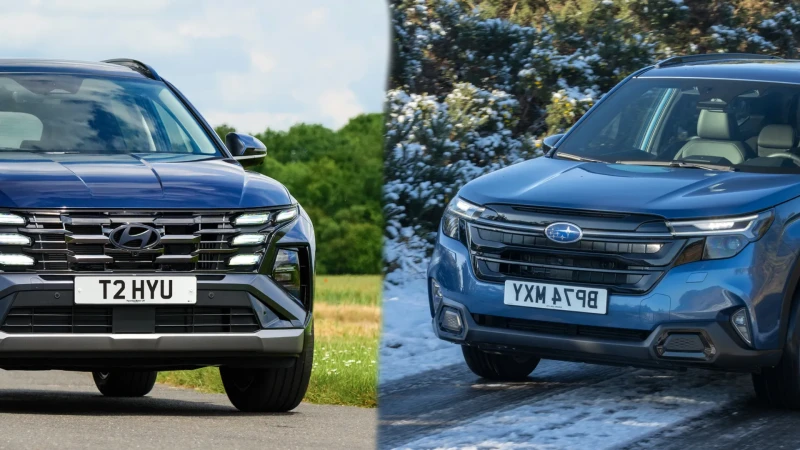
Hyundai Tucson 2025 and Subaru Forester 2025 — two strong contenders with distinct personalities. The Hyundai impresses with bold design and cutting-edge tech, while Subaru counters with legendary off-road prowess and reliability. Let's see which one better suits American driving conditions — from LA traffic jams to Rocky Mountain trails. We'll compare design, tech, capability, pricing, and practicality to help you choose the perfect compact SUV.
Design: Hyundai Challenges with Boldness, Subaru Stays True to Tradition
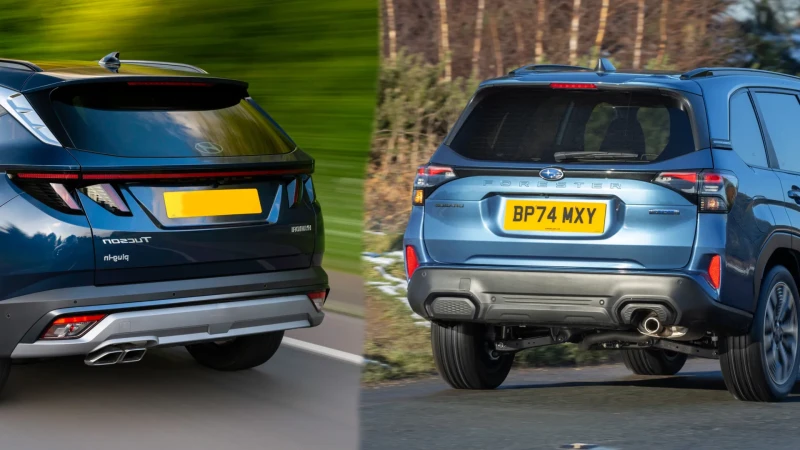
Hyundai Tucson 2025 — like a flagship smartphone among SUVs: dynamic, stylish, with a futuristic look. Its Parametric Jewel grille with integrated LED lights, sharp body lines, and claw-like taillights turn heads in busy city parking lots. The interior continues the wow factor: minimalist design, premium materials, optional dual 12.3-inch screens, and enhanced sound insulation. You'll want to spend time inside, whether cruising Route 66 or stuck in rush hour. Hyundai embodies "Sensuous Sportiness" — sensual athleticism that makes the Tucson a standout partner.
Subaru Forester 2025, on the other hand, bets on functionality and recognizability. The refreshed design evolves classic Subaru lines: bold grille, clean contours, pronounced wheel arches. It's not flashy, but confidently hints at off-road potential. The cabin uses durable materials — from tough fabric to leather in higher trims. A vertical 11.6-inch screen (not in all trims) adds modernity, but the interior remains restrained — for those who value utility over gloss. Subaru stays loyal to "Confidence in Motion" — confidence on the move, perfect for unpredictable American roads.
Who wins? The Tucson stands out with daring design and premium cabin — ideal for those wanting to shine in the city. The Forester wins with practicality and adventure-ready character, great for nature lovers.
Capability: Subaru for Off-Road, Hyundai for Comfort
American roads test everything: from potholes on interstates to snowy backroads. How do our contenders perform?
- Hyundai Tucson: 8.3-inch ground clearance and optional HTRAC all-wheel drive let the Tucson handle dirt roads and light off-roading confidently. HTRAC distributes torque for better traction — useful on slippery winter highways. But the Tucson leans toward city and highway: its soft suspension smooths bumps, though it yields on serious trails.
- Subaru Forester: Legendary Symmetrical AWD is the Forester's ace. With 8.7-inch clearance (9.2 inches in Wilderness) and X-Mode for snow, mud, or sand, it's ready for any adventure. The Forester tackles snowy mountain paths or muddy rural roads effortlessly.
Who's ahead? The Forester reigns supreme off-road, especially in harsh winters. The Tucson suits urban and suburban routes where comfort trumps extreme capability.
Specs: Power vs Versatility
Hyundai and Subaru take different engine approaches. Power or endurance?
- Hyundai Tucson: Base 2.5L gas engine delivers 187 hp (0-60 mph in ~8.5 seconds). Hybrid (231 hp) and plug-in hybrid PHEV (261 hp) raise the bar: 7.8–8.0 seconds to 60 and better efficiency (around 35-38 mpg combined in hybrid, up to 33 miles electric in PHEV). All with 8-speed auto, AWD optional. Choose for dynamics and savings, especially with rising fuel costs.
- Subaru Forester: Base boxer 2.5L gives 180 hp (0-60 in 8.7 seconds). Hybrid version (194 hp) improves efficiency (around 35 mpg combined) but lacks thrill. Standard Symmetrical AWD and CVT ensure smooth ride, though CVT may not suit aggressive drivers. Built for reliability and all-around use, not racing.
Who’s better? Tucson leads in power and efficiency, especially hybrids. Forester offers standard AWD and smooth driving but lags in acceleration.
Tech & Safety: Smart Systems for American Roads
Both SUVs pack tech, but whose fits US needs best?
- Hyundai Tucson: SmartSense suite — full safety arsenal: adaptive cruise with Stop & Go, blind-spot monitoring, lane keep, collision warning — standard. Dual 12.3-inch screens, wireless Apple CarPlay/Android Auto, Bluelink+ remote control — premium level. Tucson earned 5 stars NHTSA and IIHS Top Safety Pick+.
- Subaru Forester: EyeSight system — Subaru hallmark, with adaptive cruise, emergency braking, lane departure warning. Blind-spot and rear cross-traffic in higher trims. Multimedia: 7-inch base or 11.6-inch top with Apple CarPlay/Android Auto (wireless in top). Also 5 stars NHTSA.
Who’s cooler? Tucson leads in tech volume and base features, key for city driving. Forester offers intuitive EyeSight and better visibility from large windows but less equipped in base.
Practicality: Family Values and Cargo Space
For American families, space and comfort are key. Which SUV delivers?
| Feature | Hyundai Tucson 2025 | Subaru Forester 2025 |
|---|---|---|
| Cargo Volume (cu ft) | 41.2 (80.3 with seats folded) | 29.6 (74.4 with seats folded) |
| Rear Legroom (inches) | 41.3 | 39.4 |
| Ground Clearance (inches) | 8.3 | 8.7 |
| Multimedia | 12.3-inch screen, wireless Apple CarPlay/Android Auto, Bluelink+ | 7-inch or 11.6-inch screen, wireless Apple CarPlay/Android Auto (top trims) |
Space: Tucson dominates cargo (41.2 cu ft vs 29.6 cu ft in Forester) and rear legroom — perfect for families with kids or gear-heavy trips. Forester offers more front headroom and better visibility for taller drivers.
Comfort: Tucson delights with "Baby Mode" for gentle acceleration — a boon for parents. Forester emphasizes large windows and high seating for superior road view.
Who wins? Tucson leads for families needing space and comfort. Forester suits those prioritizing visibility and utility.
Pricing & Ownership: Budget Matters
In the US market, value and ownership costs are crucial.
- Hyundai Tucson: Approximate market price in the United States starts from $28,000–$30,000 (base gas), hybrid from $33,000–$38,000, PHEV around $40,000+. Warranty: 5 years/60,000 miles basic, 10 years/100,000 miles powertrain. Extensive dealer network makes service easy nationwide.
- Subaru Forester: Approximate market price in the United States starts from $29,000–$31,000 (base), hybrid from $35,000+. Warranty: 3 years/36,000 miles basic, 5 years/60,000 miles powertrain. Service costs higher, but strong resale value (45–50%). Smaller dealer network in some areas.
Who’s better value? Tucson wins with lower starting price, longer warranty, and accessible service. Forester costs more to maintain but appeals with reliability reputation and resale.
Use Cases: City, Highway, or Trails?
City Driving: Tucson rules urban jungles. Soft suspension, compact size, and adaptive cruise ease traffic in big cities. "Baby Mode" and roomy cabin — family find.
Highway: Tucson edges with hybrid efficiency for long hauls like cross-country trips. Forester delivers smooth CVT ride but less efficient.
Off-Road: Forester dominates. Symmetrical AWD and X-Mode ideal for snowy mountains or dirt roads. Tucson handles light trails but not its element.
Why Choose Hyundai or Subaru in the US?
Hyundai popular for vast dealer network and value. Tucson chosen by families and young drivers for style, tech, and efficiency.
Subaru — pick for outdoor enthusiasts valuing reliability. Forester loved for capability and "bulletproof" rep, though service access varies regionally.
Which Compact SUV to Choose in 2025?
Hyundai Tucson 2025 — your pick for stylish, tech-loaded, efficient SUV with spacious cabin and strong warranty. Ideal for city families, highway trips, and light adventures. Recommend hybrid for fuel savings.
Subaru Forester 2025 — for rural living or adventures. Standard AWD, high clearance, X-Mode make it off-road king. Choose Wilderness for serious trails.
Advice for American drivers: Test drive both. For city and family — Tucson favorite. For winter roads and outdoors — Forester unbeatable. Either way, both ready for American challenges!