Since the fourth-generation Tucson arrived for the 2022 model year, and especially after the 2025 refresh, its interior has evolved into a more user-friendly space for everyday driving. The changes matter in real U.S. conditions, from freezing Midwest winters and triple-digit Southwest heat to Los Angeles traffic and long interstate road trips. This review focuses on cabin design, materials, comfort and trim-level differences rather than powertrain specifications.
Dashboard Layout and Control Logic
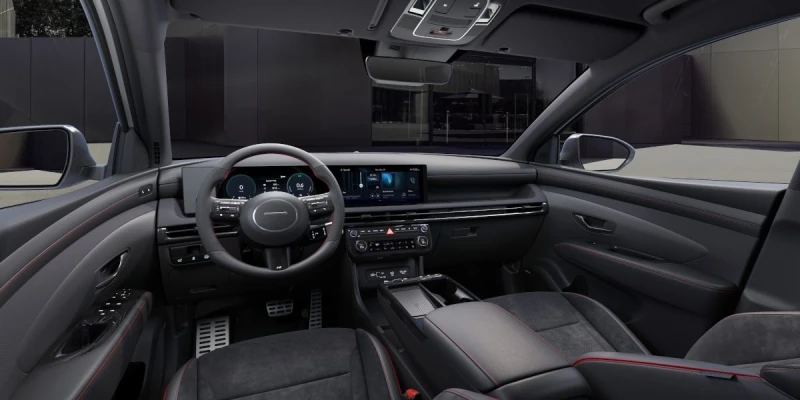
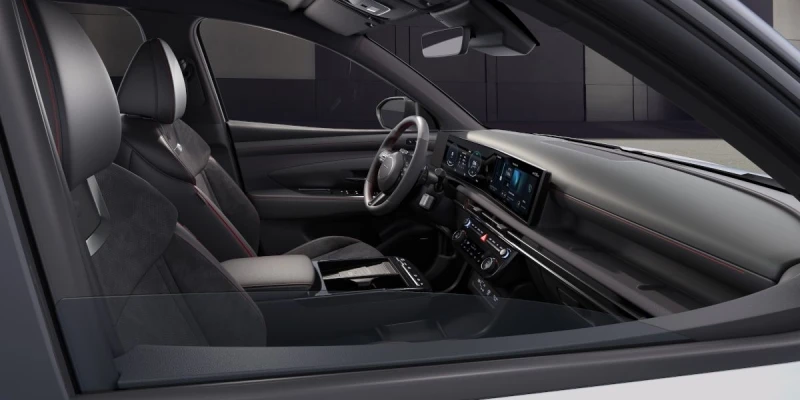
The Tucson NX4 uses a broad horizontal dashboard that makes the cabin feel wider than it is. Refreshed models feature an available panoramic display arrangement with a 12.3-inch digital instrument cluster and a 12.3-inch ccNC infotainment touchscreen. Wireless Apple CarPlay and Android Auto are available across much of the U.S. lineup, while lower trims use a simpler gauge display than the fully digital setup offered on better-equipped versions. One of the most useful updates for 2025 was Hyundai's return to more physical climate controls. Dedicated knobs and buttons are easier to operate on rough pavement and require less attention than an all-touch interface.
The redesigned center console is straightforward and practical, with cupholders, available wireless phone charging and useful small-item storage. A column-mounted Shift-by-Wire selector on refreshed models frees up additional space between the front seats. The steering wheel has well-positioned multifunction controls and is available with leather wrapping and heating. The driver's seating position is upright, and the large mirrors provide a confident view in city traffic and on the highway.
Interior Materials and Build Quality
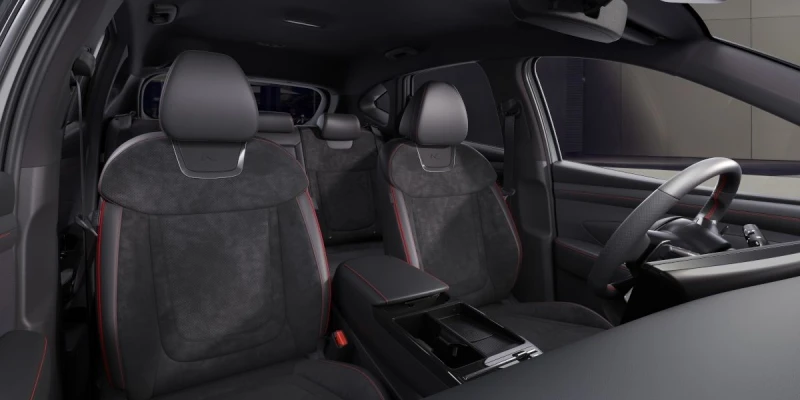
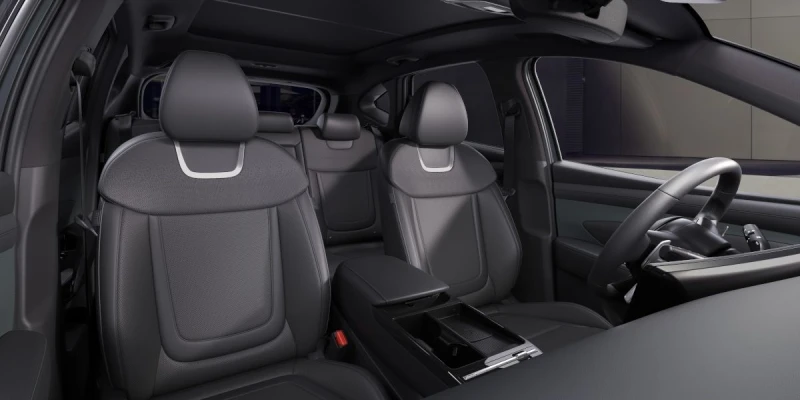
Material quality varies by trim, but the Tucson remains competitive within the compact SUV segment. Entry-level versions rely on durable cloth upholstery and harder plastics in lower-contact areas. Midrange trims add softer dashboard and door-panel surfaces, upgraded cloth or H-Tex leatherette upholstery and metallic-look accents. Limited models bring leather-trimmed seating, ambient lighting and more padded surfaces, while selected hybrid trims offer similarly upscale finishes.
In daily use, the materials are well suited to family duty. The cloth upholstery handles spills, children's gear and muddy shoes reasonably well, while H-Tex leatherette is easier to wipe clean after road trips. Cabin rattles are uncommon on well-maintained vehicles at roughly 30,000–50,000 miles, although repeated driving on badly broken roads can expose occasional trim noise. Sound insulation improved with the refresh, and the cabin remains relatively calm at 70–80 mph, though coarse pavement and loose gravel can still be heard through the wheel wells.
Passenger Space and Everyday Practicality
A 105.5-inch wheelbase gives rear-seat passengers generous room. Adults around 5 feet 11 inches to 6 feet 1 inch tall should have adequate knee and headroom even when taller occupants are seated up front. The rear seatbacks recline, and the second row includes a center armrest, air vents and USB charging ports on many trims. Seatback pockets and cargo hooks add useful convenience for commuting and family travel.
Gas-powered 2026 Tucson models provide up to about 41.2 cubic feet of cargo space behind the rear seats, or 38.7 cubic feet by the SAE measurement listed by Hyundai. Folding the second row expands maximum capacity to approximately 80.3 cubic feet. That is enough for a stroller, several large suitcases or a substantial warehouse-club shopping run. An adjustable cargo floor and a nearly flat load area are available depending on configuration.
U.S. Trim Levels and Interior Equipment
For the 2026 model year, the gas-powered Tucson is offered in familiar U.S. trims such as SE, SEL, XRT and Limited, while the hybrid range includes Blue SE, SEL, SEL Convenience and Limited versions. Equipment varies, but even lower trims emphasize smartphone connectivity and a large center display. SEL models add comfort features such as heated front seats and a power driver's seat, while XRT focuses more heavily on rugged appearance details.
Limited models offer the most complete cabin, including leather-trimmed seats, ventilated front seats, heated front and rear seats, a heated steering wheel, a panoramic sunroof, a surround-view camera system and driver-seat memory. Hybrid SEL Convenience models add H-Tex leatherette seating, ambient lighting and expanded digital features without reaching the Limited trim's price and equipment level. HTRAC all-wheel drive does not directly change the cabin, but it is commonly paired with better-equipped configurations.
What Changed With the 2025 Refresh
The 2025 update did not completely redesign the cabin, but it made several important improvements. The separate displays were reorganized into a cleaner panoramic layout, the infotainment system became faster, and the interface was modernized. Physical climate controls returned, and the column-mounted shifter created more usable console storage. Hyundai also revised several upholstery and trim combinations. Pre-refresh 2022–2024 models still feel modern, but their controls and multimedia layout are less intuitive than those in the updated cabin.
How the Cabin Handles U.S. Driving Conditions
In real-world use, the Tucson interior is durable and easy to live with. Heated seats and the available heated steering wheel warm up quickly in temperatures around 5°F to -4°F, while ventilated front seats in Limited models are valuable when summer temperatures climb above 100°F. The surfaces resist dust and moisture well, although all-weather floor mats are a smart choice in snowy states and regions with frequent rain. Some owners may notice occasional plastic creaks during extreme heat, but this is not a defining weakness of the cabin.
Routine care is simple. Cloth seats can be maintained with a vacuum and upholstery cleaner, while leather and H-Tex surfaces usually need only a damp microfiber cloth and an appropriate interior product. In areas where winter road salt is common, the door sills, lower door panels and floor-mat edges deserve extra attention because grime tends to collect there.
Overall, the Hyundai Tucson IV (NX4) remains a strong choice in 2026 because its interior balances technology, passenger space and everyday usability. For many U.S. buyers, the SEL or Hybrid SEL Convenience trims offer the best combination of comfort and value. Buyers who prioritize leather, ventilation, surround-view cameras and premium convenience features will find the Limited trim more compelling.