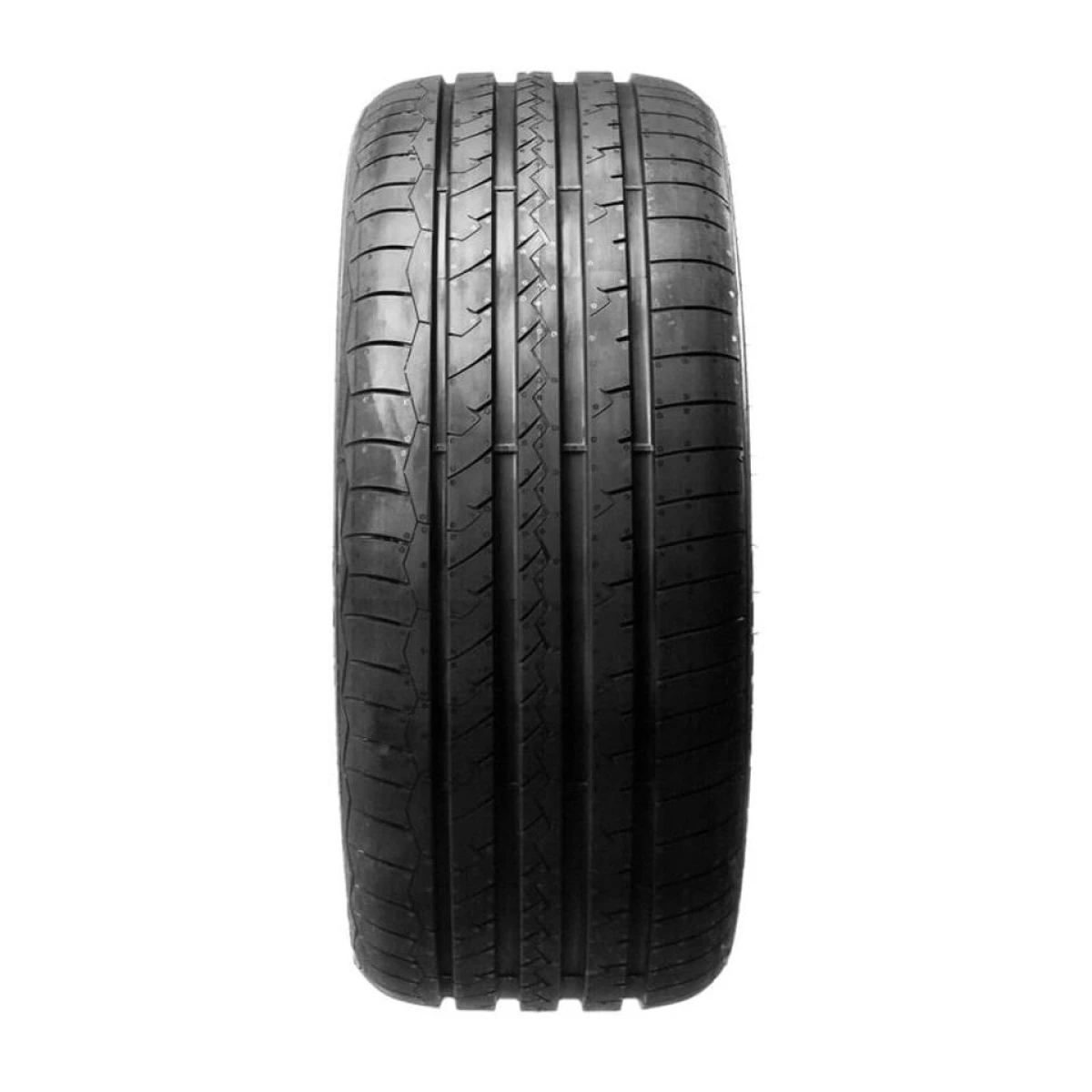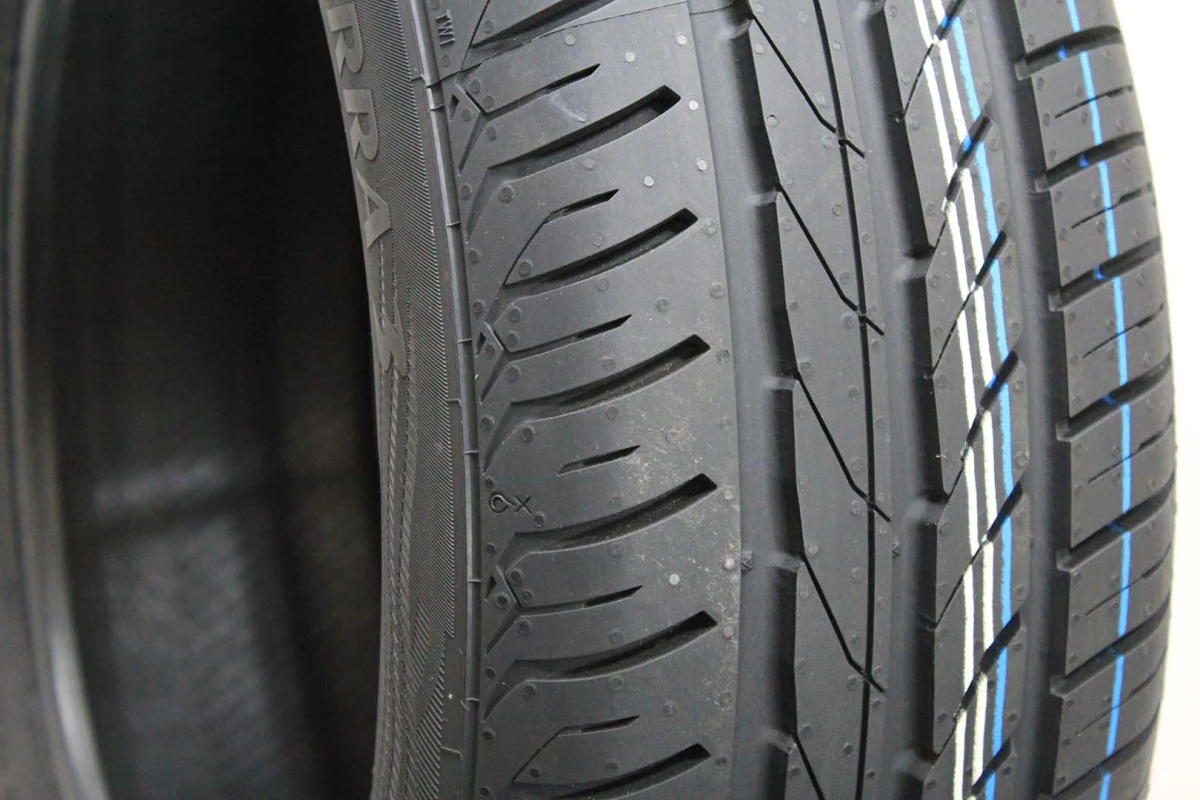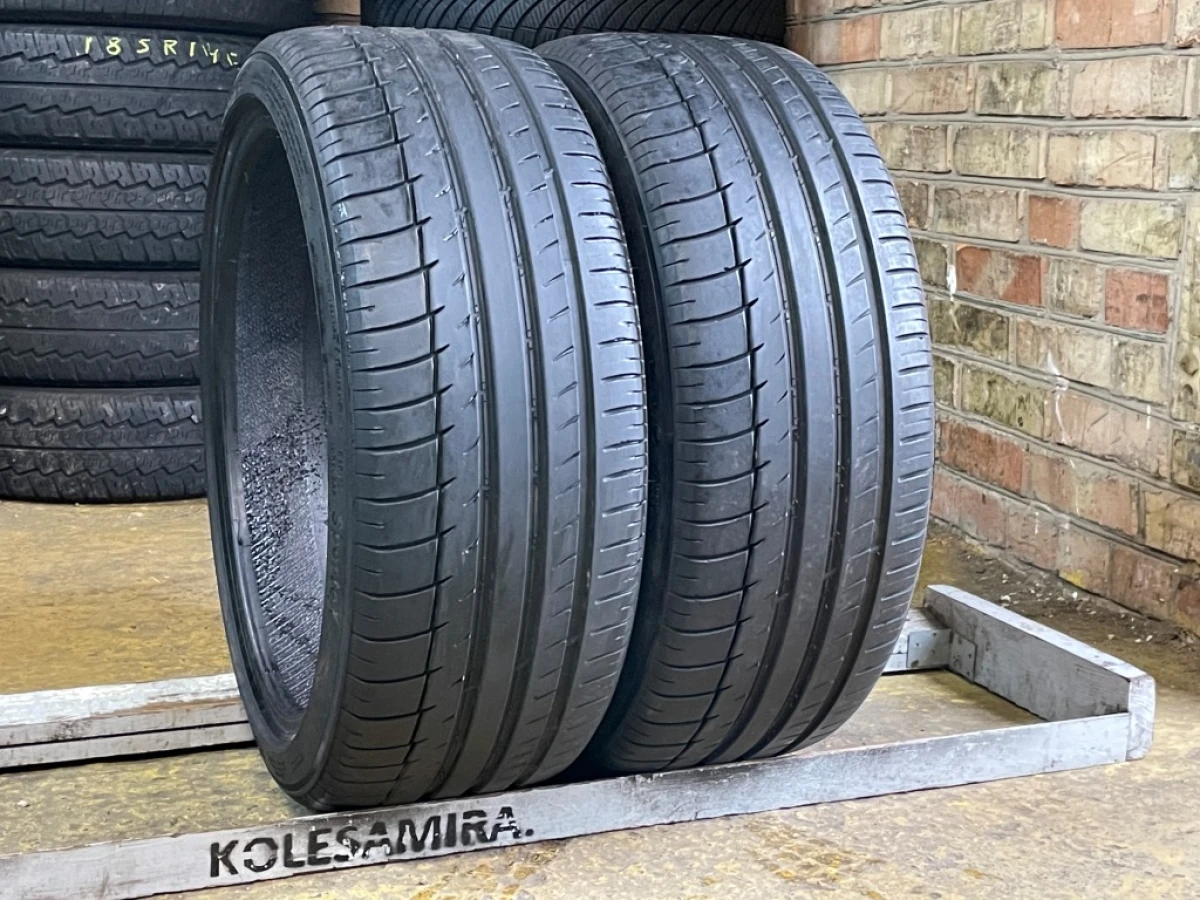
Yet many drivers underestimate the importance of regular monitoring. Even minor deviations in pressure or improper storage can result in accelerated wear and compromised vehicle behavior on the road. We examine how to properly service tires and which factors are truly critical.
Tire Pressure — A Key Parameter
One of the main factors is tire pressure. It determines the contact patch with the road, vehicle stability, fuel consumption, and uniformity of tread wear. If pressure is too low, the tire deforms more during motion, heats up faster, and wears more on the edges. In extreme cases, this can damage the carcass or cause a sudden loss of pressure.
Excessively high pressure also degrades vehicle characteristics. The contact patch decreases, grip worsens, and the suspension transmits road imperfections more harshly. Additionally, the tread wears faster in the center. Therefore, it is important to follow the values specified by the vehicle manufacturer rather than visual assessment.
How to Properly Check Tire Pressure
The recommended pressure is usually indicated on the driver’s door pillar, near the fuel filler flap, or in the owner’s manual. Manufacturers often provide different values for normal driving and when the vehicle is fully loaded. This is important to consider before long trips, carrying passengers, or transporting luggage.
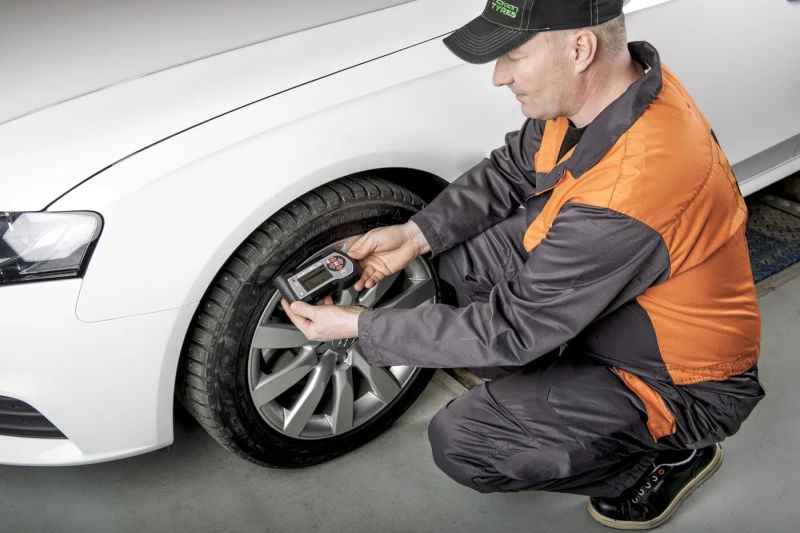
It is best to check pressure on cold tires, before driving or after the vehicle has been parked for a while. After driving, the air inside heats up, temporarily increasing pressure and making readings inaccurate. A gauge at a gas station or a personal device can be used for monitoring. The optimal frequency is at least once a month, as well as after significant temperature changes.
Tire Mounting and Seasonal Replacement
Seasonal tire replacement may seem straightforward, but installation errors can affect safety. If switching complete wheels, the driver can perform the replacement independently with a jack, lug wrench, and a flat surface. However, mounting tires on rims is best left to a professional service, as it requires specialized equipment.
- The vehicle must be securely immobilized before replacement
- Lug nuts should be loosened before raising the vehicle
- After installation, wheels must be tightened to the correct torque
- It is advisable to re-check torque after 50–100 km
It is also important to consider tire wear levels. It is generally recommended to install the fresher pair on the rear axle, regardless of drive type. This helps maintain vehicle stability, especially on wet roads where loss of rear tire grip can be particularly hazardous.
How to Properly Store Tires
After seasonal replacement, tires should be prepared for storage. They should be cleaned of dirt, stones, and road chemicals, then inspected for cuts, cracks, bulges, and uneven wear. Identifying damage early allows time to select replacements for the next season rather than addressing issues at the last moment.
The best storage location is a dry, cool, and dark area away from direct sunlight. High humidity, temperature fluctuations, and UV exposure accelerate rubber aging. Assembled wheels can be stored horizontally stacked or suspended, while tires without rims are best stored vertically and rotated periodically.

When to Switch Between Winter and Summer Tires
The transition between winter and summer tires depends not only on the calendar but also on temperature. A common guideline is around 7 degrees Celsius. When the average daily temperature consistently drops below this level, summer tires lose elasticity, while winter tires become more suitable for safe driving.
In spring the situation is reversed: with sustained warming, winter tires wear faster, perform worse on dry asphalt, and can increase braking distance. Therefore, delaying seasonal replacement is not advisable. It is important to base decisions on actual weather conditions rather than calendar dates alone.
Conclusion
Proper tire care does not require complex actions but significantly affects safety and maintenance costs. Regular pressure checks, correct mounting, wear monitoring, and appropriate storage help extend tire life and maintain predictable vehicle behavior on the road. The more attentive a driver is to their tires, the more stable the vehicle performs in everyday use.