


The company hopes this model will be more accessible and help improve the financial situation of its electric vehicle division. However, the chosen path — reducing costs by decreasing battery capacity and aggressive design optimization — raises questions regarding real-world practicality and market success.
Financial Context and Future Plans
Over the past several years, Ford's EV division has suffered significant losses. Despite this, the automaker continues to invest in new models. The company considers the period after 2029 a turning point, when an all-new family of electric vehicles will launch. The first will be a pickup truck with an estimated US market starting price of around $30,000.
For comparison, compact electric hatchbacks at this price are about 14 feet long, while Ford's new pickup will be nearly 16.5 feet. In the traditional truck segment, vehicles of this size with body-on-frame construction and a full cargo bed usually cost considerably more.
Smaller Battery as the Main Cost-Cutting Strategy
The key to affordability is a smaller battery pack. Ford notes that the battery can account for up to 40% of an EV's cost and about a quarter of its weight. Reducing its size should lower both the price and the vehicle's mass.
However, less energy storage directly reduces range. A 50 kWh battery holds roughly the energy equivalent of 3.4 gallons of diesel fuel. For a nearly 16.5-foot pickup designed for cargo and highway use, this reserve may feel limited.
Aerodynamics and Construction Optimization
To offset the smaller battery, Ford is focusing on major efficiency improvements. The company claims around 15% better aerodynamics than competitors by using a streamlined body, smaller mirrors, and a lower roofline.
Additional weight savings will come from:
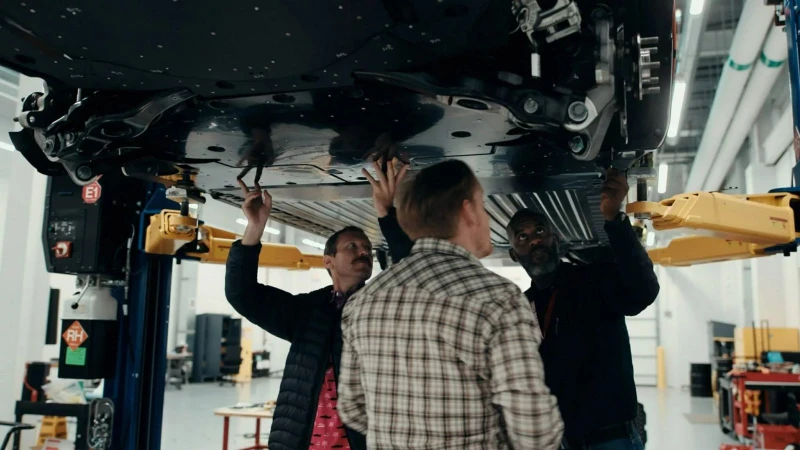
- reducing wiring length by more than 3,900 feet,
- large cast structural components,
- optimized regenerative braking.
Each of these measures helps, but the overall effect depends heavily on the base energy capacity.
Real-World Limitations
In everyday driving on US roads, range depends on driving style, temperature, payload, and terrain. With a smaller battery, these factors become more critical. For a truck this size built for work, limited range could be a notable drawback.
Furthermore, a smaller battery doesn't solve long charging times compared to a quick gas station stop.
The Bottom Line
Ford aims to deliver an affordable electric pickup by prioritizing lightweight design, superior aerodynamics, and efficiency over a larger battery. Whether this approach succeeds in the competitive American pickup market will be clear once the production version arrives with official range specifications.