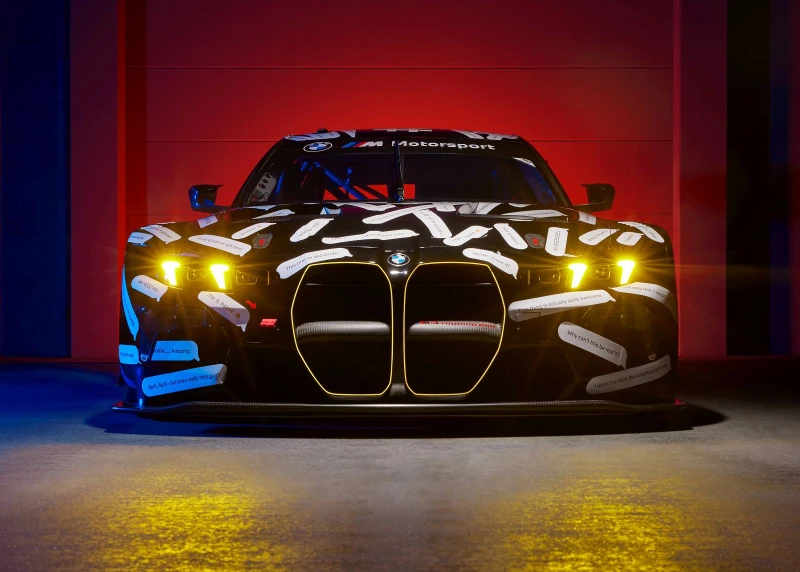
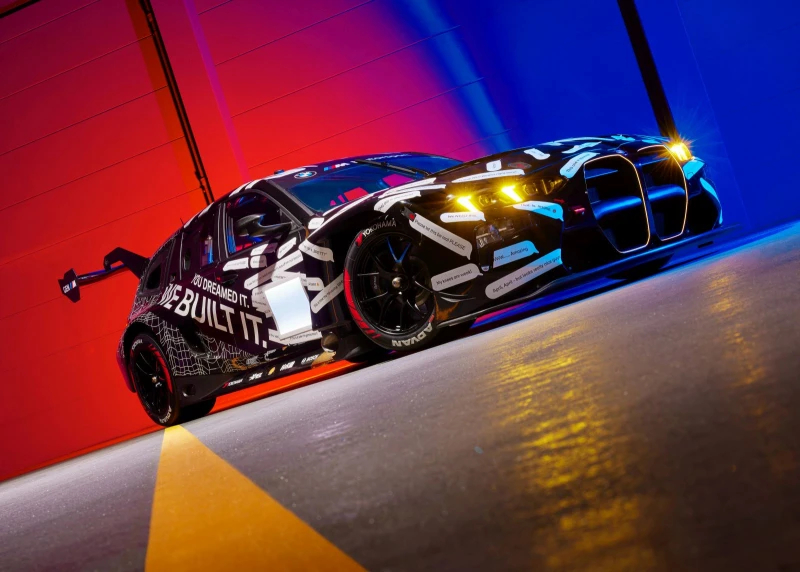
This is exactly what happened with the unconventional BMW M3 Touring, which initially appeared as an April Fools’ concept and was later developed into a fully functional race car. The project highlights how a non-traditional wagon body style can be adapted to meet the demands of motorsport.
From Concept to Race Car
At first, it was only a visual concept — a GT3-style performance wagon that seemed more experimental than practical. However, strong public interest encouraged the manufacturer to move forward with development. Within months, the vehicle was prepared for real competition.
Its debut is planned as part of the Nürburgring 24-hour race, where it will compete in a separate category. This approach allows BMW to maintain its main racing lineup while testing the unconventional format under real conditions.
Body and Structural Design
The project is based on the M4 GT3 race coupe platform, fitted with a redesigned wagon body. The modifications extend beyond styling, affecting the overall structure of the vehicle.
Key changes include:
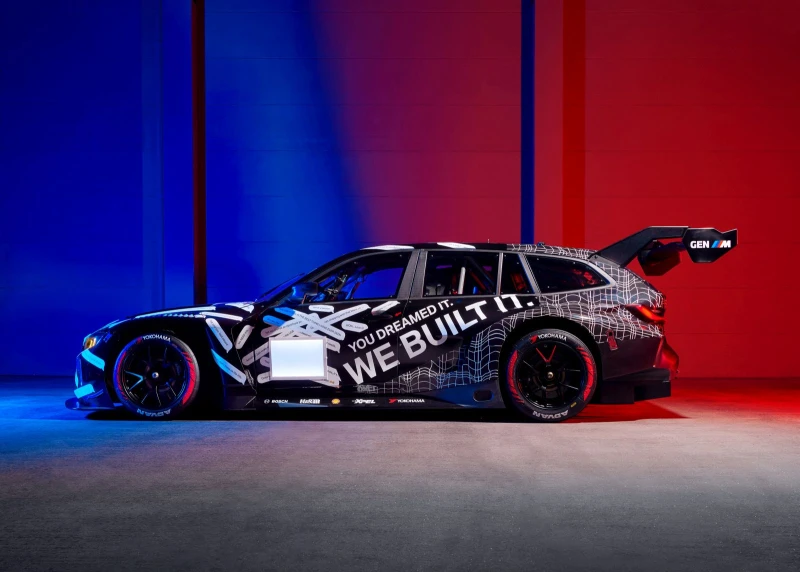
- a wide carbon fiber body with extended arches;
- a reinforced chassis with a full roll cage;
- removal of rear seats in favor of racing architecture;
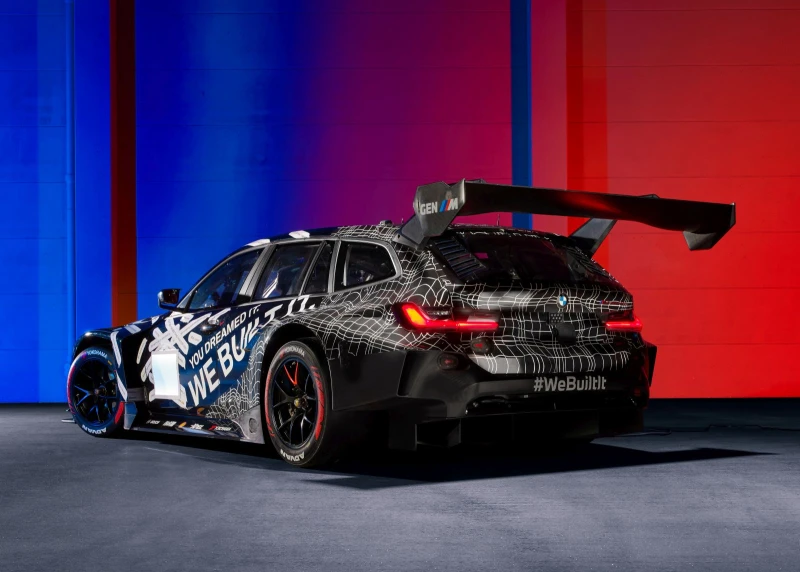
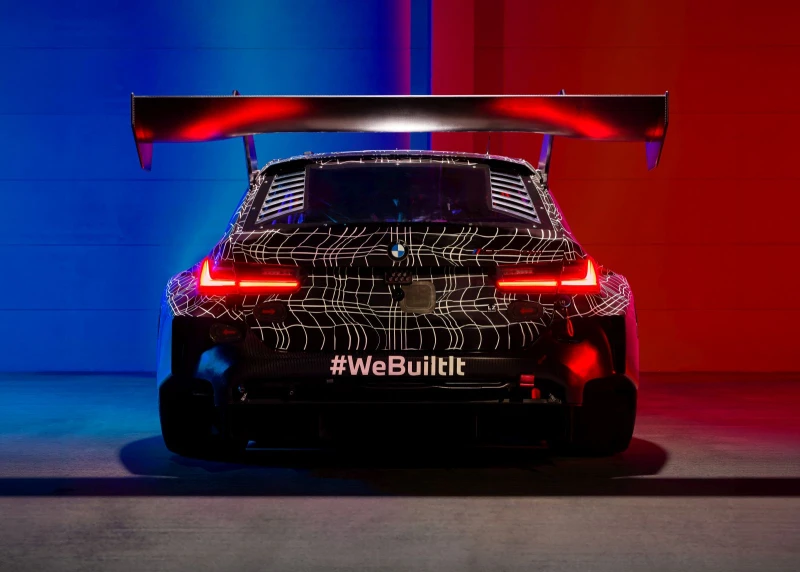
- reworked aerodynamics with a large rear wing.
The dimensions have also been adjusted: overall length has increased to approximately 5.2 meters, and height is slightly greater compared to the base racing coupe. These changes required additional aerodynamic and balance tuning.
Technical Specifications
Under the hood is a 3.0-liter inline-six engine with twin turbocharging, producing around 598 horsepower. Power is delivered to the rear wheels through a six-speed racing transmission.
The car is equipped with a race-tuned suspension and a reinforced braking system designed for endurance conditions. The 18-inch wheels comply with track racing regulations.
Aerodynamics and Track Performance
Due to the extended body shape, engineers paid particular attention to aerodynamic efficiency. One of the key elements is a large rear wing mounted on tall supports, providing necessary downforce and compensating for the wagon profile.
In terms of performance, the vehicle is expected to deliver dynamics close to the M4 GT3 coupe, although differences in weight distribution and geometry may influence cornering behavior.
Project Purpose
This vehicle was not designed for mass production but rather as an experimental project showcasing the capabilities of BMW’s engineering division. After its race participation, it will likely be used for demonstrations and exhibitions.
There are no plans for a production version, but the project illustrates how unconventional ideas can evolve into practical engineering solutions.
Conclusion
The BMW racing wagon demonstrates how a conceptual idea can develop into a fully realized engineering project. Despite its limited application, it highlights the adaptability of different body styles for motorsport and expands the perception of what a race car can be.